MONSTER
"The only thing humans are equal in is death."
Monster - Symbolism & Philosophy
Symbols & Motifs
The Nameless Monster (Storybook)
This recurring Czech children's story symbolizes the core of Johan's nihilistic philosophy and origin. It tells of a monster who splits in two, one going east and one west, consuming people to steal their names and identities but never feeling whole. It represents the loss of self, the corrupting nature of desire, and the idea that true horror comes from a lack of identity and love. Johan sees himself in this story, believing he is the monster who was never given a name.
The storybook appears multiple times, first discovered by Tenma during his investigation. It was written by Franz Bonaparta, the man behind the psychological experiments that created Johan. Its chilling refrain, "Munch-munch, chomp-chomp, gobble-gobble, gulp," is often used to create an atmosphere of dread. Johan uses the story to manipulate others and explain his worldview, seeing it as the blueprint for his own life and tragic existence.
Pointing to the Forehead
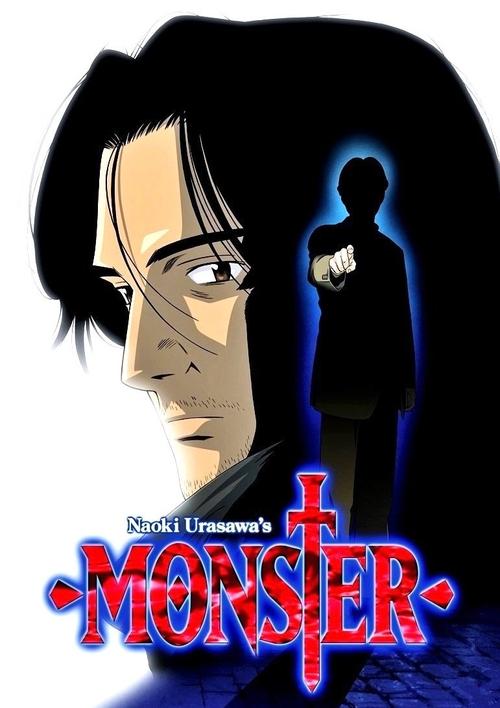
Johan's signature gesture of calmly pointing a finger to his own forehead is a symbol of his nihilism and his challenge to fate and morality. It is an invitation to be killed, a sign that he places no value on his own life and dares others to end it. It signifies his desire for his "perfect suicide" and his attempt to corrupt others, particularly Tenma, by forcing them into the role of a killer.
This gesture is seen at pivotal moments. He first does it as a child when Tenma saves him. He repeats it during his confrontation with Tenma in the university library and again in the final standoff in Ruhenheim. The gesture is a chilling and iconic visual that encapsulates his entire philosophy of life's meaninglessness and his deep-seated death wish.
Empty Bed
The image of an empty hospital bed symbolizes Johan's ephemeral, ghost-like nature and the ambiguity of his fate. It represents the central question of whether the "monster" can ever truly be contained or if it has once again vanished into the world. It is a metaphor for disappearance and the cyclical nature of the story, leaving the conclusion open to interpretation.
This symbol appears twice. The first time is after Tenma saves the young Johan, who then disappears from the hospital after murdering the director, beginning Tenma's nightmare. The second is in the final shot of the series, where Tenma visits a comatose Johan, only to turn back and find the bed empty, mirroring the beginning and leaving the audience to ponder if Johan has escaped or if the monster has finally ceased to exist.
Philosophical Questions
Are all lives truly equal?
This is the central question that ignites the entire plot. Dr. Tenma's unwavering belief in this principle leads him to save Johan, a decision with catastrophic consequences. The series relentlessly tests this ideal. Is the life of a charismatic sociopath who causes immense suffering equal to the lives of his innocent victims? Johan's philosophy acts as the direct antithesis, stating that only death is an equalizer. Tenma's journey is a painful exploration of this dilemma, and while he is pushed to the brink of abandoning his belief, he ultimately reaffirms it by saving Johan again, suggesting that to abandon this principle is to become a monster oneself.
What is the origin of evil: nature or nurture?
"Monster" serves as an extended case study on this debate. Johan is presented as the embodiment of evil, but the series meticulously uncovers his past in institutions like Kinderheim 511, where he was subjected to intense psychological abuse and conditioning. This suggests that his monstrosity was not innate but created. However, the story also plays with the idea that something was inherently different about Johan, which allowed the conditioning to take root so profoundly. Characters like Wolfgang Grimmer went through similar trauma but chose a path of empathy, complicating a simple "nurture" argument. The series ultimately leans towards nurture, arguing that monsters are made, not born, from a lack of love and an abundance of trauma.
Can one fight a monster without becoming one?
This question defines Tenma's internal conflict. To stop Johan, he must abandon his life-saving oath and learn to kill. His journey into the underworld, his association with criminals, and his single-minded pursuit of Johan all push him closer to the darkness he is fighting. The narrative constantly asks if taking Johan's life, even to save countless others, would be a victory or a final corruption of Tenma's soul. Johan actively tries to force Tenma into this position, believing it would be the ultimate proof of his nihilistic worldview. Tenma's refusal to kill Johan in the end is his ultimate victory, preserving his own humanity.
Core Meaning
The core meaning of "Monster" revolves around an exploration of the human condition, questioning the origins of evil and the inherent value of life. It posits that "monsters" are not born but created through abuse, psychological manipulation, and the failure of others to show love and compassion. The series relentlessly examines the nature versus nurture debate, suggesting that the monster inside each person is a product of their environment and choices. Ultimately, the message is one of cautious hope, asserting that despite the existence of profound darkness, humanity's capacity for empathy, forgiveness, and the belief in the equality of all lives are the only forces that can counter it. The story challenges the audience to define what a monster truly is, pointing fingers not just at the villain, but at the systems and individuals who created him.