
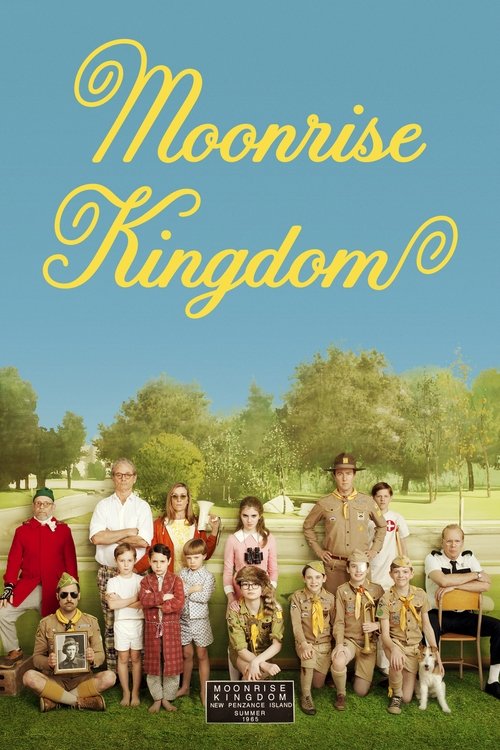
Moonrise Kingdom - Symbolism & Philosophy
Symbols & Motifs
Suzy's Binoculars
They symbolize Suzy's feeling of distance from those around her and her desire to observe the world without participating in it. They are her "magic power" to see things up close while remaining emotionally removed.
Suzy uses them constantly, even indoors. She looks at her family from afar, highlighting her alienation. Later, she offers them to Sam, inviting him into her perspective.
Maps and Cartography
Maps represent the desire to define, control, and understand one's world. They symbolize the adventure of charting a new life and the innocence of believing the world can be neatly navigated.
Sam is an expert cartographer. The film features animated maps to track their journey. The cove they find is an "unmapped" inlet, which they name, effectively claiming it as their own private reality.
The Flood / Noye's Fludde
A biblical reference to cleansing and rebirth. It mirrors the emotional turmoil of the characters and the washing away of the old, stagnant order to make way for a new family dynamic.
The film opens with a performance of Benjamin Britten's opera Noye's Fludde (Noah's Flood), where Sam and Suzy first meet. The climax involves a massive hurricane and flood that forces the entire community into the ark-like safety of the church.
The Khaki Scout Uniform
A symbol of belonging, rules, and the performative nature of masculinity and growing up. For Sam, it is initially a costume of the group that rejects him, which he later repurposes for his own survival.
Sam wears his uniform with pride throughout his rebellion, using the skills he learned to sustain his life with Suzy. He eventually modifies it, shedding the official badges for his own created identity.
Philosophical Questions
Does society protect children or suppress them?
The film presents institutions (Scouts, Social Services, family law) as obstacles to the children's happiness. It questions whether the "protection" offered by adults—who are often incompetent or unhappy themselves—is actually beneficial, or if children possess a wisdom and capability that society ignores.
What constitutes a 'real' family?
Through Sam's rejection by his foster parents and his acceptance by Captain Sharp, the film argues that family is defined by loyalty and choice (emotional bonds) rather than biology or legal obligation. The Bishops are a 'real' family on paper but are emotionally estranged, whereas Sam and Suzy create a bond stronger than blood.
Is the innocence of childhood a weakness or a strength?
The adults in the film are paralyzed by regret and melancholy. The children, conversely, act with decisive moral clarity. The film suggests that the 'innocence' of childhood is actually a form of courage—the bravery to pursue what you love without the cynicism of experience.
Core Meaning
Moonrise Kingdom is an ode to the intensity and seriousness of childhood emotions, suggesting that children often understand loyalty and love better than the jaded adults who govern them. Director Wes Anderson explores the idea of the "chosen family" and the melancholy realization that growing up involves compromise. The film validates the feelings of the "outsider," portraying their escape not just as rebellion, but as a necessary quest for a place where they truly belong.