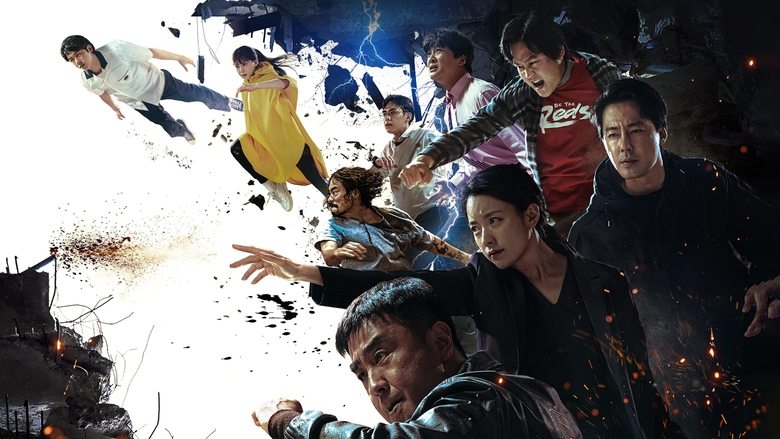
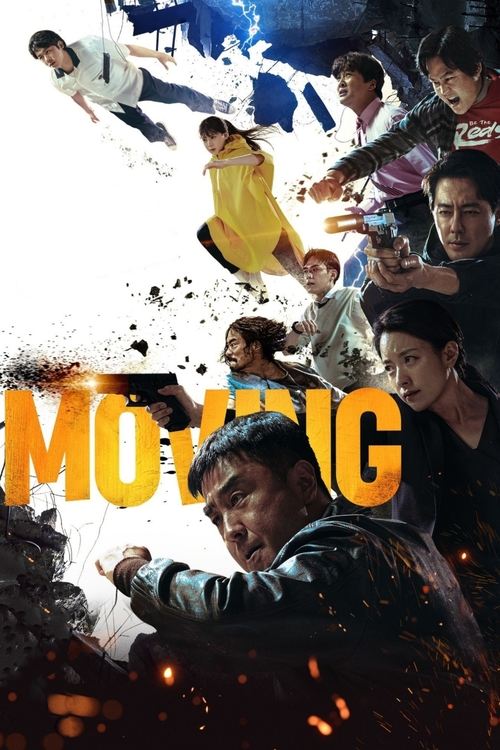
"Moving" is a story told in two halves: the present-day mystery of the superpowered children and the extensive flashback revealing their parents' history as NIS black ops agents. The major twist is that the school's seemingly kind homeroom teacher, Choi Il-hwan, is actually a government agent tasked with identifying and nurturing the next generation of superhumans for the NIS.
The assassin, Frank, is revealed to be a product of a brutal American program that adopted and trained orphaned Korean children with powers, forcing them to hunt their own kind. The parents' backstories reveal a tragic love quadrangle and partnership: Mi-hyun (super senses) and Doo-sik (flight) fall in love while on a mission, while Ju-won (regeneration) finds love with a normal woman, Ji-hee, who dies in a car accident. Doo-sik is eventually captured on a mission and has been imprisoned in North Korea for years.
The finale culminates in a massive battle at Jeongwon High School between the parents, the children, and a team of elite North Korean super-soldiers who have come to acquire the student files. Key moments include Ju-won surviving a bullet to the eye by gouging it out to trigger his healing, Bong-seok mastering his flight and senses to save his mother, and Gang-hoon's father, Jae-man (super strength/speed), finally unleashing his power to protect his son. The North Korean operation leader, Deok-yoon, ultimately sacrifices himself to stop the cycle of violence. In the aftermath, Doo-sik is freed by a disillusioned North Korean agent, returns to South Korea, and kills the manipulative NIS Director Min Yong-jun, finally reuniting with Mi-hyun and Bong-seok. The post-credits scene reveals that Frank is alive and a new threat, Elias, is being activated by the CIA, setting the stage for Season 2.