Moving
A heart-pounding superhero noir where familial love is the ultimate superpower, wrapped in the quiet melancholy of rain-soaked South Korean streets.
Moving

Moving

무빙

"We can be heroes or monsters."

09 August 2023 — 20 September 2023 South Korea 2 season 20 episode Returning Series ⭐ 8.5 (236)
Cast: Ryu Seung-ryong, Han Hyo-joo, Zo In-sung, Cha Tae-hyun, Ryoo Seung-bum
Drama Action & Adventure Mystery
Parental Sacrifice and Love The Burden of Being Different Humanity vs. The State Legacy and Coming of Age

Overview

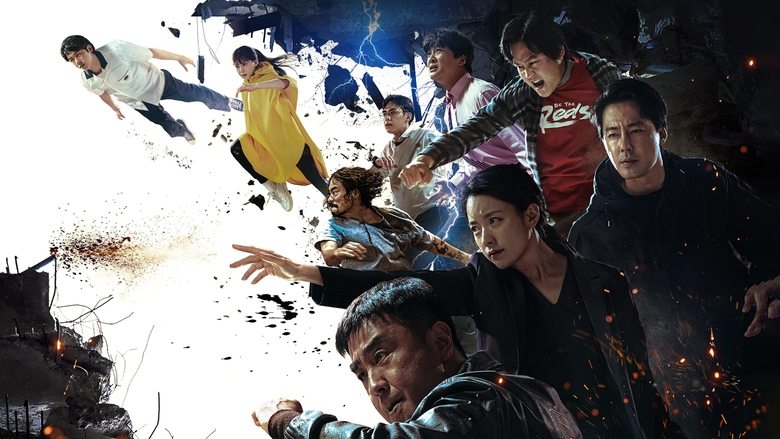
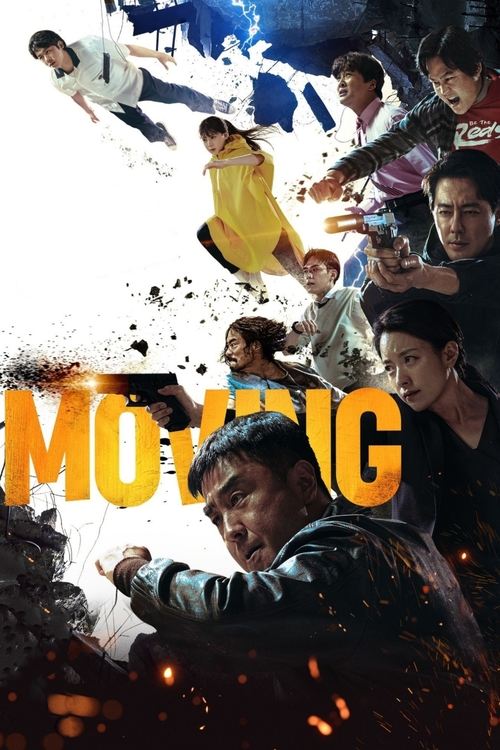
"Moving" follows a group of high school students who appear ordinary but possess extraordinary genetic superpowers inherited from their parents. Kim Bong-seok can fly, Jang Hui-soo has incredible regenerative abilities, and Lee Gang-hoon possesses immense speed and strength. They live their lives trying to conceal their powers, while their parents, former black ops agents for the National Intelligence Service (NIS), harbor painful secrets and fight to protect their children from being discovered and exploited by government agencies.

The story unfolds across two timelines. The present day focuses on the teenagers navigating school life, friendships, and the challenge of controlling their burgeoning abilities. A mysterious assassin named Frank begins hunting down the retired superpowered agents, forcing the parents out of hiding. The narrative then delves deep into the past, revealing the romantic and perilous lives of the parents in the 1990s as NIS agents, detailing how they met, fell in love, and ultimately decided to disappear to give their children a normal life. This generational saga culminates in a violent confrontation where both parents and children must unite to fight against powerful forces that threaten their existence.
Core Meaning

The core meaning of "Moving" revolves around the profound and fierce nature of parental love and the sacrifices made to protect family. It posits that the greatest power isn't supernatural ability, but the unwavering instinct to shield one's children from a world that seeks to exploit them. The series explores the idea that these extraordinary gifts are both a legacy and a burden, questioning whether one can escape a predetermined fate. Ultimately, it is a deeply humanistic story about people deemed 'monsters' or 'tools' by the state, who strive to find normalcy, forge connections, and assert their right to a peaceful life, suggesting that family is the only nation worth fighting for.

Thematic DNA

Parental Sacrifice and Love 40%
The Burden of Being Different 30%
Humanity vs. The State 20%
Legacy and Coming of Age 10%

Parental Sacrifice and Love

This is the central theme of the series. The first generation of superhumans, once devoted agents, give up their careers, identities, and personal safety to raise their children in obscurity. Lee Mi-hyun runs a small tonkatsu restaurant and constantly weighs her son down to prevent him from floating away. Jang Ju-won hides his monstrous strength behind a humble chicken shop to provide for his daughter. Their entire existence is a testament to sacrifice, culminating in their willingness to re-enter a world of violence to ensure their children's freedom. Their actions consistently echo the sentiment, "I'll become a monster anytime if it's to protect my child."

The Burden of Being Different

The series poignantly explores the alienation and fear that comes with being different. The children are taught to suppress their true selves—Bong-seok is told to gain weight and carry sandbags, Hui-soo is told not to stand out for her resilience. Their powers are a source of anxiety and isolation before they become a source of strength. This theme extends to their parents, who were treated as valuable but ultimately disposable weapons by the government, never truly seen as human. The narrative questions whether society can accept those who don't fit the norm, or if they will always be viewed with fear and suspicion.

Humanity vs. The State

"Moving" presents a critical view of government agencies that view individuals as assets and tools. Both South and North Korean governments, as well as American agencies, are portrayed as morally ambiguous entities that exploit superpowered individuals for nationalistic goals, with no regard for their personal lives or well-being. The agents are forced on deadly missions and are seen as disposable. The parents' decision to abandon this life is an act of rebellion, prioritizing individual humanity and family over blind patriotism and the cold machinations of the state.

Legacy and Coming of Age

The story is a dual coming-of-age narrative. The teenagers learn to accept and control the powers they inherited, transitioning from hiding their abilities in fear to using them to protect their loved ones. This journey mirrors the process of accepting one's identity and heritage. Their arc is about understanding the sacrifices their parents made and choosing what kind of people they want to be, moving beyond the legacy of pain and secrecy to forge their own paths.

Character Analysis

Lee Mi-hyun

Han Hyo-joo

Archetype: The Protector
Key Trait: Resourceful

Motivation

Her primary motivation is to ensure her son, Kim Bong-seok, can live a normal life, free from the exploitation she experienced. She dedicates herself to suppressing his powers and keeping him under the radar, driven by a deep-seated fear of the government finding and using him as a weapon.

Character Arc

In the past, Mi-hyun is a top-tier NIS agent with superhuman senses, sharp, confident, and skilled in strategy. After falling in love with Kim Doo-sik and having their son, Bong-seok, her focus shifts entirely. She transforms into a fiercely protective mother, sacrificing her former life to create a semblance of normalcy. Her arc is about channeling her formidable skills from national security to the singular, all-consuming mission of protecting her child. In the finale, she is forced to reconcile her past as an agent with her present as a mother, taking up arms once more to defend her family.

Jang Ju-won

Ryu Seung-ryong

Archetype: The Redeemed Monster
Key Trait: Indestructible

Motivation

After his wife's death, Ju-won's sole motivation is to protect his daughter, Hui-soo, and provide her with the stable life he never had. He fears that she will be targeted for her inherited abilities and does everything in his power to keep her safe and allow her to choose her own path.

Character Arc

Ju-won begins as a gangster known as "Guryongpo," a veritable monster who feels no pain and cannot be killed. His life is violent and aimless until he meets Hwang Ji-hee, who sees the humanity in him. Her love and their daughter, Hui-soo, redeem him. After Ji-hee's death, his entire arc becomes about honoring her memory by being a good father. He transforms from an indestructible brute into a gentle, loving parent who runs a chicken restaurant. The final battle forces him to unleash the "monster" he tried to bury, but this time, he fights not for territory or pride, but for his daughter.

Kim Doo-sik

Zo In-sung

Archetype: The Missing Hero
Key Trait: Steadfast

Motivation

Initially motivated by a sense of duty, his motivation shifts entirely to protecting Mi-hyun and their unborn son. He orchestrates their escape from the NIS, knowingly sacrificing his own freedom for theirs. Upon his return, his motivation is twofold: to reunite with his family and to eliminate the man, NIS Director Min Yong-jun, who poses the greatest threat to them.

Character Arc

Doo-sik is the NIS's most elite black ops agent, capable of flight and a deadly marksman. He is portrayed in flashbacks as charming, confident, and morally grounded despite his profession. His arc is one of tragedy and sacrifice. He chooses love and family over duty, which leads to him being hunted by the agency. He is captured and imprisoned in North Korea for over a decade. His physical presence is limited, but his influence is immense. His arc culminates in his dramatic escape and return, no longer an agent of the state, but a father and husband exacting revenge to finally protect his family.

Kim Bong-seok

Lee Jung-ha

Archetype: The Reluctant Hero
Key Trait: Empathetic

Motivation

Initially, his motivation is to please his mother and keep his secret. This shifts to wanting to be close to Hui-soo. Ultimately, his motivation evolves into a powerful desire to protect his mother and friends from harm, which is the final catalyst that allows him to gain full control of his powers.

Character Arc

Bong-seok starts the series as a kind-hearted, clumsy, and insecure teenager, burdened by the secret of his ability to fly, which he can't fully control. His mother has made him gain 30kg to literally keep him grounded. Meeting Hui-soo and developing feelings for her makes it harder to control his floating. His arc is a classic coming-of-age story. He learns to shed the physical and emotional weight holding him down, gradually embracing his inherited powers. By the end of the series, he transforms from a boy who is afraid to float into a confident young man who can fly, becoming a hero who saves people, dubbed the "Yellow Man" by the media.

Jang Hui-soo

Go Youn-jung

Archetype: The Unbreakable Spirit
Key Trait: Resilient

Motivation

Hui-soo is driven by a strong sense of justice and a desire to live up to her father's expectations of living a normal, good life. She wants to get into a physical education college, using her abilities in a way that is socially acceptable. Her core motivation is to protect the people she cares about, especially her father and Bong-seok.

Character Arc

Hui-soo is a resilient and righteous transfer student who carries the pain of her mother's death and the guilt of a past incident where she was ostracized for her healing ability. She is pragmatic and tough on the outside but deeply caring. Her arc is about self-acceptance and learning to trust others with her secret. Her friendship with Bong-seok is central to this; they find solace in their shared otherness. She moves from seeing her power as a curse that isolates her to understanding it as a gift that can protect others.

Symbols & Motifs

Namsan Tonkatsu (Pork Cutlet)

Meaning:

It symbolizes safety, maternal love, and the ordinary life Lee Mi-hyun desperately wants for her son. The restaurant is their sanctuary, and the act of eating tonkatsu is an act of grounding and normalcy. It is also the place where Mi-hyun and Doo-sik's love story began, representing a cherished past and a hope for future reunion.

Context:

The Namsan Tonkatsu restaurant is Mi-hyun's business and home throughout the series. She feeds Bong-seok large portions to literally weigh him down and keep him from floating. It serves as a key location where characters meet and find refuge.

The Color Purple

Meaning:

Purple symbolizes the hidden, secret love between Lee Mi-hyun and Kim Doo-sik. It was Mi-hyun's code for a secure line when they were agents and becomes their unique signal. It represents their enduring connection, a private world that no one else can penetrate, and the hope of their eventual reunion.

Context:

Mi-hyun uses a purple lamp in the NIS office to signal a secure communication channel with Doo-sik. Years later, she paints the roof of their home and restaurant purple, a beacon of hope that he might one day see it from the sky and find his way back to her and their son.

Flight

Meaning:

Flight symbolizes both freedom and a lack of control. For Kim Doo-sik, it is a tool for his missions, a controlled expression of his power. For his son, Bong-seok, it is initially an uncontrollable impulse tied to his emotions, something to be suppressed. His journey to master flight represents his coming-of-age and acceptance of his identity, transforming a liability into a strength he can use for good.

Context:

Doo-sik's missions as a flying black ops agent are shown in flashbacks. Bong-seok's struggle with floating is a central conflict in the early episodes, often triggered by his feelings for Hui-soo. The finale sees him fully embrace his ability to become a hero.

Memorable Quotes

너는 이상한 게 아니야. 조금 다를 뿐이지.

— Lee Mi-hyun to Kim Bong-seok

Context:

This is a recurring sentiment expressed by Mi-hyun to Bong-seok throughout his childhood and teenage years whenever he feels alienated by his inability to control his floating. It's the emotional bedrock of their relationship.

Meaning:

"You're not strange. You're just a little different." This line encapsulates the series' core message of acceptance and parental love. It's a constant reassurance from a mother to her son that his powers do not make him a monster, providing the emotional foundation for Bong-seok's eventual self-acceptance.

아빠는... 괴물이 아니야.

— Jang Hui-soo

Context:

Hui-soo says this after Ju-won is forced to reveal the extent of his abilities. It's a pivotal moment that solidifies their bond and helps Ju-won overcome his internal struggles with his identity.

Meaning:

"My dad... is not a monster." This is a powerful declaration of love and defense from Hui-soo for her father, Jang Ju-won. Ju-won has always feared that his indestructible nature and violent past make him a monster, but Hui-soo's words affirm that she sees only a loving father, redeeming him in his own eyes and the audience's.

나는 내 아이를 지키기 위해서라면 언제든지 괴물이 될 수 있어.

— Lee Mi-hyun

Context:

Mi-hyun says this when confronting the threats against her son, expressing the lengths she is willing to go. It reflects the shared philosophy among the retired agents who have become parents.

Meaning:

"I'll become a monster anytime if it's to protect my child." This quote embodies the fierce, unwavering protectiveness of all the parents in the series. It signifies their willingness to abandon morality, safety, and their own humanity if it means ensuring their children's survival, highlighting the theme of parental sacrifice.

Episode Highlights

The Stranger (Episode 7)

S1E7

This episode is a major turning point. The focus shifts from the high school drama of the kids to the violent, high-stakes world of their parents. The mysterious and relentless assassin, Frank, is systematically hunting retired agents. The episode fully introduces the threat that has been looming, raising the tension and stakes for the entire series and beginning the transition into the parents' backstories.

Significance:

It bridges the two main narratives of the series—the children's present and the parents' past. It establishes the central external conflict and provides the catalyst for Mi-hyun and Ju-won to be drawn back into the world they tried so desperately to escape.

Black (Episode 8) & The Secret (Episode 9)

S1E8

These episodes begin the extensive flashback arc, detailing the recruitment of Lee Mi-hyun and Kim Doo-sik into the NIS. Viewers see their first meeting and the beginning of their complex relationship as partners in the elite Black Team. The episodes masterfully build a world of 90s espionage, romance, and tension, showing the origins of their love story amidst dangerous missions.

Significance:

This arc provides the entire emotional backstory for the series. Understanding Mi-hyun and Doo-sik's love story is crucial to comprehending the depth of their sacrifice and the stakes of their separation. It establishes the foundation for the show's central family.

Romanticist (Episode 11) & Partners (Episode 12)

S1E11

Continuing the flashbacks, these episodes are often cited by fans and critics as high points of the series. They focus on the burgeoning romance between Mi-hyun and Doo-sik, and separately, the story of how the monstrous gangster Jang Ju-won finds redemption through his love for Ji-hee. These episodes are deeply character-driven, beautifully balancing heartwarming romance with brutal action.

Significance:

These episodes humanize characters who were previously depicted as nearly invincible weapons. They establish the core emotional motivation for why these characters would do anything to protect their families, making their later struggles all the more impactful.

Awakening (Episode 17)

S1E17

The narrative returns to the present day with a vengeance. The North Korean super-soldiers arrive at Jeongwon High School, and the conflict erupts. The episode features the first major confrontation, where Bong-seok must consciously use his powers to save Hui-soo from the North Korean flyer, Jun-hwa. It's the moment the students are forced to stop hiding and start fighting.

Significance:

This episode marks the beginning of the series' epic, three-part finale. It's the culmination of the kids' character arcs, where they finally have to put their training and newfound confidence to the test, officially entering the battle their parents fought for so long.

Graduation Day (Episode 20)

S1E20

The final episode delivers a spectacular and emotionally resonant conclusion to the battle at the school. Parents and children fight side-by-side to protect each other. It features major character resolutions: Ju-won survives a point-blank gunshot to the eye, North Korean leader Deok-yoon sacrifices himself to end the cycle of violence, and Doo-sik is finally freed. The episode ends with a heartfelt reunion and a glimpse of the children's future, with Bong-seok becoming a local hero.

Significance:

It provides a satisfying conclusion to the first season's arcs while setting up future storylines. It reaffirms the series' central theme that family is the ultimate power, as every character's final action is driven by the desire to protect their loved ones. The post-credit scene teases the continuation of the story.

Philosophical Questions

What is the true definition of a 'monster'?

The series consistently challenges the definition of monstrosity. Jang Ju-won, who is called a monster by his enemies, proves to be the most gentle of fathers. The parents, capable of immense destruction, are driven by profound love. Conversely, the 'normal' humans in positions of power, like NIS Director Min Yong-jun, commit monstrous acts by treating people as disposable tools for the state. The show suggests that monstrosity is not defined by one's abilities, but by one's actions and the absence of empathy.

Are superpowers a gift or a curse?

"Moving" explores this classic superhero dilemma with great nuance. For the parents, their powers were a curse that led to a life of violence and loss, forcing them into hiding. For the children, the powers are initially a source of shame and alienation, a 'curse' to be hidden. However, as the story progresses, they learn to control their abilities and use them to protect those they love, transforming the curse into a gift. The series ultimately argues that the nature of the power is determined by the intent of the wielder.

Can you protect your children by hiding them from the world?

The parents' primary strategy is to suppress their children's abilities and hide them from the world. While this keeps them physically safe for a time, it also stunts their emotional growth and self-acceptance, particularly for Bong-seok. The series questions this approach, suggesting that true protection lies not in hiding, but in empowering children to understand and control who they are. The climax proves that only by embracing their full potential can the children truly defend themselves and their families.

Alternative Interpretations

One alternative interpretation of the series focuses on the political allegory of the two Koreas. The older generation of superhumans represents a populace exploited and scarred by the ideological conflicts of the Cold War era, forced into service by their respective nations. Their children represent a new generation that inherits this painful history but desires to live differently, outside the cycle of conflict. The North Korean agents are not depicted as one-dimensional villains but as individuals with their own families and sense of duty, suggesting that the true 'enemy' is not the people on the other side, but the systems and leaders that perpetuate the unending war. Deok-yoon's final act of sacrifice can be interpreted as a desperate plea to break this cycle of inherited trauma and violence for the sake of the next generation.

Cultural Impact

"Moving" made a significant cultural and industrial impact upon its release. It was a massive success for Disney+, becoming its most-watched Korean original globally and revitalizing the platform's presence in the competitive South Korean streaming market. The series was widely praised by critics and audiences for its unique blend of superhero action, espionage thriller, and deep, emotional family drama, a combination that subverted the expectations of the superhero genre. Its success demonstrated a global appetite for Korean-style superhero narratives that prioritize character development and emotional depth over pure spectacle.

By having the original webtoon creator, Kang Full, write the screenplay, the series set a new standard for webtoon adaptations, ensuring a faithful yet expanded vision. It tackled complex themes, subtly referencing the political tensions between North and South Korea and even US influence, framing the superpower narrative within a specific and resonant historical context. The show's success launched its young lead actors—Lee Jung-ha, Go Youn-jung, and Kim Do-hoon—into stardom and garnered numerous awards, including the Grand Prize at the Baeksang Arts Awards, solidifying its place as a critically acclaimed masterpiece and a landmark in modern Korean television.

Audience Reception

Audience reception for "Moving" was overwhelmingly positive, with viewers and critics alike praising it as a masterpiece of the genre. Many lauded its ambitious storytelling, which successfully balanced high-octane action with deeply emotional character studies. The extended flashback episodes detailing the parents' pasts were particularly acclaimed for their rich narrative and romantic depth, with some considering it a compelling drama in its own right. The performances of the entire ensemble cast, both veteran and rookie actors, received widespread praise.

Common points of praise included the high production values and stunning visual effects, which were seen as on par with major Hollywood productions. The main points of criticism, though minor, were directed at the pacing of the initial episodes, which some viewers found slow before the main plot kicked in. Others felt the ending, while satisfying, was slightly rushed and left some loose ends, fueling anticipation for a second season. Overall, the verdict was that "Moving" is a must-watch, genre-defining K-drama that sets a new benchmark for superhero stories.

Interesting Facts

  • The series is one of the most expensive Korean dramas ever made, with a production budget reported to be between ₩50 billion and ₩65 billion (approx. $45-50 million USD).
  • Kang Full, the creator of the original hit webtoon, wrote the screenplay for all 20 episodes himself. This was his debut as a screenwriter, and he expanded the story to include more detailed backstories for the parents that were not in the webtoon.
  • The series involved extensive visual effects, with over 7,000 CGI shots created by 60 studios from 9 different countries, a number equivalent to the VFX shots of three or four blockbuster movies.
  • Actor Lee Jung-ha, who plays Kim Bong-seok, intentionally gained 30 kg (about 66 lbs) for the role to physically embody the character who is weighed down to control his flying.
  • Conversely, actor Kim Do-hoon (Lee Gang-hoon) lost 10 kg for his role to achieve a leaner physique suitable for his character's speed and strength.
  • The character of Jeon Gye-do (the electric bus driver played by Cha Tae-hyun) was created specifically for the TV series and does not appear in the original webtoon.
  • The show became the most-watched Korean original series on Disney+ globally and on Hulu in the U.S. within its first week of release.
  • The series won the prestigious Grand Prize (Daesang) for Television at the 60th Baeksang Arts Awards, one of South Korea's highest honors for film and television.

Easter Eggs

Connection to the "Kang Full Universe"

The series is part of a larger, interconnected universe of webtoons created by Kang Full. Other stories in this universe include "Timing," "Again," and "Bridge." While the show stands on its own, fans of the webtoons can see how the world of "Moving" fits into a larger narrative of superpowered individuals. The second season is expected to adapt the webtoon "Bridge," which features characters from "Timing" meeting the characters from "Moving."

Frank's character origin

The relentless assassin Frank, who hunts the retired agents, was a character that Kang Full originally intended to introduce in a future webtoon called "Hidden." He decided to bring the character into the TV adaptation of "Moving" instead, making him a unique and menacing addition exclusive to the show's narrative.

⚠️ Spoiler Analysis

Click to reveal detailed analysis with spoilers

Frequently Asked Questions

Explore More About This Movie

Dive deeper into specific aspects of the movie with our detailed analysis pages

Comments (0)

Leave a comment

No comments yet. Be the first to share your thoughts!