
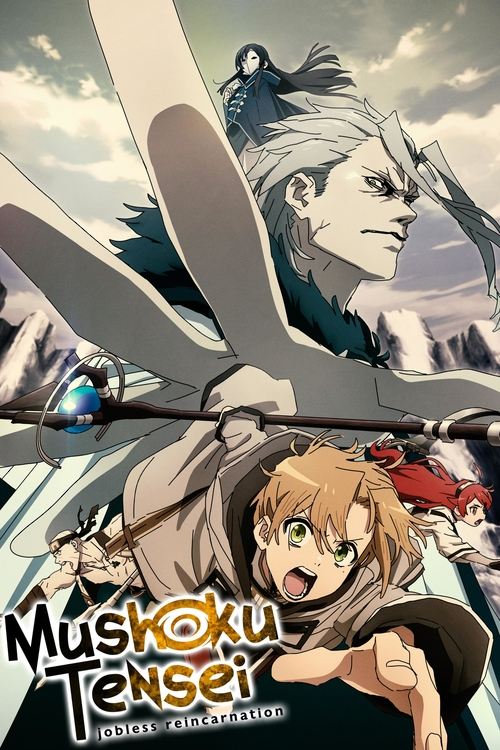
無職転生 ~異世界行ったら本気だす~
Mushoku Tensei: Jobless Reincarnation - Symbolism & Philosophy
Symbols & Motifs
Roxy's Pendant
Symbolizes guidance, hope, and a connection to his first mentor and savior. Roxy was the first person to lead Rudeus out of his self-imposed isolation (both literally, by getting him to leave his house, and metaphorically). The pendant is a physical manifestation of her teachings and the hope she represents.
Rudeus receives the pendant from Roxy upon her departure in Season 1. He treasures it throughout his journeys. In his darkest moments of depression and despair, particularly after being abandoned by Eris, he prays to the pendant (along with a pair of her stolen panties), treating it as a holy relic that gives him the strength to carry on.
The Man-God (Hitogami)
The Man-God symbolizes manipulation, temptation, and deceptive guidance. He appears in Rudeus's dreams offering seemingly helpful advice, but his true motives are selfish and destructive. He represents the easy path and the temptation to rely on an external force rather than one's own judgment and effort, a constant test of Rudeus's free will.
Starting in Season 1, the Man-God frequently appears to Rudeus in his dreams, offering cryptic advice that often helps him out of immediate danger. However, it's slowly revealed that his guidance is a long-term manipulation designed to serve his own goals, which are in opposition to another powerful figure, Orsted. A major turning point in the source material involves Rudeus realizing the catastrophic consequences of blindly trusting the Man-God.
Rudeus's Staff (Aqua Heartia)
The staff represents Rudeus's magical prowess, his identity as a mage, and his independence. Created by himself with Roxy's help, it is a tool of his own making, symbolizing his hard-earned skill and the journey he has undertaken to become powerful.
Rudeus receives the staff as a birthday present in Season 1, a gift from Roxy that he helped create. It is his primary weapon and tool throughout all his adventures. The gem in the staff, a piece of Aqua Heartia, is a high-level material, signifying his exceptional talent from a young age.
Philosophical Questions
What does it truly mean to have a second chance?
The series explores this question through Rudeus's entire life. It rejects the idea that a second chance is a magical reset. Instead, it portrays it as a continuous, difficult process. Rudeus retains all his memories, flaws, and trauma from his first life. His second chance isn't an escape from his old self, but an opportunity to actively fight against that self every day. The story suggests that a second chance is not about becoming a perfect hero, but about the lifelong commitment to trying to be better, making new mistakes, and learning to live with the person you are while striving for the person you want to be.
Can a person with a reprehensible past truly achieve redemption?
"Mushoku Tensei" tackles this by making its protagonist deeply unsympathetic at his core. He is a former NEET who engaged in disturbing behavior. The series constantly forces the audience to question if his efforts in his new life—his bravery, his loyalty, his desire to protect his family—are enough to atone for the person he was. It suggests that redemption isn't a destination one arrives at, but a continuous journey. The answer is left ambiguous; while Rudeus becomes a 'good man' by the standards of his new world, the narrative never fully absolves him of his past or his ingrained flaws, leaving the final judgment to the viewer.
Core Meaning
The core meaning of "Mushoku Tensei" is a profound exploration of redemption and the concept of a second chance. It posits that even someone who has hit rock bottom—a person considered 'societal garbage' in their past life—can achieve growth and live a fulfilling life if they genuinely try. The series argues that redemption isn't a single act of heroism, but a long, arduous, and non-linear process of confronting one's flaws, making mistakes, learning from them, and slowly building meaningful relationships. It delves into the idea that overcoming past trauma and deep-seated personality defects is a lifelong battle, and true strength lies in the persistent effort to be a better person than you were yesterday, even when you stumble.