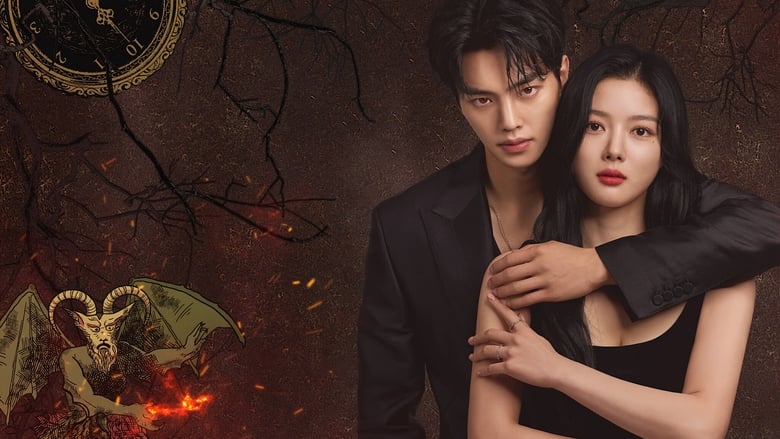

마이데몬
"A demon who lost his powers becomes a bodyguard to a demonic human."
My Demon - Symbolism & Philosophy
Symbols & Motifs
The Cross Tattoo
The cross tattoo on Gu-won's wrist symbolizes his demonic power, his life force, and the source of his immortality. It is the tool he uses to make contracts and collect souls. Its transfer to Do-hee represents their intertwined fates and his sudden vulnerability.
The tattoo is the central magical element of the plot. It physically moves from Gu-won's wrist to Do-hee's after he saves her from drowning, binding them together. He needs to hold her wrist to access his powers, creating both romantic and comedic tension. The tattoo's presence on Do-hee makes her a target while also being the key to Gu-won's survival.
The Demon's Watch
Gu-won's pocket watch is a symbol of his contracts and the finite time his human clients have left. It serves as a constant reminder of the deals he makes and the souls he is bound to collect after ten years. It represents his detachment and the transactional nature of his existence before meeting Do-hee.
The watch is frequently shown when Gu-won discusses or finalizes a contract with a human. When a contract's ten-year term is up, the watch signals that it is time to collect the soul. Its ticking is a countdown to damnation for his clients.
Fire
Fire symbolizes Gu-won's demonic nature, his destructive power, and his ultimate fate. It represents both his birth as a demon and the method of his fated extinction. When he breaks the ultimate rule by resurrecting Do-hee, he spontaneously combusts, fulfilling the prophecy of his demonic existence.
Fire appears throughout the series in connection with Gu-won's powers. He is born as a demon in a fiery rage after his human lover is killed. In the climax of Episode 15, after he saves Do-hee, he burns away into ashes, a visual representation of his self-immolation for love.
Philosophical Questions
Are humans inherently flawed, or are they led astray by external temptations?
The series explores this through Gu-won's very existence. He repeatedly states that his role is not to create evil, but to capitalize on the evil that already exists within human desires for greed, power, and revenge. The main human villain, Noh Suk-min, acts with extreme cruelty without any demonic influence, supporting Gu-won's cynical view. The show suggests that while supernatural forces might offer a contract, the choice to sign it—and the darkness that fuels that choice—is entirely human.
What is the true meaning of 'salvation'?
The series presents multiple forms of salvation. Initially, Gu-won's name is a pun on the Korean word for 'savior', and he literally saves Do-hee's life multiple times. However, the deeper exploration reveals that Do-hee is his salvation, saving him from a meaningless, eternal existence by teaching him to love. In the end, their salvation is mutual: he physically saves her from death, and she emotionally saves him from damnation. The series posits that salvation isn't a divine gift but something people, and even demons, can grant each other through love and sacrifice.
Can love truly conquer a predetermined fate?
The reincarnation plotline introduces a powerful element of tragic destiny. Gu-won and Do-hee's past-life counterparts were doomed, suggesting they are fated to repeat this tragedy. The series dedicates its second half to their struggle against this outcome. Gu-won's fear of hurting Do-hee and her determination to stay with him regardless of the consequences form the central conflict. The finale, where divine intervention grants them a happy ending, can be seen in two ways: either love did conquer fate by proving itself worthy of an exception, or fate was never truly fixed, and their choices were always the most powerful force at play.
Core Meaning
The core meaning of "My Demon" revolves around the themes of choice, salvation, and the transformative power of love. The series posits that fate is not a predetermined path but rather a culmination of the choices one makes. It explores the idea that even a being defined by damnation, like a demon, can find redemption and a form of salvation through genuine love and self-sacrifice. The narrative suggests that humanity, with all its flaws and desires, is what gives life meaning, and that true happiness is found not in eternal life or supernatural power, but in the finite, precious moments spent with a loved one. Ultimately, the series conveys that love is a force powerful enough to defy destiny, challenge the divine, and redefine one's very existence.