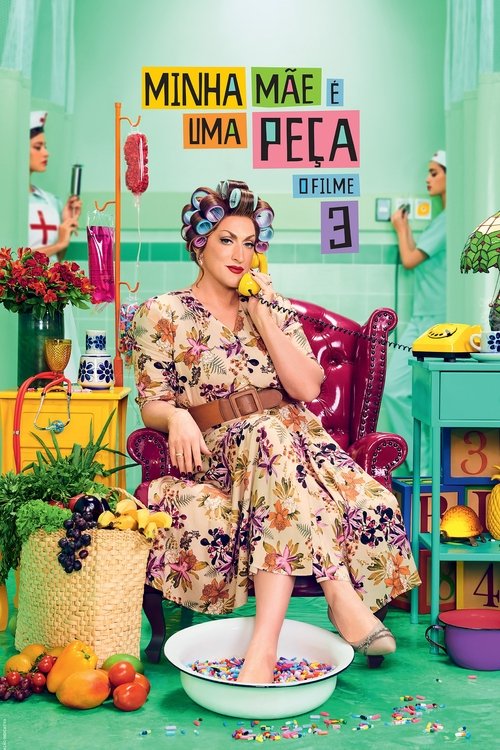
Minha Mãe é uma Peça 3: O Filme
Director: Susana Garcia
Cast: Paulo Gustavo, Mariana Xavier, Rodrigo Pandolfo, Herson Capri, Samantha Schmütz
My Mom Is a Character 3 — Movie Quotes
Memorable Quotes
Quando uma mãe perde um filho, todas as mães do mundo perdem um pouco também.
Context
This line, remembered from the previous films, underpins her dramatic reactions in the third installment. Her intense fear of 'losing' her children to their new lives is colored by this understanding of the deep connection between a mother and child.
Meaning
This quote, which translates to "When a mother loses a child, all the mothers in the world lose a little too," encapsulates the deep, universal empathy of motherhood that is central to Hermínia's character. Despite her comedic nature, she possesses profound emotional depth.
Tomou um picolé antes de dar pra ele, Marcelina?
Context
Dona Hermínia shouts this line at her daughter, Marcelina, immediately after Marcelina reveals that she is pregnant by a man she has only been dating for three months.
Meaning
Translating to "Did you have a popsicle before sleeping with him, Marcelina?", this is a classic example of Hermínia's unfiltered, critical, and hilarious way of reacting to shocking news. It blends her disapproval with absurd humor, showcasing her unique personality.
Rir é um ato de resistência.
Context
While not a direct quote from the film's dialogue, this sentiment is expressed in the emotional climax during Juliano's wedding. Dona Hermínia's speech is a defense of love and happiness (found through laughter and joy) against a prejudiced world.
Meaning
"To laugh is an act of resistance." This phrase, often cited by Paulo Gustavo, became a motto for his work and is the philosophical underpinning of the film series. It speaks to the power of humor to overcome prejudice, sadness, and adversity, which is a core message of the movie.
Explore More About This Movie
Dive deeper into specific aspects of the movie with our detailed analysis pages