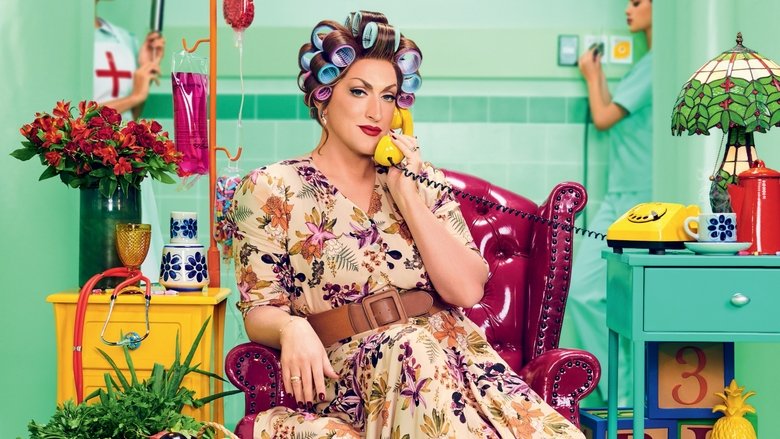
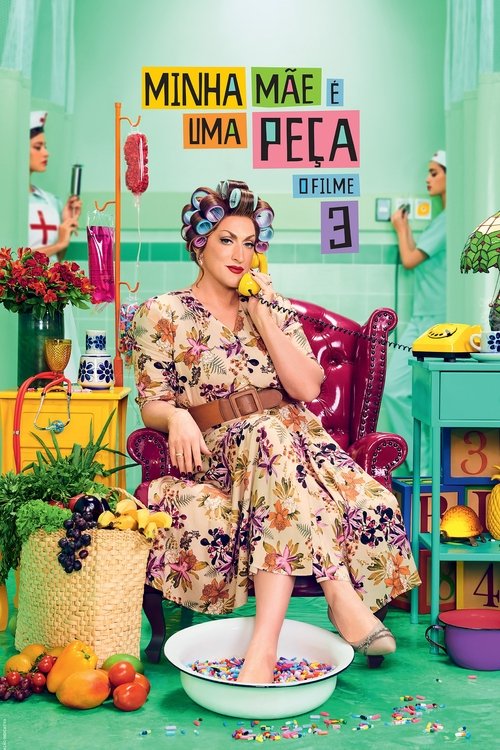
My Mom Is a Character 3
A whirlwind of heartfelt comedy where a mother's clinging love collides with the chaotic joy of her children's newfound independence.
My Mom Is a Character 3

My Mom Is a Character 3

Minha Mãe é uma Peça 3: O Filme

26 December 2019 Brazil 111 min ⭐ 8.2 (485)
Director: Susana Garcia
Cast: Paulo Gustavo, Mariana Xavier, Rodrigo Pandolfo, Herson Capri, Samantha Schmütz
Comedy
Empty Nest Syndrome Family Evolution and Acceptance Aging and Self-Rediscovery The Politics of Love
Budget: $2,000,000
Box Office: $39,273,021

Overview

In "My Mom Is a Character 3" (Minha Mãe é uma Peça 3), the fiercely loving and hilariously overbearing Dona Hermínia (Paulo Gustavo) faces her greatest challenge yet: the empty nest. After a health scare, she is confronted with two life-altering announcements from her children. Her son, Juliano (Rodrigo Pandolfo), is getting married to his boyfriend, Thiago (Lucas Cordeiro), and her daughter, Marcelina (Mariana Xavier), is pregnant with her first child.

As Hermínia grapples with her children's burgeoning independence, she tries to insert herself into every aspect of the wedding and baby preparations, leading to a series of comedic and touching confrontations. Feeling increasingly sidelined, she embarks on a trip to Los Angeles with a group of seniors to clear her head and find a new purpose. The film balances its signature chaotic humor with a poignant exploration of a mother's evolving role, celebrating love, family in all its forms, and the difficult but necessary process of letting go.
Core Meaning

The core message of "My Mom Is a Character 3" is a celebration of unconditional love and the inevitable, though often painful, evolution of family. Director Susana Garcia and writer-star Paulo Gustavo aimed to create a film that was not only a comedy but also a heartfelt homage to the enduring nature of the mother-child bond as it navigates new phases. The film posits that a family's love doesn't diminish as it expands with new members (spouses, grandchildren); it simply transforms. It champions the idea that acceptance and support are the cornerstones of a happy family, particularly highlighted through Dona Hermínia's wholehearted embrace of her son's gay marriage. Ultimately, the film suggests that a mother's purpose must also evolve from hands-on caregiver to a supportive presence, finding her own identity beyond her children.

Thematic DNA

Empty Nest Syndrome 35%
Family Evolution and Acceptance 30%
Aging and Self-Rediscovery 20%
The Politics of Love 15%

Empty Nest Syndrome

This is the central theme of the film. Dona Hermínia feels a profound sense of loneliness and loss of purpose as her children, Marcelina and Juliano, embark on their own independent lives with their partners. Her frantic attempts to control the wedding and pregnancy preparations are a direct result of her fear of becoming irrelevant in their lives. The film explores her emotional journey as she confronts the reality that her role as a full-time, hands-on mother is ending, and she must rediscover her own life and happiness.

Family Evolution and Acceptance

The film portrays the modern family as an ever-expanding and inclusive entity. Dona Hermínia's unconditional acceptance of her son Juliano's marriage to another man is a cornerstone of the plot. The narrative celebrates this union with joy and humor, treating it as a natural and happy progression of family life. This theme is further explored through Marcelina's pregnancy, which brings a new generation and a new son-in-law into the fold. The film's message is one of embracing change and loving family members for who they are.

Aging and Self-Rediscovery

With her children grown, Dona Hermínia is forced to confront her own aging and what the next chapter of her life will look like. The film uses humor to address common anxieties about getting older, such as health scares and feeling out of touch. Her trip to Los Angeles symbolizes a journey of self-rediscovery, an attempt to find joy and adventure outside of her identity as a mother. This theme highlights that personal growth is a lifelong process.

The Politics of Love

Paulo Gustavo himself described the film as his most autobiographical and political work. By placing a gay wedding at the center of a mainstream blockbuster comedy, the film makes a powerful statement about love and equality in a country grappling with homophobia. Dona Hermínia's emotional speech at the wedding, where she defends her son's right to happiness, serves as the film's political and emotional climax, advocating for love over prejudice.

Character Analysis

Dona Hermínia

Paulo Gustavo

Archetype: The Matriarch / Jester
Key Trait: Exuberantly Overbearing

Motivation

Her primary motivation is an overwhelming, and often suffocating, love for her children. She is driven by a deep-seated fear of being lonely and forgotten. Every action she takes, from meddling in wedding plans to faking a health crisis, stems from her desire to feel needed and central to her children's lives.

Character Arc

Dona Hermínia begins the film feeling lost and defined by her role as a mother. Her arc is one of reluctant acceptance and eventual transformation. She moves from desperately trying to control her children's lives to understanding that her role must change. Through the emotional journey of accepting her son's marriage and her daughter's pregnancy on their terms, she learns to let go. The film ends with her embracing her new roles as a grandmother and mother-in-law, finding a new, equally important place within the expanded family, while also taking steps to rediscover her own life.

Juliano

Rodrigo Pandolfo

Archetype: The Diplomat Son
Key Trait: Patient

Motivation

His main motivation is to marry the man he loves and to have his mother's support, but not her interference. He wants to navigate his wedding preparations with his fiancé, Thiago, and struggles to balance his mother's intense involvement with his own desires for a peaceful, happy start to his marriage.

Character Arc

Juliano's arc is about confidently stepping into adulthood and building a life with his partner. He has moved past needing his mother's approval for his sexuality and is now focused on the happiness of his own budding family. He learns to set boundaries with his mother, asserting his independence while still showing her love and patience. His wedding is the culmination of his journey toward self-assuredness.

Marcelina

Mariana Xavier

Archetype: The Independent Daughter
Key Trait: Headstrong

Motivation

Marcelina is motivated by the desire to prove to her mother, and to herself, that she is a capable adult. She wants to handle her pregnancy and the arrival of her baby without her mother's constant, critical oversight. She seeks independence and respect for her decisions.

Character Arc

Marcelina's arc centers on her transition into motherhood and her assertion of independence. Having often been the target of her mother's blunt criticisms, she is now determined to live her life and raise her child on her own terms. She evolves from being the daughter under Hermínia's thumb to a woman confident in her choices, even if they are unconventional.

Carlos Alberto

Herson Capri

Archetype: The Amiable Ex-Husband
Key Trait: Easygoing

Motivation

His motivation is to be close to his children and his soon-to-be-born grandchild. He wants a peaceful, friendly relationship with Hermínia and often acts as a mediator, trying to temper her extreme reactions and provide a voice of reason amidst the family turmoil.

Character Arc

Carlos Alberto's arc is more static, but he serves as a consistent, calming foil to Hermínia's chaos. In this film, his arc involves re-inserting himself into Hermínia's daily life by moving into the apartment next door. This proximity forces them to find a new, more mature, and supportive post-divorce relationship as they navigate the changes in their children's lives together, transitioning into their roles as co-grandparents.

Symbols & Motifs

The Empty Nest

Meaning:

The physical space of Dona Hermínia's apartment, once bustling with the chaos of her children, now represents her loneliness and the void left by their departure. It symbolizes her past identity as a full-time mother and the challenge she faces in filling that space with new meaning and purpose.

Context:

The film frequently shows Hermínia alone in her large apartment, trying to find things to do to fill the silence. Her ex-husband moving in next door is a further intrusion into this personal space, highlighting her struggle to redefine her home and her life now that the children have moved out.

The Wedding and the Baby

Meaning:

These two major life events symbolize the future and the unstoppable march of time. They are the catalysts for Hermínia's crisis but also represent the beautiful continuation and expansion of her family. They symbolize new beginnings, not just for her children, but ultimately for her as well, as she transitions into the new roles of mother-in-law and grandmother.

Context:

The entire plot revolves around the preparations for Juliano's wedding and Marcelina's baby shower. These events drive the conflict and comedy, as Hermínia tries to control them, but they ultimately lead to the film's emotional resolution where she accepts her new place within the growing family structure.

Los Angeles

Meaning:

The trip to Los Angeles represents a complete escape from Hermínia's familiar environment and maternal responsibilities. It symbolizes freedom, adventure, and the possibility of self-discovery in the third act of her life. It's a physical journey that mirrors her internal journey toward finding an identity outside of motherhood.

Context:

Feeling lost and rejected by her children, Dona Hermínia impulsively decides to join a seniors' tour to Los Angeles. The scenes filmed there show her having new experiences and briefly forgetting her troubles, highlighting her capacity for a life beyond her family drama.

Memorable Quotes

Quando uma mãe perde um filho, todas as mães do mundo perdem um pouco também.

— Dona Hermínia

Context:

This line, remembered from the previous films, underpins her dramatic reactions in the third installment. Her intense fear of 'losing' her children to their new lives is colored by this understanding of the deep connection between a mother and child.

Meaning:

This quote, which translates to "When a mother loses a child, all the mothers in the world lose a little too," encapsulates the deep, universal empathy of motherhood that is central to Hermínia's character. Despite her comedic nature, she possesses profound emotional depth.

Tomou um picolé antes de dar pra ele, Marcelina?

— Dona Hermínia

Context:

Dona Hermínia shouts this line at her daughter, Marcelina, immediately after Marcelina reveals that she is pregnant by a man she has only been dating for three months.

Meaning:

Translating to "Did you have a popsicle before sleeping with him, Marcelina?", this is a classic example of Hermínia's unfiltered, critical, and hilarious way of reacting to shocking news. It blends her disapproval with absurd humor, showcasing her unique personality.

Rir é um ato de resistência.

— Paulo Gustavo (as himself/embodying the spirit of his work)

Context:

While not a direct quote from the film's dialogue, this sentiment is expressed in the emotional climax during Juliano's wedding. Dona Hermínia's speech is a defense of love and happiness (found through laughter and joy) against a prejudiced world.

Meaning:

"To laugh is an act of resistance." This phrase, often cited by Paulo Gustavo, became a motto for his work and is the philosophical underpinning of the film series. It speaks to the power of humor to overcome prejudice, sadness, and adversity, which is a core message of the movie.

Philosophical Questions

What is the evolving role of a parent in an adult child's life?

The film delves into this question through Dona Hermínia's existential crisis. It explores the painful but necessary transition from a manager of a child's life to a supportive observer. The narrative questions how a parent, whose identity has been intrinsically linked to raising children, can find a new sense of purpose when that primary role becomes redundant. It suggests that the relationship must transform into one of mutual respect for boundaries, where love is shown not through control, but through support and trust.

Does unconditional love require complete understanding?

Through Dona Hermínia, the film explores the idea that a parent's love can be fierce and unwavering even if they don't fully understand their children's choices or lifestyles. Hermínia may not grasp all the nuances of her children's modern lives, but her fundamental love for them overrides any prejudice or confusion. Her powerful speech at the wedding champions her son's happiness over societal norms, suggesting that the highest form of love is the unwavering desire for a loved one's well-being, transcending personal biases or lack of understanding.

Alternative Interpretations

While the film is largely received as a straightforward, heartfelt comedy, its most debated element offers room for alternative interpretations: the absence of a kiss at Juliano's wedding. The official interpretation, stated by Paulo Gustavo, was that this was a creative choice to make the film's message of love universal and palatable to the widest possible audience, focusing on the emotion of the union rather than a single physical act. However, some critics and audience members interpreted this omission as a form of self-censorship or a missed opportunity to fully normalize gay affection on screen for a massive audience. This perspective suggests that, in an effort to be universally appealing, the film stopped short of a truly radical act of representation. Therefore, the wedding scene can be interpreted in two ways: either as a strategic and emotionally focused message of inclusion or as a compromise that highlights the persistent challenges of depicting unabashed queer love in mainstream commercial cinema.

Cultural Impact

"My Mom Is a Character 3" was not just a film but a cultural phenomenon in Brazil. Shattering box office records, it became the highest-grossing Brazilian film of all time, a testament to the deep connection audiences felt with the character of Dona Hermínia. The film's success demonstrated the immense commercial power of national comedies that resonate with the everyday lives of Brazilians. Critically, while some reviewers found the humor formulaic, most praised its emotional depth and ability to blend laughter with tears. The film's significant impact lies in its mainstreaming of LGBTQ+ issues. By centering the plot around a joyous gay wedding, it presented a positive and celebratory image of a same-sex couple to millions of viewers in a blockbuster format. This was a powerful statement in a socially conservative climate. Dona Hermínia became an icon, a representation of the Brazilian mother, and following the tragic death of Paulo Gustavo in 2021, the film has been imbued with even greater emotional significance, standing as the final and most successful chapter of his legacy.

Audience Reception

The audience reception for "My Mom Is a Character 3" was overwhelmingly positive, as evidenced by its record-breaking box office numbers. Viewers praised the film for its perfect blend of laugh-out-loud comedy and genuine, tear-jerking emotion. Many felt a strong personal connection to Dona Hermínia, seeing reflections of their own mothers, aunts, and grandmothers in her over-the-top but deeply loving behavior. The portrayal of family dynamics was lauded as relatable and authentic. The main point of praise was the film's emotional core, particularly the moving speech at the wedding that celebrated love and family. The primary point of criticism among some viewers was the decision to omit the kiss between Juliano and his husband, which some felt was a concession. Overall, however, the audience verdict was that it was a fitting, hilarious, and deeply moving conclusion to a beloved trilogy.

Interesting Facts

  • The film became the highest-grossing movie in Brazilian history, earning over R$143 million.
  • Paulo Gustavo's real-life husband, Thales Bretas, and their twin sons, Gael and Romeu, make a cameo appearance during the scenes shot in Los Angeles.
  • The film is considered Paulo Gustavo's most autobiographical and political work, as it was directly inspired by his own marriage and his relationship with his parents.
  • A decision was made by Paulo Gustavo not to include a kiss between the grooms at the wedding, with the intention of focusing on the broader theme of love and family acceptance in a way he felt would be accessible to a wide, popular audience.
  • To evolve the character with the times, the screenplay consciously moved away from the gordofóbic and homophobic jokes present in the earlier films, focusing instead on humor derived from aging and family dynamics.
  • Before his passing, Paulo Gustavo and director Susana Garcia had written scripts for four seasons of a "Minha Mãe é uma Peça" TV series for Globoplay, which would have explored Dona Hermínia's backstory.

Easter Eggs

Cameo by Paulo Gustavo's real family.

During Dona Hermínia's trip to Los Angeles, she briefly interacts with a family in a park. This family is played by Paulo Gustavo's actual husband, Thales Bretas, and their infant twin sons, Romeu and Gael. This serves as a deeply personal and touching tribute, blurring the lines between the fictional character inspired by his mother and his own life as a father and husband, reinforcing the film's central theme of family love.

⚠️ Spoiler Analysis

Click to reveal detailed analysis with spoilers

Frequently Asked Questions

Explore More About This Movie

Dive deeper into specific aspects of the movie with our detailed analysis pages

Comments (0)

Leave a comment

No comments yet. Be the first to share your thoughts!