Minha Mãe é uma Peça: O Filme
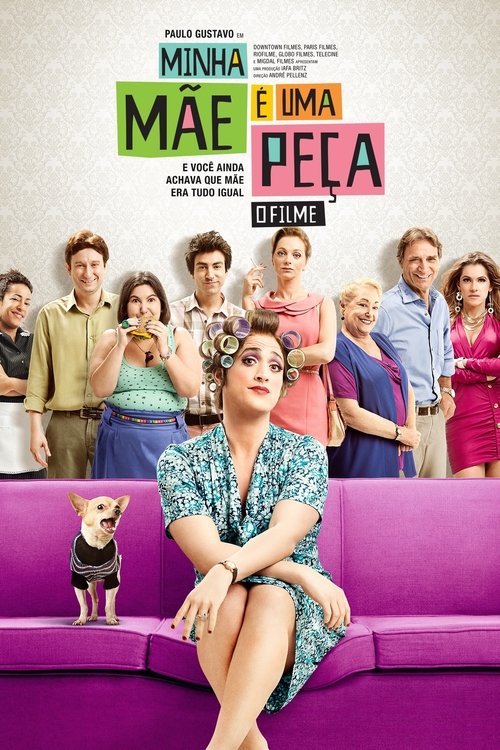
"And you still thought that mothers were all the same."
My Mom Is a Character - Symbolism & Philosophy
Symbols & Motifs
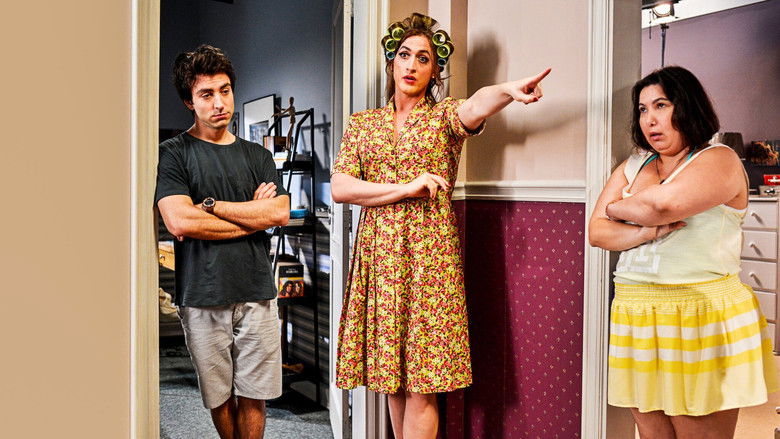
The Bobbins (Hair Rollers)
They symbolize Hermínia's lack of vanity and her total immersion in domestic life. She is constantly 'in process,' preparing for a life or an event that she rarely gets to enjoy herself because she is too busy serving others.
Hermínia wears them throughout the house and even in semi-public settings, marking her as the archetype of the 'dona de casa' (housewife) who prioritizes practicality over appearance.
The Kitchen
Represents Hermínia's domain of power and control. It is where she nurtures but also where she dictates the rules. Being told to 'get out of the kitchen' or leaving it signifies her loss of purpose.
Many of the most intense arguments and monologues happen in this space, establishing it as the emotional command center of the family.
Aunt Zélia's Apartment
A sanctuary of the past. It represents a space where Hermínia can be a niece and a child again, rather than just a mother. It allows for the introspection needed for her character arc.
Hermínia escapes here to hide from her children, using the location to recount her memories and validate her own life story.
Philosophical Questions
Is maternal love inherently possessive?
The film asks whether it is possible to love deeply without controlling the object of that love. Hermínia's journey is about disentangling care from control, suggesting that true maternal love eventually requires the painful act of letting go.
How do family roles construct our identity?
Hermínia has no identity outside of 'mother' and 'ex-wife.' The film explores the existential crisis that occurs when these roles are threatened, questioning who a person is when they are no longer needed by others.
Core Meaning
At its heart, the film is a tribute to the unrecognized labor of motherhood. Director André Pellenz and creator Paulo Gustavo use comedy as a vehicle to explore the empty nest syndrome and the identity crisis mothers face when their children become adults. The film argues that the annoying, repetitive, and controlling behaviors of mothers often stem from an intense, overwhelming love and a fear of being left behind. It validates the maternal experience, turning a specific Brazilian archetype into a universal symbol of devotion.