Ma nuit chez Maud
My Night at Maud's - Symbolism & Philosophy
Symbols & Motifs
The Snow
Symbolizes isolation and the suspension of time. The snowstorm cuts Jean-Louis off from the outside world and his routine, forcing him into the intimate, enclosed space of Maud's apartment where his principles can be tested.
The snow begins falling when Jean-Louis is at Maud's, preventing him from driving home and necessitating the titular "night."
Pascal's <i>Pensées</i>
Represents the intellectual framework Jean-Louis imposes on his life. It is his rulebook for navigating chaos, yet the film suggests he misunderstands Pascal by using the text to avoid life rather than engage with it.
Jean-Louis is seen reading the book in a bookstore and discusses it extensively with Vidal and Maud as a justification for his worldview.
The Bed
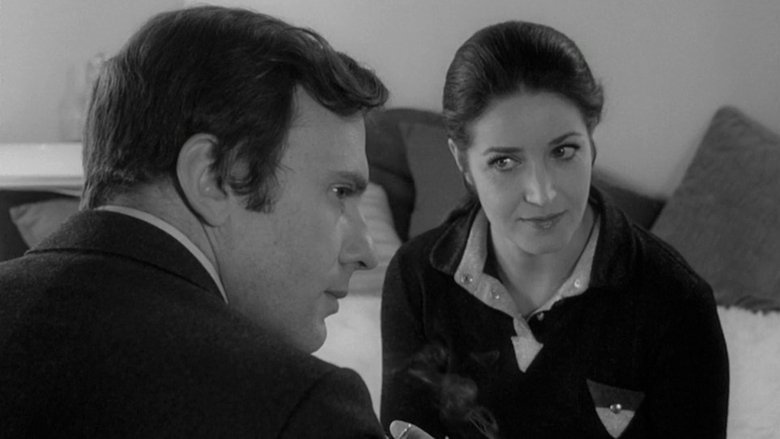
A stage for temptation and the battlefield of the mind. Unlike typical cinematic beds used for sex, here it is used for conversation, emphasizing that for these characters, the intellect is the primary erogenous zone.
Maud spends the central scene lying in bed while Jean-Louis sits awkwardly in a chair and later lies clothed on top of the blanket, physically manifesting his barrier against intimacy.
Philosophical Questions
Can faith be rationalized?
The film asks if belief in God (or love) can be the result of a mathematical calculation (Pascal's Wager) or if it requires a leap of faith that defies logic. Jean-Louis tries to use logic to control his fate, but the film suggests life is governed by chance.
Is inaction a moral choice?
Jean-Louis prides himself on what he doesn't do (sleep with Maud). The film questions whether morality is defined by the avoidance of sin or the active pursuit of truth and connection.
Do we choose who we love?
Jean-Louis 'decides' to marry Françoise before meeting her. The film explores the tension between this willed, calculated love and the organic, spontaneous connection he feels with Maud.
Core Meaning
At its heart, My Night at Maud's is a cinematic illustration of Pascal's Wager applied to romance and life choices. Rohmer uses the film to critique the way intellectuals rationalize their instincts. Jean-Louis justifies his rejection of the sensual, intellectual Maud in favor of the "safe" Françoise not through divine guidance, but through a calculated bet on salvation and social respectability.
The film exposes the irony of moral judgment. Jean-Louis seeks a "pure" partner to fit his Catholic self-image, only to discover that life is too complex for binary categories of saint and sinner. The core message suggests that rigid adherence to abstract principles often serves as a mask for fear of intimacy and life's chaotic reality.