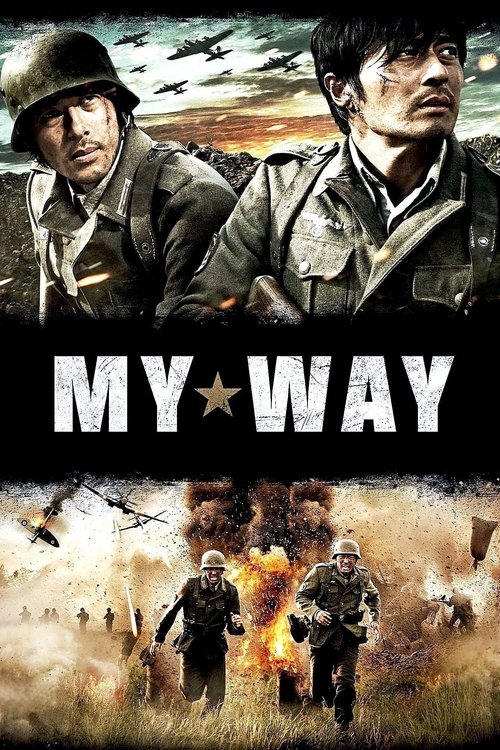
My Way
A sweeping war epic's raw fury entwined with the defiant pulse of two marathon runners, charting a brutal odyssey where rivalry bleeds into brotherhood against the vast, unforgiving canvas of World War II.
My Way
My Way

마이웨이

"They met as enemies, but fate brought them together."

21 December 2011 South Korea 137 min ⭐ 7.9 (423)
Director: Kang Je-kyu
Cast: Jang Dong-gun, Joe Odagiri, Fan Bingbing, Kim In-kwon, Lee Yeon-hee
Drama War History Action
Humanity Amidst Inhumanity The Futility and Absurdity of War Rivalry and Brotherhood Nationalism and Identity
Budget: $25,500,000
Box Office: $16,653,488

My Way - Ending Explained

⚠️ Spoiler Analysis

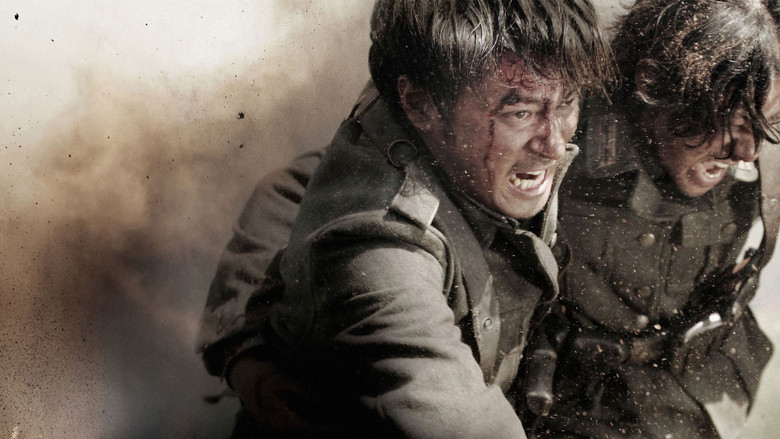
The entire narrative of "My Way" is an odyssey of survival that transforms bitter enemies into brothers. After being conscripted into the Japanese army following a riot, Kim Jun-shik finds himself under the command of his marathon rival, Tatsuo Hasegawa, at the Battle of Nomonhan. They are both captured by the Red Army and sent to a brutal Soviet POW camp. There, Jun-shik's refusal to kill a defeated Tatsuo marks the first major turning point in their relationship.

Forced to fight for the Soviets, they are subsequently captured by the Germans. During their escape attempt from the German lines, Tatsuo is wounded, and Jun-shik cares for him, solidifying their bond. They are eventually separated but reunite one last time as soldiers in the German Wehrmacht, tasked with defending Omaha Beach on D-Day in 1944. As the Allied invasion begins, they decide to desert and run towards Cherbourg. However, an explosion mortally wounds Jun-shik.

The climax reveals the ultimate meaning of their journey. To save Tatsuo from being executed as a Japanese soldier by the advancing Americans, Jun-shik swaps their identification tags, telling Tatsuo, "he is now Jun-shik." Jun-shik dies in Tatsuo's arms. The film's epilogue takes place at the 1948 London Olympics, where Tatsuo, having survived the war under his friend's name, competes in the marathon as 'Jun-shik Kim'. He recalls their first meeting as children and monologues that he was always happy to have found a true running mate, revealing that their bond transcended the hatred imposed upon them by the war.

Alternative Interpretations

One way to interpret "My Way" is as a deeply personal melodrama that uses the epic canvas of World War II as a backdrop for a story about two individuals. From this perspective, the historical accuracy and improbable coincidences are secondary to the emotional journey of rivalry turning into brotherhood. The war is less the subject and more a crucible designed to forge their bond.

Alternatively, the film can be read as a political allegory for Korean-Japanese relations. The journey from hatred and conflict to mutual sacrifice and the merging of identities can be seen as a hopeful, if idealistic, vision for the future of the two nations. Tatsuo's redemption and his decision to live as Jun-shik could symbolize Japan's need to acknowledge the past and honor the sacrifices of its victims to move forward.

A more critical interpretation views the film as a technically impressive but ultimately hollow spectacle. In this reading, the focus on large-scale, bombastic action sequences overwhelms the character development, making their transformation feel forced and unearned. The incredible unlikelihood of their journey is not seen as symbolic, but as a flaw in a script that prioritizes shocking scenarios over believable storytelling.