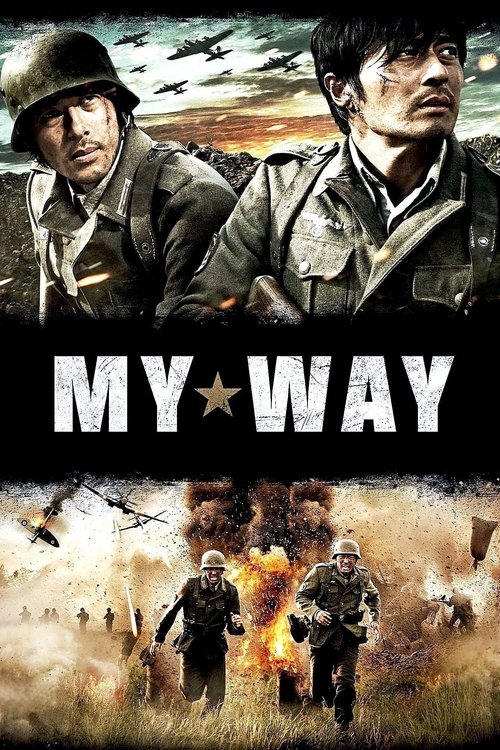
My Way
마이웨이
"They met as enemies, but fate brought them together."
Overview
Set during the Japanese occupation of Korea, "My Way" chronicles the tumultuous journey of two young men, Kim Jun-shik (Jang Dong-gun), a Korean runner with Olympic dreams, and Tatsuo Hasegawa (Joe Odagiri), the grandson of a high-ranking Japanese official and a fierce rival marathoner. Their shared passion for running is quickly overshadowed by the escalating tensions of their nations and the outbreak of World War II.
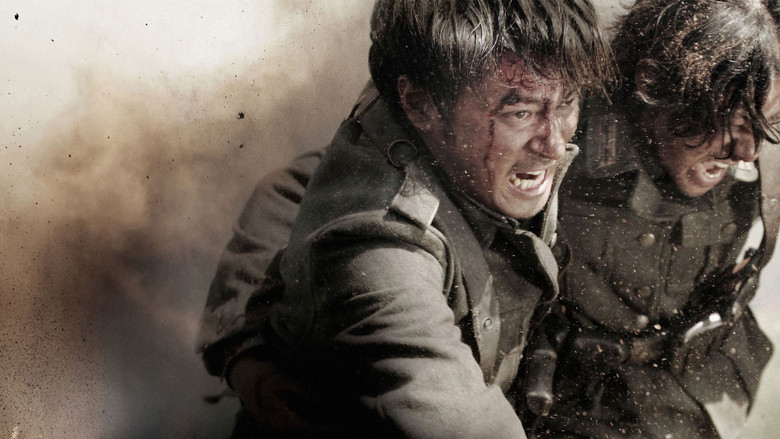
A riot following a contentious marathon trial leads to Jun-shik and other Koreans being forcibly conscripted into the Imperial Japanese Army. Fate brings the two rivals together on the battlefield at the Battle of Nomonhan, with Tatsuo as Jun-shik's ruthless commander. Their journey of survival forces them through an unbelievable odyssey, as they are captured by the Soviets, then the Germans, and are conscripted into each successive army. Spanning from the battlefields of Manchuria to the icy POW camps of the Soviet Union and ultimately to the beaches of Normandy on D-Day, their bitter animosity is stripped away by the horrors of war, forging an unlikely and profound bond of brotherhood in their shared struggle for survival.

Core Meaning
Director Kang Je-kyu intended "My Way" to be an exploration of how humanity can persevere and forge connections even in the most extreme circumstances of war. The film's core message is a call for reconciliation, particularly between Korea and Japan, two nations with a painful shared history. By stripping the two protagonists of their national identities and forcing them to rely on each other, the film argues that beneath the uniforms and ideologies, shared humanity is the most fundamental truth. It questions the nature of enmity and friendship, suggesting that war, not inherent differences, is the true enemy that twists individuals into aggressors and victims. The title itself, as explained by the director, refers not to the famous song but to the personal path and dream that each character strives to follow, even when swept up by the tides of history.
Thematic DNA
Humanity Amidst Inhumanity
The film relentlessly portrays the brutality of war across multiple fronts, showcasing the dehumanizing effect it has on soldiers and prisoners. Amidst the carnage, the central relationship between Jun-shik and Tatsuo evolves from hatred to a deep, sacrificial bond. Jun-shik consistently retains his compassion, refusing to kill Tatsuo in a POW camp fight and later caring for him when he's injured. This theme posits that even when stripped of everything, the core of one's humanity and the capacity for connection can survive.
The Futility and Absurdity of War
By having the characters fight under three different flags—Japanese, Soviet, and German—the film underscores the arbitrary nature of wartime allegiances. The soldiers are pawns to ideologies they barely understand, their lives consumed by conflicts far beyond their control. The endless, chaotic battle scenes are depicted as a 'meat grinder', emphasizing senseless slaughter over glory and highlighting war's ultimate futility.
Rivalry and Brotherhood
The narrative is framed by the rivalry between Jun-shik and Tatsuo as marathon runners. This initial competition, rooted in national pride and personal ambition, serves as the foundation for their relationship. As they endure shared suffering as prisoners and soldiers, their dynamic transforms. The rivalry that once defined them becomes the very thing that connects them, evolving into a powerful brotherhood where they are willing to sacrifice everything for one another.
Nationalism and Identity
The film begins with stark national identities: Jun-shik as the oppressed Korean and Tatsuo as the proud Japanese colonizer. Tatsuo, in particular, is a fierce nationalist who believes in the superiority of his empire. War systematically dismantles these identities. By wearing the uniforms of their enemies, their sense of self is blurred. The film suggests that nationalism is a construct that dissolves in the face of the universal human instinct to survive, replaced by a more fundamental identity as simply a human being.
Character Analysis
Kim Jun-shik
Jang Dong-gun
Motivation
Initially, his motivation is to become an Olympic marathon runner. As he is plunged into war, his motivation shifts to pure survival and protecting his fellow Koreans. Ultimately, his deepest motivation is his profound bond with Tatsuo, compelling him to save his former enemy's life.
Character Arc
Jun-shik begins as a talented and hopeful Korean marathon runner living under Japanese occupation, driven by a simple dream. Despite being stripped of his dream and forced into war, he never loses his core humanity and compassion. His arc is not about changing who he is, but about maintaining his integrity against all odds. He evolves from being Tatsuo's rival to his savior and brother, ultimately sacrificing his life and identity to ensure his friend's survival.
Tatsuo Hasegawa
Joe Odagiri
Motivation
His initial motivation is to uphold the honor of the Japanese Empire and defeat his Korean rival. This is replaced by the raw will to survive. By the end, his motivation is to honor the memory and sacrifice of Jun-shik, the man who saved him.
Character Arc
Tatsuo starts as a privileged, arrogant, and fierce Japanese nationalist, embodying the role of the colonizer and aggressor. His worldview is shattered by the horrors of war. As a Japanese commander, he is ruthless, but after being captured and becoming a POW himself, he experiences the same suffering he once inflicted. This humbling experience breaks down his nationalist pride, allowing him to see Jun-shik as a fellow human being. His arc is one of complete transformation, from a hateful rival to a devoted friend who honors Jun-shik's memory by taking his name and fulfilling his dream.
Shirai
Fan Bingbing
Motivation
Her sole motivation is to avenge the death of her family by killing as many Japanese soldiers as possible.
Character Arc
Shirai is a Chinese sniper whose family was killed by the Japanese. She is introduced as a hardened warrior seeking revenge. Her arc is brief but impactful. After being captured, she finds common cause with the Korean conscripts who also suffer under Japanese command. She helps Jun-shik escape and dies heroically, representing the countless civilians caught in the crossfire of imperial ambitions. Her role was criticized by some as being too brief and underdeveloped.
Lee Jong-dae
Kim In-kwon
Motivation
His motivation transforms from simple friendship and survival to gaining power and inflicting revenge within the brutal POW camp system.
Character Arc
Jong-dae begins as Jun-shik's loyal and somewhat comical friend. After being conscripted and later captured by the Soviets, his character takes a dark turn. To survive and gain power within the POW camp, he collaborates with the Soviets, becoming a cruel taskmaster to his former Japanese captors. His arc is a tragic exploration of how war can corrupt a good person, forcing them to make inhuman choices to survive.
Symbols & Motifs
Marathon Running
Marathon running symbolizes the characters' dreams, personal identity, and enduring spirit. For Jun-shik, it represents his hope and a way to bring pride to his nation. For Tatsuo, it's a measure of superiority and honor. Throughout their ordeal, the act of running becomes a metaphor for survival itself—a grueling, long-distance journey of endurance against impossible odds.
The film opens and closes with the theme of running. It's the basis of their initial rivalry in Japanese-occupied Korea. Their final conversation before Jun-shik's death is about running together again. The film's epilogue shows Tatsuo competing in the 1948 Olympics under Jun-shik's name, fulfilling his friend's dream and symbolizing the complete merging of their identities.
Changing Uniforms
The progression of uniforms—from Japanese to Soviet to German—symbolizes the loss of national identity and the absurdity of war. The uniforms represent the warring ideologies that claim the characters' lives, but they become meaningless shells. The men inside remain the same, forced into conflicts that are not their own. It visually represents them being stripped of their initial loyalties until their only loyalty is to each other.
The characters are first seen in civilian clothes, then in Japanese Imperial Army uniforms. After being captured at Nomonhan, they are forced into Soviet Red Army uniforms to fight the Germans. Finally, after being captured by the Wehrmacht, they are made to wear German uniforms and defend the beaches of Normandy.
Identification Tags
The identification tags represent a person's official identity—their name, their nationality, their life. The final exchange of these tags is the ultimate act of sacrifice and the symbolic merging of two souls, transcending race and past enmity.
In the final moments on Normandy beach, as American paratroopers approach, Jun-shik knows that Tatsuo, as a Japanese soldier, will likely be killed immediately. He forcibly swaps his own dog tags with Tatsuo's, giving his friend his Korean identity to save his life. This act allows Tatsuo to survive the war and live on as 'Jun-shik Kim'.
Memorable Quotes
He is now Jun-shik.
— Kim Jun-shik
Context:
On the beaches of Normandy, Jun-shik is mortally wounded by shrapnel. As American paratroopers close in, he takes his own identification tags and puts them on Tatsuo, uttering these words before dying.
Meaning:
This is Jun-shik's final act of sacrifice. By giving Tatsuo his identity, he saves his friend's life, as an arriving American soldier would likely execute a Japanese officer. It represents the complete transfer of identity and the culmination of their journey from enemies to brothers, where one's life is indistinguishable from the other's.
When I first met him, I was secretly happy to have found someone who could be his running mate.
— Tatsuo Hasegawa (monologue)
Context:
This is part of a voice-over monologue from an older Tatsuo, now living as Jun-shik Kim, as he reflects on his past during the 1948 London Olympics. The film flashes back to their first race as children.
Meaning:
This final line reframes their entire relationship. It reveals that beneath the layers of nationalistic hatred and fierce rivalry, Tatsuo always felt a deep connection and respect for Jun-shik's talent. It suggests their friendship was fated, and that the political circumstances were what forced them into conflict.
Philosophical Questions
What defines a person's identity when stripped of nationality, ideology, and purpose?
The film systematically removes every external marker of identity from Jun-shik and Tatsuo. They lose their homes, their dreams, and are forced to shed their national allegiances by wearing the uniforms of three different armies. In this void, the film suggests that what remains is a core humanity—the capacity for empathy, loyalty, and sacrifice. Their ultimate identity is not as 'Korean' or 'Japanese', but as friends bound by shared experience.
Is enmity a product of personal choice or political circumstance?
The initial hatred between the protagonists is fueled by the political reality of the Japanese occupation of Korea. Tatsuo's monologue at the end reveals that he felt a connection to Jun-shik even as a child, suggesting their rivalry was a construct of their environment. The film explores how large-scale political conflicts create enemies out of individuals who might otherwise have been friends, arguing that true animosity is often imposed by external forces rather than born from the heart.
Can one find individual meaning and purpose amidst the chaotic indifference of war?
The film's title, "My Way," points to this question directly. Both characters start with a clear path: to be the best marathon runner. War obliterates these paths. For much of the film, their only purpose is to survive the next battle. However, by the end, they find a new, shared purpose in ensuring each other's survival. Jun-shik's final act gives Tatsuo a new path—to live for both of them, thereby finding profound meaning in an otherwise meaningless conflict.
Alternative Interpretations
One way to interpret "My Way" is as a deeply personal melodrama that uses the epic canvas of World War II as a backdrop for a story about two individuals. From this perspective, the historical accuracy and improbable coincidences are secondary to the emotional journey of rivalry turning into brotherhood. The war is less the subject and more a crucible designed to forge their bond.
Alternatively, the film can be read as a political allegory for Korean-Japanese relations. The journey from hatred and conflict to mutual sacrifice and the merging of identities can be seen as a hopeful, if idealistic, vision for the future of the two nations. Tatsuo's redemption and his decision to live as Jun-shik could symbolize Japan's need to acknowledge the past and honor the sacrifices of its victims to move forward.
A more critical interpretation views the film as a technically impressive but ultimately hollow spectacle. In this reading, the focus on large-scale, bombastic action sequences overwhelms the character development, making their transformation feel forced and unearned. The incredible unlikelihood of their journey is not seen as symbolic, but as a flaw in a script that prioritizes shocking scenarios over believable storytelling.
Cultural Impact
"My Way" was a hugely ambitious project in the history of South Korean cinema, representing a push towards creating internationally appealing blockbusters with pan-Asian casts and epic, continent-spanning stories. It was director Kang Je-kyu's follow-up to his massively successful Korean War epic "Taegukgi," and expectations were incredibly high.
The film deliberately tackles the historically fraught relationship between Korea and Japan, a sensitive topic in both nations. Kang Je-kyu has stated his goal was to foster a sense of reconciliation and explore a path to a better future by focusing on the friendship between a Korean and a Japanese man. However, this ambition did not translate into success. The film received a lukewarm response and performed poorly at the box office in both Korea and Japan, suggesting that audiences may not have been ready for its message or that the painful historical context was still too raw. Critics were divided, with many praising the spectacular, brutal, and technically impressive battle sequences but criticizing the film for being emotionally hollow, overly sentimental, or having a weak script.
Audience Reception
Audience reception for "My Way" was generally mixed, and it was considered a commercial failure in its home country of South Korea. Many viewers praised the film's immense scale, comparing its visceral and brutal battle sequences favorably to Hollywood productions like "Saving Private Ryan". The technical aspects, including cinematography and special effects in the war scenes, were often highlighted as stunning and horrifyingly realistic. However, a common point of criticism was that the emotional core of the story felt underdeveloped and that the film prioritized spectacle over character depth. Some viewers found the repeated, improbable reunions of the two protagonists to be contrived and felt the narrative was emotionally manipulative. Despite the box office failure, the film has gained a following among fans of the war genre for its epic scope and intense action.
Interesting Facts
- With a budget of ₩28 billion (approximately US$24 million), "My Way" was one of the most expensive South Korean films ever produced at the time of its release.
- The film is inspired by the story of Yang Kyoumjong, a Korean soldier who was allegedly conscripted into the Japanese, Soviet, and German armies before being captured by Allied forces at Normandy. However, the historical accuracy and even the existence of Yang Kyoumjong are debated by historians, with some believing the story is apocryphal.
- Director Kang Je-kyu decided to make the film after watching an SBS documentary about the Korean soldier found at Normandy, which moved him deeply.
- The large-scale battle scenes, including the Normandy beach landing, were filmed in Latvia.
- The Soviet BT-5 and BT-7 tanks depicted in the film were custom-built replicas based on the chassis of British FV432 armored personnel carriers.
- Despite its massive budget and pan-Asian cast (including stars from Korea, Japan, and China), the film was a box office flop in South Korea, failing to recoup its costs.
⚠️ Spoiler Analysis
Click to reveal detailed analysis with spoilers
Frequently Asked Questions
Explore More About This Movie
Dive deeper into specific aspects of the movie with our detailed analysis pages
Comments (0)
No comments yet. Be the first to share your thoughts!