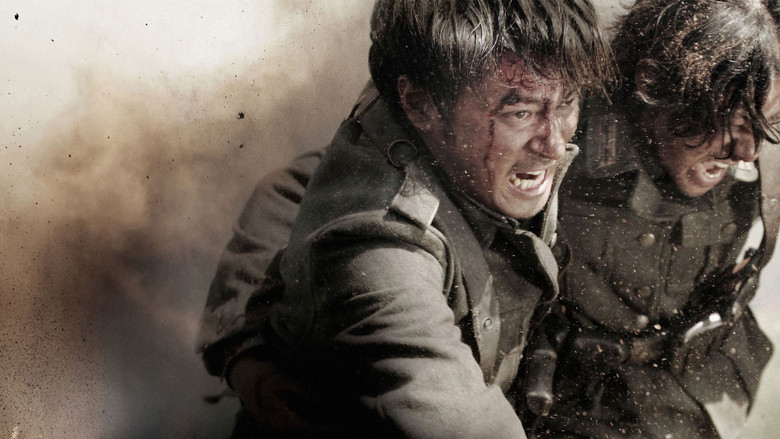
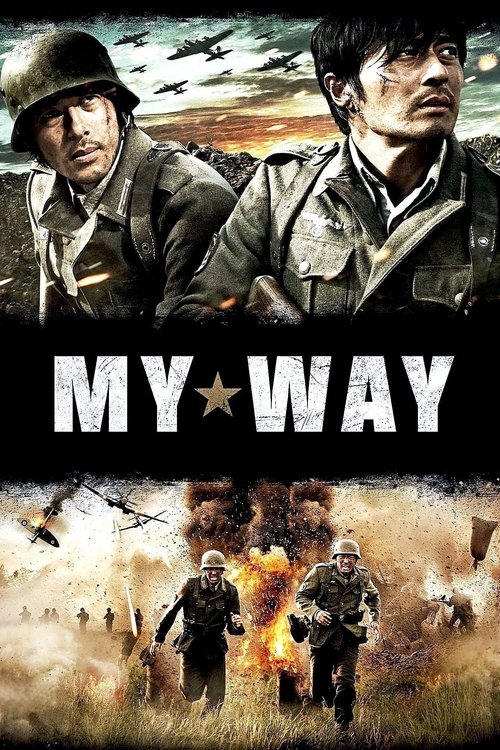
마이웨이
"They met as enemies, but fate brought them together."
My Way - Symbolism & Philosophy
Symbols & Motifs
Marathon Running
Marathon running symbolizes the characters' dreams, personal identity, and enduring spirit. For Jun-shik, it represents his hope and a way to bring pride to his nation. For Tatsuo, it's a measure of superiority and honor. Throughout their ordeal, the act of running becomes a metaphor for survival itself—a grueling, long-distance journey of endurance against impossible odds.
The film opens and closes with the theme of running. It's the basis of their initial rivalry in Japanese-occupied Korea. Their final conversation before Jun-shik's death is about running together again. The film's epilogue shows Tatsuo competing in the 1948 Olympics under Jun-shik's name, fulfilling his friend's dream and symbolizing the complete merging of their identities.
Changing Uniforms
The progression of uniforms—from Japanese to Soviet to German—symbolizes the loss of national identity and the absurdity of war. The uniforms represent the warring ideologies that claim the characters' lives, but they become meaningless shells. The men inside remain the same, forced into conflicts that are not their own. It visually represents them being stripped of their initial loyalties until their only loyalty is to each other.
The characters are first seen in civilian clothes, then in Japanese Imperial Army uniforms. After being captured at Nomonhan, they are forced into Soviet Red Army uniforms to fight the Germans. Finally, after being captured by the Wehrmacht, they are made to wear German uniforms and defend the beaches of Normandy.
Identification Tags
The identification tags represent a person's official identity—their name, their nationality, their life. The final exchange of these tags is the ultimate act of sacrifice and the symbolic merging of two souls, transcending race and past enmity.
In the final moments on Normandy beach, as American paratroopers approach, Jun-shik knows that Tatsuo, as a Japanese soldier, will likely be killed immediately. He forcibly swaps his own dog tags with Tatsuo's, giving his friend his Korean identity to save his life. This act allows Tatsuo to survive the war and live on as 'Jun-shik Kim'.
Philosophical Questions
What defines a person's identity when stripped of nationality, ideology, and purpose?
The film systematically removes every external marker of identity from Jun-shik and Tatsuo. They lose their homes, their dreams, and are forced to shed their national allegiances by wearing the uniforms of three different armies. In this void, the film suggests that what remains is a core humanity—the capacity for empathy, loyalty, and sacrifice. Their ultimate identity is not as 'Korean' or 'Japanese', but as friends bound by shared experience.
Is enmity a product of personal choice or political circumstance?
The initial hatred between the protagonists is fueled by the political reality of the Japanese occupation of Korea. Tatsuo's monologue at the end reveals that he felt a connection to Jun-shik even as a child, suggesting their rivalry was a construct of their environment. The film explores how large-scale political conflicts create enemies out of individuals who might otherwise have been friends, arguing that true animosity is often imposed by external forces rather than born from the heart.
Can one find individual meaning and purpose amidst the chaotic indifference of war?
The film's title, "My Way," points to this question directly. Both characters start with a clear path: to be the best marathon runner. War obliterates these paths. For much of the film, their only purpose is to survive the next battle. However, by the end, they find a new, shared purpose in ensuring each other's survival. Jun-shik's final act gives Tatsuo a new path—to live for both of them, thereby finding profound meaning in an otherwise meaningless conflict.
Core Meaning
Director Kang Je-kyu intended "My Way" to be an exploration of how humanity can persevere and forge connections even in the most extreme circumstances of war. The film's core message is a call for reconciliation, particularly between Korea and Japan, two nations with a painful shared history. By stripping the two protagonists of their national identities and forcing them to rely on each other, the film argues that beneath the uniforms and ideologies, shared humanity is the most fundamental truth. It questions the nature of enmity and friendship, suggesting that war, not inherent differences, is the true enemy that twists individuals into aggressors and victims. The title itself, as explained by the director, refers not to the famous song but to the personal path and dream that each character strives to follow, even when swept up by the tides of history.