哪吒之魔童降世
"Fight your fate"
Ne Zha - Symbolism & Philosophy
Symbols & Motifs
Chaos Pearl (Spirit Pearl and Demon Orb)
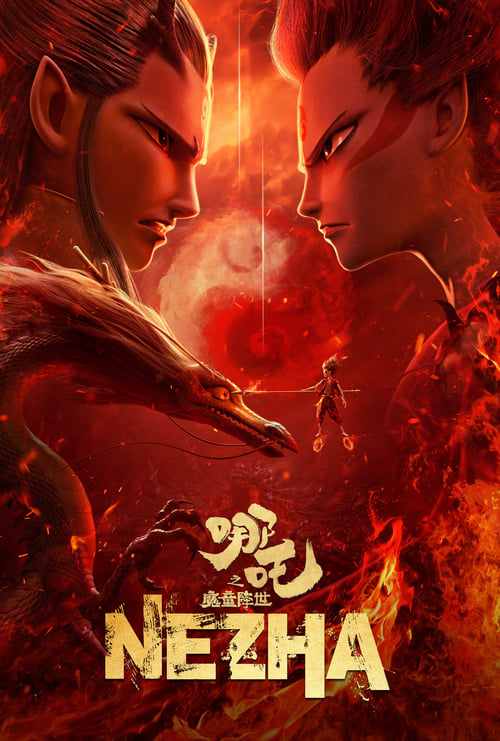
The Chaos Pearl, split into two, represents the concept of Yin and Yang—the inherent duality of good and evil within a single entity. It symbolizes that no one is purely good or purely evil. Ne Zha (Demon Orb) has the capacity for great heroism, while Ao Bing (Spirit Pearl) is pushed towards villainy. Their union at the end signifies the restoration of balance and the idea that these forces are interconnected.
The film's entire premise is built on the separation of the Chaos Pearl by Yuanshi Tianzun. Shen Gongbao's theft causes the Demon Orb to become Ne Zha and the Spirit Pearl to become Ao Bing, setting the plot in motion. The climax sees them join forces, momentarily reuniting the pearl's power to withstand the heavenly curse.
Fire and Water
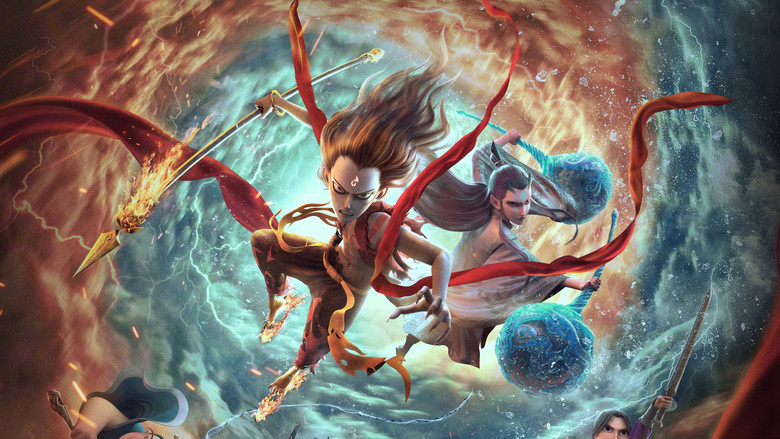
These elements visually represent the opposing yet connected natures of Ne Zha and Ao Bing. Ne Zha, embodying the Demon Orb, wields fire—a symbol of passion, destruction, and rebellion. Ao Bing, from the Spirit Pearl and a dragon, commands water and ice—symbolizing calmness, control, and immense power. Their climactic battle is a visceral clash of these elements, representing their internal and external conflicts.
The final confrontation sees Ao Bing attempt to freeze the entire Chentang Pass under a massive sheet of ice, while Ne Zha, in his full demonic form, unleashes his fire powers to counter the flood and save the villagers. This elemental battle is the visual and emotional peak of the film.
Lotus
In Chinese culture, the lotus flower symbolizes purity, resilience, and rebirth, famously growing clean out of muddy water. The Heavenly Lord uses a Seven-Colored Sacred Lotus to separate the Chaos Pearl. At the end, Taiyi Zhenren uses a magical lotus to preserve the souls of Ne Zha and Ao Bing after their bodies are destroyed. This symbolizes their spiritual rebirth and purification, hinting at their potential for a new beginning, free from the physical forms that defined them.
The lotus is used by the highest celestial being at the beginning to impose order on chaos. It appears again at the very end when Taiyi Zhenren contains the boys' spirits within a lotus blossom after the lightning strike, saving them from complete annihilation.
Philosophical Questions
Are we defined by our nature or our choices?
This is the central philosophical question of the film, exploring the classic debate of nature versus nurture. Ne Zha is born with a demonic nature and is prophesied to be a destructive force. The villagers and even some celestial beings believe his evil nature is immutable. However, the film argues powerfully for nurture and choice. The love of his parents and his own conscious decision to be a hero ultimately allow him to overcome his innate demonic essence. Ao Bing's journey mirrors this; despite being born from the divine Spirit Pearl, the pressures of his environment and his choices lead him to commit villainous acts before he ultimately redeems himself. The film concludes that destiny is not written in our origins, but in the path we choose to walk.
What is the root of prejudice?
The film explores how prejudice is born from fear, misunderstanding, and preconceived notions. The villagers hate Ne Zha not for anything he has done initially, but simply because he is the reincarnation of the Demon Orb. They project their fears onto him, and their hostility, in turn, fuels his anger and destructive behavior, creating a self-fulfilling prophecy. The film suggests that prejudice is a destructive cycle that can only be broken by empathy and the willingness to see the individual beyond the label.
Core Meaning
The core meaning of "Ne Zha" is a powerful and resounding declaration of self-determination against the tyranny of fate. The film champions the idea that one's identity is not defined by birth, prophecy, or societal prejudice, but by one's choices and actions. Director Yang Yu (Jiaozi) sought to convey the message, encapsulated in Ne Zha's iconic line, "I am my own destiny," which resonated deeply with modern audiences, particularly the youth. It's a story about breaking free from the shackles of expectations—whether they are divine, societal, or familial—and forging one's own path, proving that true heroism comes from within, not from a predetermined label.