Ne Zha
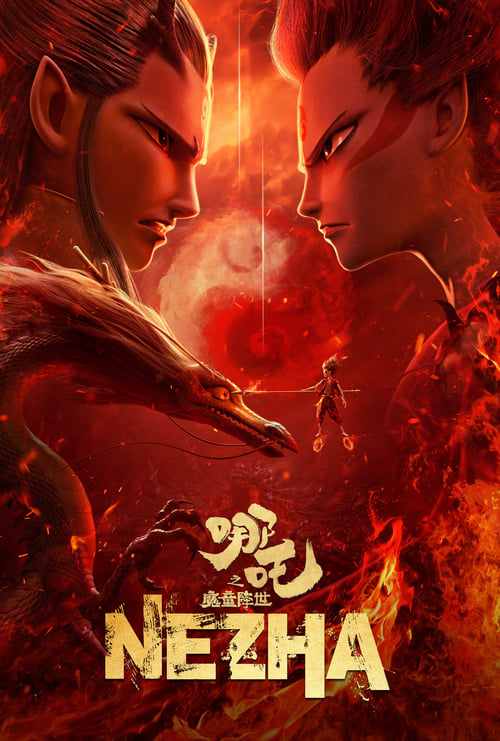
A vibrant fantasy epic where defiant energy clashes with destiny's decree, painting the sky with the fire of a boy who refuses to be a monster.
Ne Zha

Ne Zha

哪吒之魔童降世

"Fight your fate"

26 July 2019 China 110 min ⭐ 7.9 (698)
Director: Yang Yu
Cast: Lu Yanting, Joseph, Han Mo, Chen Hao, Lu Qi
Animation Fantasy Adventure
Destiny vs. Free Will Prejudice and Social Acceptance Parental Love and Sacrifice Friendship and Loneliness
Budget: $22,000,000
Box Office: $742,718,496

Overview

"Ne Zha" reimagines a classic Chinese myth, beginning when a powerful Chaos Pearl is split into a Spirit Pearl and a Demon Orb. Through the scheming of a jealous immortal, Shen Gongbao, the Demon Orb is mistakenly implanted into the newborn third son of Li Jing and Lady Yin, named Ne Zha. Cursed to be destroyed by a heavenly lightning strike in three years, Ne Zha is ostracized and feared by the villagers for his demonic nature and uncontrollable power.

His parents, desperate to give him a happy life, lie to him about his origins, claiming he is a hero destined to fight evil. Isolated and resentful, Ne Zha's only solace is the unconditional love of his parents and the training from his bumbling master, Taiyi Zhenren. His life takes a dramatic turn when he befriends the lonely and graceful Ao Bing, the Dragon Prince who was born from the Spirit Pearl and carries the heavy burden of his clan's hopes for freedom. Their burgeoning friendship is set on a collision course with their predetermined fates, forcing both boys to confront prejudice, identity, and the true meaning of heroism.
Core Meaning

The core meaning of "Ne Zha" is a powerful and resounding declaration of self-determination against the tyranny of fate. The film champions the idea that one's identity is not defined by birth, prophecy, or societal prejudice, but by one's choices and actions. Director Yang Yu (Jiaozi) sought to convey the message, encapsulated in Ne Zha's iconic line, "I am my own destiny," which resonated deeply with modern audiences, particularly the youth. It's a story about breaking free from the shackles of expectations—whether they are divine, societal, or familial—and forging one's own path, proving that true heroism comes from within, not from a predetermined label.

Thematic DNA

Destiny vs. Free Will 40%
Prejudice and Social Acceptance 30%
Parental Love and Sacrifice 20%
Friendship and Loneliness 10%

Destiny vs. Free Will

This is the central theme of the film. Ne Zha is born from a Demon Orb and cursed by a prophecy to bring destruction and be killed by lightning in three years. The entire narrative revolves around his struggle against this predetermined fate. His defiant cry, "My fate is up to me, not the heavens," serves as the film's thesis. He ultimately chooses to become a hero and save the very people who fear him, proving that personal choice can overcome destiny. This theme is mirrored in Ao Bing, who is born from the Spirit Pearl but is pressured by his clan's destiny to destroy the village, a path he also struggles against.

Prejudice and Social Acceptance

From birth, Ne Zha is labeled a demon and is feared, hated, and ostracized by the villagers. His mischievous and destructive behavior is a direct result of this constant rejection; he acts the part he has been assigned. The film explores how societal prejudice can shape an individual's identity and behavior. Ne Zha's deepest desire is to be accepted and to prove everyone wrong. The film critiques judging others based on their origins or appearance rather than their character and actions.

Parental Love and Sacrifice

The film portrays a deep and moving depiction of parental love. Despite Ne Zha's demonic nature, his parents, Li Jing and Lady Yin, love him unconditionally. Lady Yin dedicates her time to playing with him, even though it's dangerous, to make his short life happy. Li Jing travels to the heavens to plead for his son's life and ultimately decides to sacrifice his own life in exchange for Ne Zha's through a magical talisman. This sacrificial love is what ultimately inspires Ne Zha to embrace heroism and fight for his family and village.

Friendship and Loneliness

Both Ne Zha and Ao Bing are profoundly lonely characters. Ne Zha is isolated by fear and prejudice, while Ao Bing is isolated by the immense pressure and secrecy of his clan's mission. Their chance meeting and immediate connection highlight their shared experience of being outcasts. Their friendship, the first either has ever had, becomes a central emotional pillar of the story. The eventual conflict between them is tragic precisely because it forces two friends, two halves of a whole, into opposition due to the fates prescribed to them.

Character Analysis

Ne Zha

Lu Yanting

Archetype: Anti-hero / The Outcast
Key Trait: Defiant

Motivation

His primary motivation shifts throughout the film. Initially, it is a simple desire for friendship and acceptance from the villagers. After learning the truth, his motivation becomes defiance—to prove to the heavens and the world that he alone controls his destiny. Finally, it becomes love for his parents and his one friend, Ao Bing, which inspires his ultimate sacrifice.

Character Arc

Ne Zha begins as a lonely, misunderstood, and rebellious child who lashes out at a world that rejects him. Initially believing he is destined for greatness as a demon hunter, he is crushed when he learns the truth—that he is the Demon Orb, fated to be destroyed. Moved by his father's intended sacrifice, he rejects his demonic destiny, embraces his own identity, and chooses to be a hero, saving the village at the cost of his own life. His arc is a powerful journey from resentment to self-acceptance and sacrifice.

Ao Bing

Han Mo

Archetype: The Reluctant Antagonist / The Burdened Hero
Key Trait: Dutiful

Motivation

Ao Bing is motivated by a deep sense of duty and responsibility to his entire clan. The dragons are imprisoned and seen as demons, and as the Spirit Pearl, he is their only hope for salvation and restoration of their divine status. This heavy burden forces him into conflict with his own conscience and his friendship with Ne Zha.

Character Arc

Ao Bing starts as a kind, gentle, and lonely figure, burdened by the immense expectations of the Dragon Clan. He finds his first true friend in Ne Zha. However, torn between his friendship and his duty to his people, he makes the devastating choice to sacrifice the village to achieve his clan's freedom. In the end, inspired by Ne Zha's selflessness, he defies his own destiny and joins his friend in facing the heavenly punishment, achieving redemption through sacrifice.

Li Jing

Chen Hao

Archetype: The Stoic Father / The Protector
Key Trait: Sacrificial

Motivation

His sole motivation is the protection and well-being of his son, Ne Zha. He is willing to defy social pressure, lie to his son about his origins, and ultimately give up his own life to ensure Ne Zha has a chance to live and be seen as a hero, not a demon.

Character Arc

Li Jing is initially presented as a stern and distant military commander. However, his arc reveals him to be a deeply loving and devoted father. He silently bears the burden of his son's fate, seeking a way to save him. His decision to sacrifice his own life for Ne Zha's by using a substitution charm is the ultimate expression of his love, and it's the catalyst for Ne Zha's transformation into a true hero.

Taiyi Zhenren

Zhang Jiaming

Archetype: The Bumbling Mentor
Key Trait: Comedic

Motivation

Initially motivated by his duty to the Heavenly Lord and the promise of a promotion, his motivation shifts to a genuine sense of responsibility and affection for his student, Ne Zha. He wants to see Ne Zha overcome his fate and is willing to risk everything to help him.

Character Arc

Taiyi Zhenren is a celestial being tasked with delivering the Spirit Pearl but fails due to his love for wine and carelessness. He serves as Ne Zha's mentor, but his comedic incompetence often leads to trouble. Despite his flaws, he genuinely cares for Ne Zha. His arc is one of redemption; after failing in his initial duty, he makes up for it by dedicating himself to training Ne Zha and, crucially, saving the boys' souls at the film's climax.

Symbols & Motifs

Chaos Pearl (Spirit Pearl and Demon Orb)

Meaning:

The Chaos Pearl, split into two, represents the concept of Yin and Yang—the inherent duality of good and evil within a single entity. It symbolizes that no one is purely good or purely evil. Ne Zha (Demon Orb) has the capacity for great heroism, while Ao Bing (Spirit Pearl) is pushed towards villainy. Their union at the end signifies the restoration of balance and the idea that these forces are interconnected.

Context:

The film's entire premise is built on the separation of the Chaos Pearl by Yuanshi Tianzun. Shen Gongbao's theft causes the Demon Orb to become Ne Zha and the Spirit Pearl to become Ao Bing, setting the plot in motion. The climax sees them join forces, momentarily reuniting the pearl's power to withstand the heavenly curse.

Fire and Water

Meaning:

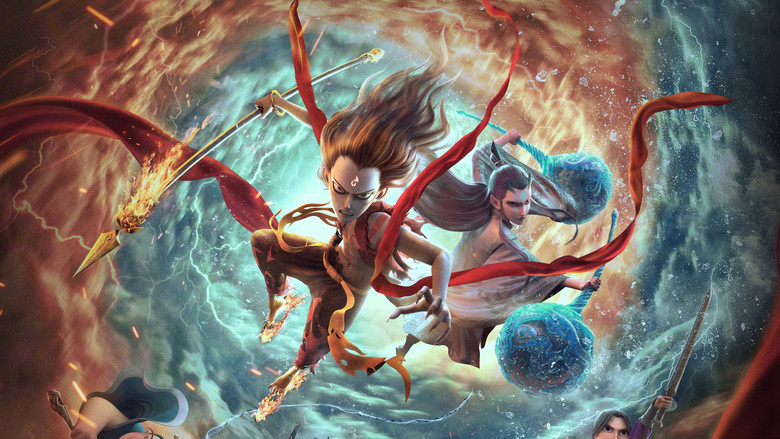
These elements visually represent the opposing yet connected natures of Ne Zha and Ao Bing. Ne Zha, embodying the Demon Orb, wields fire—a symbol of passion, destruction, and rebellion. Ao Bing, from the Spirit Pearl and a dragon, commands water and ice—symbolizing calmness, control, and immense power. Their climactic battle is a visceral clash of these elements, representing their internal and external conflicts.

Context:

The final confrontation sees Ao Bing attempt to freeze the entire Chentang Pass under a massive sheet of ice, while Ne Zha, in his full demonic form, unleashes his fire powers to counter the flood and save the villagers. This elemental battle is the visual and emotional peak of the film.

Lotus

Meaning:

In Chinese culture, the lotus flower symbolizes purity, resilience, and rebirth, famously growing clean out of muddy water. The Heavenly Lord uses a Seven-Colored Sacred Lotus to separate the Chaos Pearl. At the end, Taiyi Zhenren uses a magical lotus to preserve the souls of Ne Zha and Ao Bing after their bodies are destroyed. This symbolizes their spiritual rebirth and purification, hinting at their potential for a new beginning, free from the physical forms that defined them.

Context:

The lotus is used by the highest celestial being at the beginning to impose order on chaos. It appears again at the very end when Taiyi Zhenren contains the boys' spirits within a lotus blossom after the lightning strike, saving them from complete annihilation.

Memorable Quotes

我命由我不由天!

— Ne Zha

Context:

Ne Zha shouts this line during the climactic battle against his fate. As the heavenly lightning descends to destroy him, he refuses to simply accept his demise. Instead, he charges towards it, fully embracing his own power and his decision to be a hero, regardless of what was foretold.

Meaning:

Translated as "My fate is up to me, not the heavens!" or "I am my own destiny." This is the film's most iconic line and its central philosophical statement. It encapsulates the core theme of defying a predetermined path and asserting one's own free will. It represents Ne Zha's ultimate rebellion against the curse placed upon him and the prejudice he faces, becoming a powerful anthem for self-determination.

Philosophical Questions

Are we defined by our nature or our choices?

This is the central philosophical question of the film, exploring the classic debate of nature versus nurture. Ne Zha is born with a demonic nature and is prophesied to be a destructive force. The villagers and even some celestial beings believe his evil nature is immutable. However, the film argues powerfully for nurture and choice. The love of his parents and his own conscious decision to be a hero ultimately allow him to overcome his innate demonic essence. Ao Bing's journey mirrors this; despite being born from the divine Spirit Pearl, the pressures of his environment and his choices lead him to commit villainous acts before he ultimately redeems himself. The film concludes that destiny is not written in our origins, but in the path we choose to walk.

What is the root of prejudice?

The film explores how prejudice is born from fear, misunderstanding, and preconceived notions. The villagers hate Ne Zha not for anything he has done initially, but simply because he is the reincarnation of the Demon Orb. They project their fears onto him, and their hostility, in turn, fuels his anger and destructive behavior, creating a self-fulfilling prophecy. The film suggests that prejudice is a destructive cycle that can only be broken by empathy and the willingness to see the individual beyond the label.

Alternative Interpretations

While the primary reading of "Ne Zha" focuses on individualism and defying fate, some interpretations view the film through a socio-political lens. Ne Zha's struggle can be seen as a metaphor for the younger generation in China pushing against traditional, rigid societal structures and expectations. His rebellious nature and ultimate choice to forge his own identity resonate with a youth culture that values self-expression more than previous generations.

Another interpretation focuses on the duality of Ne Zha and Ao Bing as a commentary on class and privilege. Ao Bing, born of the "noble" Spirit Pearl, is still imprisoned by the burdens and responsibilities of his lineage (the Dragon Clan), while Ne Zha, born of the "demonic" orb, finds freedom through rejection of his prescribed role. Their story could be read as a critique of how birthright, whether perceived as advantageous or disadvantageous, imposes its own set of inescapable constraints.

Cultural Impact

"Ne Zha" is considered a landmark achievement in Chinese animation, signaling a new era of quality and commercial success for the industry. It shattered domestic box office records, becoming the first animated film to be the highest-grossing movie of the year in China, proving that homegrown animation could compete with and even surpass Hollywood blockbusters like Disney and Pixar in its own market.

Culturally, the film resonated deeply with modern Chinese audiences, especially the youth. Its modern reinterpretation of a classic mythological figure from the 16th-century novel Investiture of the Gods was praised for its creative changes and relevant themes. The central message of defying fate and societal prejudice—"I am my own destiny"—became a cultural catchphrase, reflecting contemporary anxieties and aspirations regarding individuality and social pressure. The film's success boosted national pride and confidence in China's creative industries and its ability to tell its own stories on a global stage, promoting Chinese culture and mythology to a wider international audience. It also kickstarted the 'Fengshen Cinematic Universe,' an ambitious project to create an interconnected series of films based on the rich lore of Investiture of the Gods.

Audience Reception

Audience reception for "Ne Zha" was overwhelmingly positive, particularly in China, where it became a cultural phenomenon. Viewers widely praised its stunning, high-quality 3D animation, which was seen as a major step forward for the Chinese animation industry and competitive with top international studios. The story's emotional depth, particularly the themes of parental love and the defiant struggle against fate, resonated strongly with audiences of all ages. The film's humor was also a highlight for many. Critically, some Western reviewers found the tone uneven, jumping between broad comedy and high drama, and felt the character designs borrowed heavily from American and Japanese animation styles. A few also noted that a lack of familiarity with Chinese mythology might make some plot points less accessible to international audiences. Overall, however, it was hailed as an entertaining, visually spectacular, and emotionally powerful film.

Interesting Facts

  • The film was in production for a total of five years, with the screenplay alone taking two years to write.
  • Over 20 different Chinese special effects studios, employing more than 1,600 people, were involved in creating the film's 1,318 special effects shots.
  • Director Yang Yu, who goes by the nickname Jiaozi (meaning "Dumpling"), was a pharmacist before switching careers to become a self-taught animator.
  • "Ne Zha" became the highest-grossing animated film of all time in China and, at the time of its release, the highest-grossing non-U.S. animated film worldwide.
  • It was the first Chinese-produced animated feature to be released in the IMAX format.
  • The film was selected as the Chinese entry for Best International Feature Film at the 92nd Academy Awards, a first for a Chinese animated film.

Easter Eggs

There are two post-credit scenes.

The first post-credit scene shows the Dragon King vowing revenge for what happened to Ao Bing, setting up a future conflict. The second, more significant scene, provides a direct teaser for the next film in the Fengshen Cinematic Universe, showing the character Jiang Ziya in his own movie, which was released in 2020. This established a model similar to the Marvel Cinematic Universe for Chinese animation.

⚠️ Spoiler Analysis

Click to reveal detailed analysis with spoilers

Frequently Asked Questions

Explore More About This Movie

Dive deeper into specific aspects of the movie with our detailed analysis pages

Comments (0)

Leave a comment

No comments yet. Be the first to share your thoughts!