
Ned's Declassified School Survival Guide - Symbolism & Philosophy
Symbols & Motifs
The Guide
The survival guide itself symbolizes preparedness, shared wisdom, and the attempt to impose order on the chaos of adolescence. It represents the idea that knowledge and experience can be powerful tools for navigating life's challenges. It is also a manifestation of Ned's desire to help others and his own process of learning and growing.
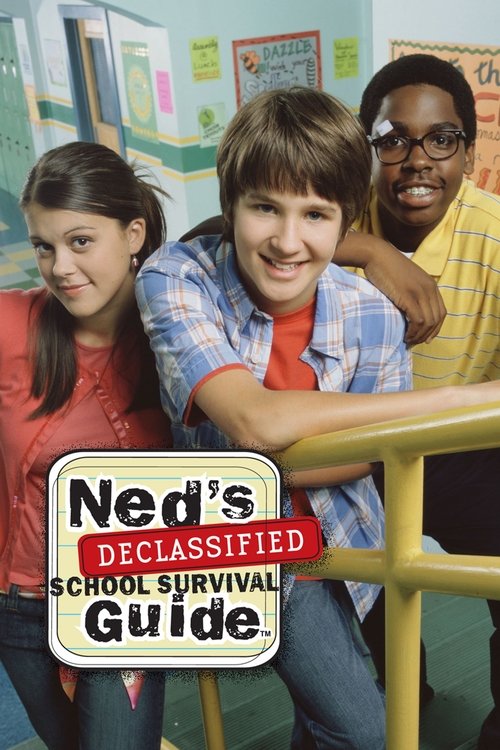
The guide is the central framing device for the entire series. In every episode, Ned adds new tips based on his experiences. He directly addresses the audience, sharing these tips as he writes them. The physical notebook is often seen, and the tips frequently appear as on-screen text, making it a constant visual and narrative motif.
The Weasel
The recurring, often unseen weasel that roams the halls of James K. Polk Middle School symbolizes the unpredictable, chaotic, and absurd nature of their environment. It represents the wild, untamable elements of school life that defy rules and logic, often appearing at the most inconvenient times to disrupt the students' plans.
The weasel is a running gag throughout the series. It is blamed for various mishaps, gets elected to student council, and is often pursued by the janitor, Gordy. Its presence underscores the show's surreal and cartoonish tone, reminding the audience that not everything in middle school can be controlled or explained by a guide.
Coconut Head's Haircut
Coconut Head's iconic, unchanging, and ridiculous haircut symbolizes social awkwardness and the fear of being unable to change one's defining (and sometimes embarrassing) features during adolescence. He represents the quintessential kid who is stuck in a certain social standing, despite his friendly nature.
Coconut Head is a recurring background and supporting character. His haircut is his most prominent feature and the source of his nickname. He is part of the fabric of the school, a constant reminder of the social labels that can be hard to shake in the rigid hierarchy of middle school.
Philosophical Questions
Can life's chaos be ordered by a set of rules?
The entire premise of the show revolves around this question. Ned attempts to create a definitive guide to navigating middle school, believing that with the right tip for every situation, survival is guaranteed. However, the series constantly demonstrates the limits of this approach. Ned's tips often backfire or are insufficient to handle the sheer unpredictability of human behavior and absurd events (like a rampaging weasel). The show ultimately suggests that while rules and guides can be helpful starting points, true wisdom comes from adaptability, improvisation, and understanding that some experiences are too chaotic to be 'declassified.' Friendship, not a rulebook, is the most reliable tool.
What is the relationship between identity and social labels?
The characters in "Ned's Declassified" are constantly grappling with the labels assigned to them. Moze is 'the jock' or 'the tomboy,' Cookie is 'the nerd,' and Loomer is 'the bully.' A significant portion of their character development involves either trying to escape these labels or learning to embrace them on their own terms. Moze's journey to make female friends and Cookie's attempts to be 'cool' are direct explorations of this conflict. The show asks whether we are defined by how others see us or if we can forge our own identities despite the social pressures of a rigid environment like middle school.
Core Meaning
The core meaning of "Ned's Declassified School Survival Guide" is that the often terrifying and confusing journey through adolescence can be successfully navigated with creativity, humor, and, most importantly, unwavering friendship. The series posits that no problem—whether it's a pop quiz, a social faux pas, or a tyrannical teacher—is insurmountable when faced with the support of loyal friends. It demystifies the middle school experience, suggesting that while there are no perfect answers, the act of trying, learning from mistakes, and sharing that knowledge is what truly matters. The "guide" itself becomes a metaphor for collaborative problem-solving and the idea that shared experience is the most valuable resource for growing up.