新世紀エヴァンゲリオン劇場版 Air/まごころを、君に
"The fate of destruction is also the joy of rebirth."
Neon Genesis Evangelion: The End of Evangelion - Symbolism & Philosophy
Symbols & Motifs
AT Field (Absolute Terror Field)
The AT Field is the barrier that separates all living things, allowing them to maintain their individual physical forms and consciousness. Symbolically, it represents the emotional and psychological barriers between people—the walls that protect the ego but also cause isolation and loneliness. The goal of the Human Instrumentality Project is to collapse all AT Fields, merging humanity into a single being.
Throughout the series and film, Angels and Evangelions are shown to project powerful AT Fields during combat. The climax of "The End of Evangelion" involves the global collapse of all human AT Fields, causing people to dissolve into LCL, the primordial soup of life, as their souls are gathered into a single entity. Shinji's ultimate choice is whether to restore these barriers.
LCL (Link Connected Life)
LCL is the amber-colored, translucent liquid that fills the cockpits of the Evangelions, allowing the pilots to mentally sync with them. It is referred to as the "primordial soup of life." During the Third Impact, the dissolution of AT Fields causes all of humanity to revert to LCL, symbolizing the loss of individuality and the merging of all souls into a single ocean of consciousness.
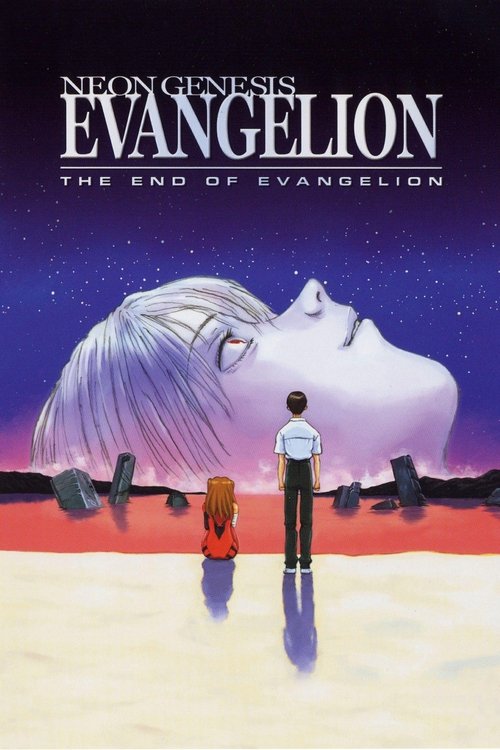
In the film's climax, the entire population of Earth turns into LCL, creating a literal sea of orange liquid covering the planet. The final scene takes place on a beach next to this LCL sea, from which Shinji and Asuka have emerged, having chosen to regain their physical forms.
The Giant Naked Rei/Lilith
The colossal, white, female figure that appears during the Third Impact is a fusion of Rei Ayanami with Lilith, the Second Angel. She represents a divine, maternal, and ultimately terrifying arbiter of humanity's fate. Her form shifts to appear as the person one most desires (like Kaworu for Shinji), symbolizing the promise of comfort and an end to loneliness that Instrumentality offers before collecting their soul.
After Rei III betrays Gendo and merges with Lilith, her body grows to a planetary scale. She floats above the Earth, initiating the Human Instrumentality Project at Shinji's behest. When Shinji rejects Instrumentality, her body breaks apart and dies, leaving a trail of blood across the moon.
Hands
Hands are a recurring motif representing connection, communication, and violence. They are the means by which people can reach out to one another for comfort or inflict pain. The film constantly explores this duality. Shinji often stares at his own hands, contemplating his actions and inaction. The film's climax questions the purpose of hands and a heart if one chooses to be alone.
Key scenes involve hands: Shinji masturbating over the comatose Asuka, Misato giving Shinji a final kiss while her hands are covered in blood, and most famously, Shinji strangling Asuka in the final scene, only to stop when she caresses his face. This final act powerfully juxtaposes the violent and gentle potential of human contact.
Philosophical Questions
Is a life without pain truly worth living?
The film's central conflict revolves around the Human Instrumentality Project, which offers humanity an escape from all pain, loneliness, and misunderstanding by merging everyone into a single, unified consciousness. This state is presented as a painless, womb-like existence. However, the film argues that this state is also devoid of joy, love, and the potential for growth that comes from overcoming hardship. Shinji ultimately concludes that memories of joy can exist even in a life filled with pain, and that the possibility of genuine connection, however fleeting, makes the suffering of an individual existence worthwhile.
What is the nature of the self, and can it exist without others?
The film explores the idea that our sense of self is defined by our separation from others. The AT Fields are physical manifestations of the ego's boundaries. During Instrumentality, Shinji is told that he cannot understand his own shape without the "walls that separate" him from other people. The existence of "the other" is necessary for self-recognition. By choosing to restore the world to one of individuals, Shinji affirms that a solitary existence, even a mentally painless one, is not a true existence at all. He accepts the necessity of others, even if they are a source of pain, to define his own reality.
Core Meaning
The core meaning of "The End of Evangelion" revolves around the director Hideaki Anno's exploration of depression, loneliness, and the difficulty of human connection. The film posits that while individuality leads to misunderstanding, pain, and loneliness (the "Hedgehog's Dilemma"), a life without it—a collective consciousness devoid of ego and separation—is akin to death. Shinji's final decision to reject the painless world of Instrumentality in favor of a reality where people can hurt each other signifies an acceptance of life's inherent suffering as a necessary component of joy and genuine connection. Anno intended the film as a message to anime fans, including himself, urging them to wake up from escapist fantasies and engage with the complexities and pains of the real world. Ultimately, the film suggests that self-worth must come from within and that true living requires accepting the possibility of being hurt by others.