
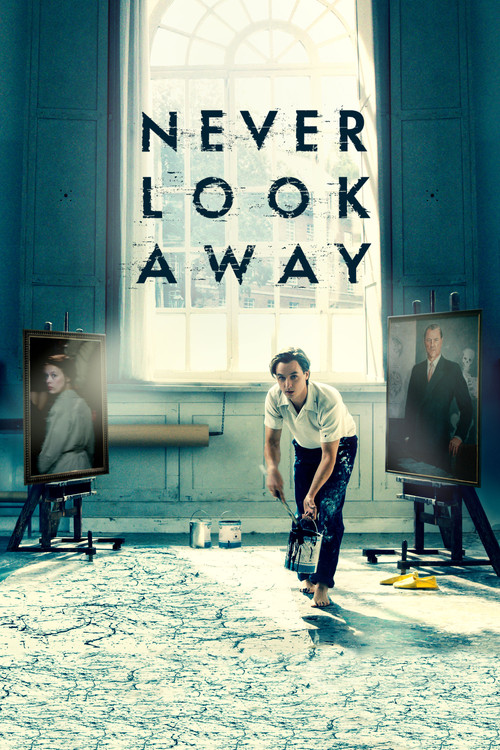
Werk ohne Autor
Never Look Away - Symbolism & Philosophy
Symbols & Motifs
The Blur
Represents the ambiguity of memory and the subconscious. It softens the blow of the harsh truth while simultaneously making it more universal and haunting. It reflects the refusal to make a definitive, dogmatic statement (unlike the Nazis or Communists).
Used in Kurt's final paintings (mimicking Gerhard Richter's style) and visually when characters hold their hands in front of their eyes to soften the focus of the world.
The Open Note / A Note
Symbolizes the underlying harmony of the universe that only sensitive souls (like Elisabeth and Kurt) can perceive. It represents connection to the divine or the absolute truth.
Elisabeth plays this note on the piano while nude; later, the bus horns harmonize to a specific pitch that Kurt recognizes, linking him back to her.
The Tree
A place of sanctuary and perspective. It represents rising above the mundane and the traumatic to see the world clearly.
Kurt hides in trees as a child during the war; as an adult, he climbs a tree at the art academy to find inspiration.
Blue Bus Number
The banality of evil and the bureaucratic nature of death. It links the mechanism of the Holocaust to everyday life.
The bus horns that sound the 'A' note are from the buses used to transport patients to extermination camps; Kurt later hears the same pitch in the West.
Philosophical Questions
Can art reveal truths that the artist themself does not consciously know?
Kurt paints the collage of Seeband and Elisabeth intuitively, without knowing the factual link. The film suggests art taps into a collective or subconscious knowledge that transcends facts.
Is morality relative to the political system?
The film shows Seeband flourishing under Nazism, Communism, and Capitalism. It asks if 'success' in society is divorced from morality, and if the only true moral compass is the internal artistic one.
Core Meaning
At its heart, the film posits that art is an instrument of truth that bypasses rational defense mechanisms to heal deep-seated trauma. The director, Florian Henckel von Donnersmarck, suggests that true artistic genius comes from confronting, rather than evading, painful realities. The mantra "Never look away" evolves from a literal instruction to a philosophical imperative: only by facing the darkest parts of history and oneself can an artist create work that is undeniably true and, therefore, beautiful. It explores the idea that victims and perpetrators in post-war Germany were often inextricably bound together, living in a silence that only art could break.