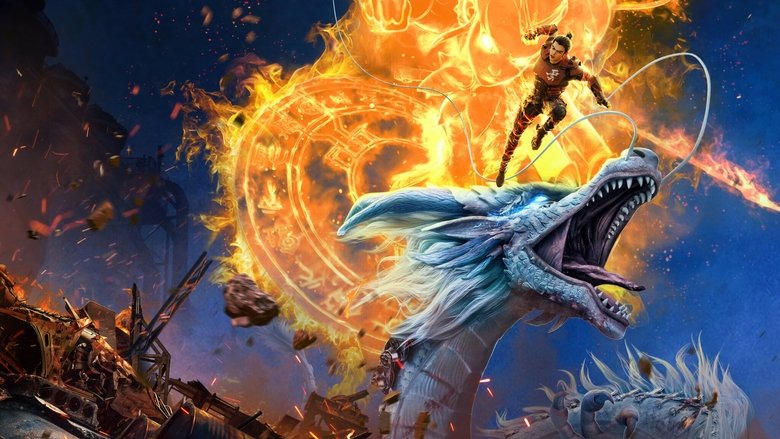
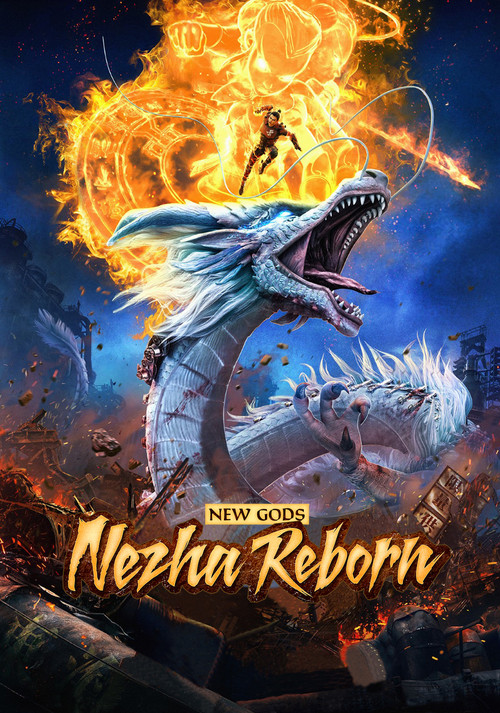
新神榜:哪吒重生
"Rebirth of a hero"
New Gods: Nezha Reborn - Symbolism & Philosophy
Symbols & Motifs
Motorcycle
The motorcycle symbolizes Li Yunxiang's modern identity, freedom, and rebellious spirit. It's his personal creation and his connection to the world he knows, separate from the ancient identity of Nezha. It represents his individuality and his attempt to control his own path.
Yunxiang is an expert racer and mechanic, and his customized motorcycle is his prized possession. The initial conflict with Ao Bing is triggered over the bike. He later incorporates mechanical parts, resembling his bike's engine, into his armor, symbolizing the merging of his modern self with his divine powers.
Water
Water represents life, power, and control. In Donghai City, it is a scarce resource hoarded by the De (Dragon) Clan, making it a symbol of their oppressive power and the city's socio-economic inequality. For the Dragon Clan, controlling water is synonymous with controlling the populace. For the people, access to water is freedom and survival.
The central conflict revolves around the De Clan's monopoly on the city's water supply. Ao Guang, the Dragon King, ultimately unleashes a massive tsunami in an attempt to destroy the city, showcasing water's destructive potential when wielded by a tyrant.
The Mask
The mask worn by the mysterious mentor figure symbolizes hidden identity, neutrality, and observation. It conceals the true identity of the Monkey King, Sun Wukong, allowing him to operate incognito and guide Yunxiang without revealing his own stake in the celestial power struggles.
Throughout the first half of the film, the Masked Man appears as a seemingly self-interested mechanic and fixer. He trains Yunxiang but keeps his motivations and immense power hidden. The eventual removal of the mask signifies a turning point, where he fully reveals his identity as the Monkey King and his role as a key player in the unfolding events.
Philosophical Questions
Are we defined by our past or by our present choices?
The film explores this question through Li Yunxiang, who is literally burdened by a past life. He is the reincarnation of a powerful, chaotic, and vengeful deity. The Dragon Clan sees him only as their ancient enemy, defined entirely by Nezha's past actions. Yunxiang, however, fights to be seen as himself, an individual separate from the god he hosts. His journey suggests that while the past is a part of us, our character and destiny are ultimately forged by the decisions we make in the present. He chooses to use Nezha's power not for ancient revenge, but to save his city, thus redefining his own heroic identity.
What is the nature of a hero: inherent power or the will to protect others?
The film contrasts the raw, destructive power of the deity Nezha with Yunxiang's human compassion. Initially, Yunxiang's power manifests as uncontrollable rage. The Masked Man (Monkey King) tells him he is too weak to wield Nezha's spirit because his human empathy gets in the way. However, it is precisely this empathy—his desire to protect his friends and community—that ultimately allows him to master the power for a greater purpose. The film argues that true heroism isn't just possessing great power, but having the moral compass and will to use it for the good of others, even at great personal cost.
Core Meaning
The central message of "New Gods: Nezha Reborn" revolves around the themes of self-identity, destiny, and rebellion against oppressive authority. The director, Zhao Ji, reimagines the classic myth to explore the struggle of a modern young man, Li Yunxiang, who feels disconnected from the legendary figure he is supposed to be. The film posits that one's identity is not solely defined by fate or a past life, but by the choices made in the present. It carries a message of fighting against unfair systems, as seen in the De Clan's monopolization of water, and finding the strength to forge one's own path, even when burdened by a powerful legacy. It's a story about harnessing inner power not just for personal revenge, but for the greater good of the community.