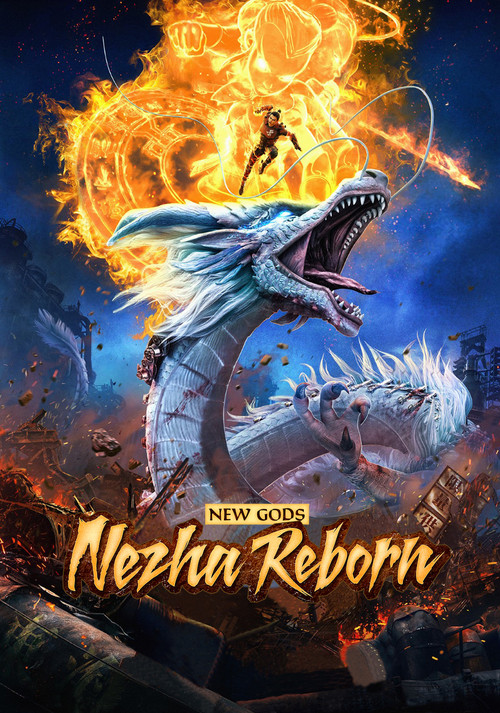
New Gods: Nezha Reborn
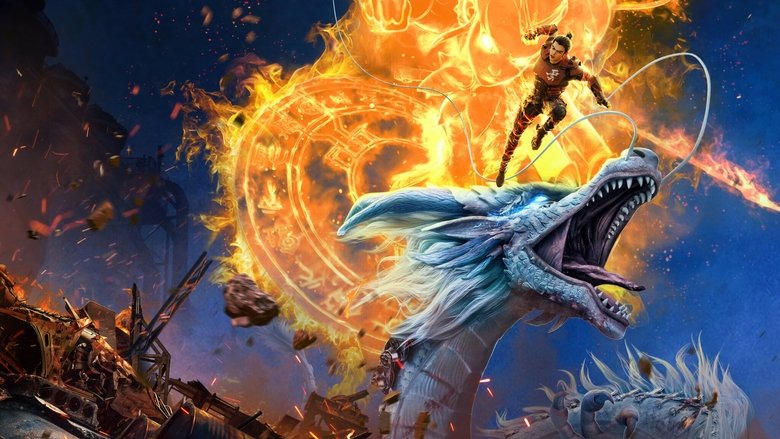
A cyberpunk-infused animation where ancient myth clashes with rebellious fury, visualized as a superpowered motorcycle chase through a dystopian city.
New Gods: Nezha Reborn

New Gods: Nezha Reborn

新神榜:哪吒重生

"Rebirth of a hero"

06 February 2021 China 116 min ⭐ 8.1 (483)
Director: Zhao Ji
Cast: Yang Tianxiang, Zhang He, Xuan Xiaoming, Li Shimeng, Keer Zhu
Animation Fantasy Action
Rebellion Against Authority and Fate The Conflict Between Tradition and Modernity Identity and Self-Discovery Social Justice and Inequality
Box Office: $70,000,000

Overview

Set in the fictional, steampunk-inspired city of Donghai, which is plagued by a severe water shortage controlled by the powerful De Clan, the film follows Li Yunxiang, a hot-headed young motorbike racer and smuggler. After a confrontation with Ao Bing, the arrogant son of the De Clan's leader, Ao Guang, Yunxiang's latent powers awaken, revealing him to be the reincarnation of the powerful deity Nezha.

Haunted by visions of his past life and hunted by his ancient enemies from the Dragon Clan, Yunxiang must grapple with his newfound identity and immense power. He is guided by a mysterious masked figure, who helps him understand his connection to Nezha and the 3,000-year-old grudge he has inherited. As Ao Guang seeks to consolidate his power and exact revenge on Nezha, Yunxiang must learn to control the fiery spirit within him to protect his friends, family, and the oppressed citizens of Donghai from an impending catastrophe.
Core Meaning

The central message of "New Gods: Nezha Reborn" revolves around the themes of self-identity, destiny, and rebellion against oppressive authority. The director, Zhao Ji, reimagines the classic myth to explore the struggle of a modern young man, Li Yunxiang, who feels disconnected from the legendary figure he is supposed to be. The film posits that one's identity is not solely defined by fate or a past life, but by the choices made in the present. It carries a message of fighting against unfair systems, as seen in the De Clan's monopolization of water, and finding the strength to forge one's own path, even when burdened by a powerful legacy. It's a story about harnessing inner power not just for personal revenge, but for the greater good of the community.

Thematic DNA

Rebellion Against Authority and Fate 35%
The Conflict Between Tradition and Modernity 30%
Identity and Self-Discovery 25%
Social Justice and Inequality 10%

Rebellion Against Authority and Fate

This theme is central to both the original Nezha myth and this retelling. Li Yunxiang, like his divine predecessor, is a natural rebel. He initially acts as a smuggler, defying the oppressive De Clan's control over the city's water supply. His personal journey is a fight against the destiny thrust upon him as Nezha's reincarnation and the expectations that come with it. The film modernizes this rebellion, framing it as a young individual's struggle against a corrupt corporate-like power structure and the search for self-definition beyond pre-ordained roles.

The Conflict Between Tradition and Modernity

The film creates a striking visual and narrative contrast between ancient Chinese mythology and a futuristic, dieselpunk/cyberpunk setting. Deities with ancient powers and grudges are reborn into a world of motorcycles, neon lights, and mechanical armor. This juxtaposition highlights the challenge of reconciling a rich cultural past with the fast-paced, often impersonal, nature of modern life. Yunxiang's struggle to accept the ancient god within him mirrors this broader cultural tension.

Identity and Self-Discovery

Li Yunxiang spends much of the film wrestling with the question of who he is: Is he just a delivery boy and racer, or is he the fearsome god Nezha? He initially rejects the divine identity, wanting to solve problems his own way. The narrative explores the idea of a dual identity and the process of integrating a powerful, inherited legacy with one's personal values and experiences to forge a new, complete self. His journey is about accepting all parts of himself to unlock his true potential.

Social Justice and Inequality

The plot is driven by the stark inequality in Donghai City, where the wealthy elite control the essential resource of water, leaving the general populace to suffer. Yunxiang's initial acts of rebellion involve providing water to his community. This theme grounds the high-fantasy conflict in a relatable social issue, positioning the protagonist not just as a reincarnated god settling an ancient score, but as a hero fighting for the well-being of his people against corporate greed and corruption.

Character Analysis

Li Yunxiang

Yang Tianxiang (Stephen Fu in English dub)

Archetype: The Reluctant Hero
Key Trait: Rebellious

Motivation

Initially motivated by a desire for a satisfying life and protecting his family, his motivation shifts to revenge after his family is targeted by the De Clan. Ultimately, his core motivation becomes the protection of his city, Donghai, and its people from the tyranny of the Dragon King.

Character Arc

Li Yunxiang starts as a cocky, hot-headed biker and smuggler, primarily concerned with his own life and immediate circle. Upon discovering he is the reincarnation of Nezha, he is initially resentful and rejects this powerful, chaotic identity. Through the loss of loved ones and training with the Monkey King, he begins to understand the responsibility that comes with his power. He gradually evolves from fighting for personal revenge to fighting for his community, culminating in him fully embracing his dual identity as both Li Yunxiang and Nezha to save the city.

The Masked Man / Sun Wukong

Zhang He (Jason Ko in English dub)

Archetype: The Mentor / The Trickster
Key Trait: Cynical but Wise

Motivation

His primary motivation is to guide and test Nezha's reincarnation. Having seen the world fall into chaos and gods become warring factions, he seeks to find a hero capable of fixing things. He hopes Yunxiang can become this hero and seems interested in locating other celestial weapons, including his own staff.

Character Arc

Initially presenting himself as a cynical and mysterious, six-eared macaque, his true identity is the legendary Monkey King, Sun Wukong. He appears world-weary and reluctant to get involved in another celestial conflict. He takes on the role of a mentor to Yunxiang, albeit a cryptic and challenging one. By the end, he reveals his true self and his vested interest in seeing a new generation of gods like Nezha rise to restore balance, indicating a renewed sense of purpose.

Ao Guang (Dragon King of the East Sea)

Xuan Xiaoming (Andrew Kishino in English dub)

Archetype: The Tyrant / The Vengeful Antagonist
Key Trait: Vengeful

Motivation

His motivations are twofold: Revenge against Nezha for defeating him and killing his son in a past life, and Power through the control of Donghai City's resources and the eventual creation of a powerful Dragon Pearl.

Character Arc

Ao Guang is presented as the ruthless patriarch of the De Clan and the Dragon King, an ancient enemy of Nezha. His character does not have a significant arc; he remains consistently villainous. His actions are driven by a 3,000-year-old grudge and a lust for power. He controls the city's water to maintain his dominance and is singularly focused on destroying Nezha's reincarnation to avenge his son, Ao Bing, and prevent any challenge to his authority.

Dr. Su Junchu

Li Shimeng (Nicole Fong in English dub)

Archetype: The Healer / Love Interest
Key Trait: Compassionate

Motivation

Her motivation is to help people and save lives, whether through medicine or by encouraging Yunxiang to use his powers for good. She believes in giving people more time with their loved ones and stands as a moral compass for Yunxiang.

Character Arc

Dr. Su is a compassionate and skilled doctor who works to help the citizens of Donghai. She is also a skilled racer who forms a connection with Yunxiang. Initially a supporting character and potential love interest, she becomes more deeply involved in the central conflict when she is taken hostage by Ao Guang. Her arc is about maintaining her resolve to heal and help in the face of overwhelming destruction, representing the resilient spirit of the city's people.

Symbols & Motifs

Motorcycle

Meaning:

The motorcycle symbolizes Li Yunxiang's modern identity, freedom, and rebellious spirit. It's his personal creation and his connection to the world he knows, separate from the ancient identity of Nezha. It represents his individuality and his attempt to control his own path.

Context:

Yunxiang is an expert racer and mechanic, and his customized motorcycle is his prized possession. The initial conflict with Ao Bing is triggered over the bike. He later incorporates mechanical parts, resembling his bike's engine, into his armor, symbolizing the merging of his modern self with his divine powers.

Water

Meaning:

Water represents life, power, and control. In Donghai City, it is a scarce resource hoarded by the De (Dragon) Clan, making it a symbol of their oppressive power and the city's socio-economic inequality. For the Dragon Clan, controlling water is synonymous with controlling the populace. For the people, access to water is freedom and survival.

Context:

The central conflict revolves around the De Clan's monopoly on the city's water supply. Ao Guang, the Dragon King, ultimately unleashes a massive tsunami in an attempt to destroy the city, showcasing water's destructive potential when wielded by a tyrant.

The Mask

Meaning:

The mask worn by the mysterious mentor figure symbolizes hidden identity, neutrality, and observation. It conceals the true identity of the Monkey King, Sun Wukong, allowing him to operate incognito and guide Yunxiang without revealing his own stake in the celestial power struggles.

Context:

Throughout the first half of the film, the Masked Man appears as a seemingly self-interested mechanic and fixer. He trains Yunxiang but keeps his motivations and immense power hidden. The eventual removal of the mask signifies a turning point, where he fully reveals his identity as the Monkey King and his role as a key player in the unfolding events.

Philosophical Questions

Are we defined by our past or by our present choices?

The film explores this question through Li Yunxiang, who is literally burdened by a past life. He is the reincarnation of a powerful, chaotic, and vengeful deity. The Dragon Clan sees him only as their ancient enemy, defined entirely by Nezha's past actions. Yunxiang, however, fights to be seen as himself, an individual separate from the god he hosts. His journey suggests that while the past is a part of us, our character and destiny are ultimately forged by the decisions we make in the present. He chooses to use Nezha's power not for ancient revenge, but to save his city, thus redefining his own heroic identity.

What is the nature of a hero: inherent power or the will to protect others?

The film contrasts the raw, destructive power of the deity Nezha with Yunxiang's human compassion. Initially, Yunxiang's power manifests as uncontrollable rage. The Masked Man (Monkey King) tells him he is too weak to wield Nezha's spirit because his human empathy gets in the way. However, it is precisely this empathy—his desire to protect his friends and community—that ultimately allows him to master the power for a greater purpose. The film argues that true heroism isn't just possessing great power, but having the moral compass and will to use it for the good of others, even at great personal cost.

Alternative Interpretations

One interpretation of the film views Li Yunxiang's struggle with Nezha not as a simple hero's journey, but as a metaphor for China's own grappling with its identity. The blending of Western cyberpunk visuals with traditional Eastern mythology can be seen as representing modern China's attempt to synthesize its ancient cultural heritage with rapid globalization and technological advancement. Yunxiang's initial rejection and eventual fusion with Nezha could symbolize the reconciliation of these two forces into a new, powerful identity.

Another perspective focuses on the character of the Monkey King. His cynicism and reluctance to interfere could be interpreted as a commentary on the disillusionment that can follow revolutionary fervor. Once a great rebel himself, he now watches from the sidelines, unsure if the world is worth saving again. His decision to finally train Yunxiang represents a passing of the torch and a renewed hope in the potential of a new generation to fight against corruption, suggesting that the spirit of rebellion must be continually 'reborn' in each era.

Cultural Impact

"New Gods: Nezha Reborn" represents a significant step in the evolution of Chinese animation ('donghua') on the global stage. Released during the lucrative Lunar New Year period in China, it showcases the industry's growing technical prowess, with animation quality that rivals major international studios. The film's unique blend of traditional Chinese mythology with a modern, Western-influenced steampunk and cyberpunk aesthetic is a deliberate creative choice to make classic stories relevant to younger, contemporary audiences both domestically and internationally.

By reimagining a well-known figure like Nezha—a symbol of rebellion against feudal and patriarchal authority in classical literature—as a modern-day youth struggling with identity, the film taps into current societal themes in China, such as individualism versus collectivism and the pressures faced by young people. Its distribution on Netflix provided unprecedented global access to a high-budget Chinese animated feature, contributing to the growing international awareness and appreciation of 'donghua'. The film, along with its sequel 'New Gods: Yang Jian', is part of Light Chaser Animation's ambitious project to build a cinematic universe based on Chinese mythology, similar to Western superhero franchises, signaling a new direction for China's cultural soft power.

Audience Reception

Audience reception for "New Gods: Nezha Reborn" was generally positive, with particular praise directed at its stunning visual style and high-octane action sequences. Many viewers were impressed by the quality of the animation, comparing it favorably to top-tier international productions from studios like Disney and Pixar. The unique dieselpunk and cyberpunk aesthetic blended with traditional Chinese elements was also a frequent point of acclaim.

Criticism tended to focus on the film's narrative. Some found the plot to be predictable and formulaic, following familiar superhero origin story beats. The characters, particularly those outside of the protagonist and his mentor, were sometimes described as underdeveloped or one-dimensional. The pacing was also criticized by some for being too frantic, sacrificing story depth for constant action. Despite these criticisms, the overall verdict from audiences was that the film was a thrilling and visually spectacular ride that successfully modernized an ancient myth for a new generation.

Interesting Facts

  • The film is based on the 16th-century Chinese novel 'Investiture of the Gods' (Fengshen Yanyi), a classic text of Chinese mythology.
  • The movie is not related to the 2019 animated film 'Ne Zha,' although both are based on the same mythological character. They were produced by different companies.
  • The setting of Donghai City is loosely based on 1920s-1930s Shanghai, blended with steampunk and cyberpunk aesthetics.
  • The film was produced by Light Chaser Animation Studios, which also created the animated film 'White Snake' (2019).
  • Netflix acquired the global streaming rights to the film outside of mainland China.
  • Director Zhao Ji started brainstorming the film in 2016, and the production took four years to complete.

Easter Eggs

The Masked Man is initially presumed to be the Six-Eared Macaque, a villainous doppelganger of the Monkey King from the novel 'Journey to the West'.

This is a deliberate misdirection for audiences familiar with the mythology. The reveal that he is actually the true Monkey King, Sun Wukong, is a major twist that subverts expectations and establishes him as a powerful, albeit cynical, ally.

A post-credits scene teases the sequel, 'New Gods: Yang Jian'.

At the very end of the credits, a man in a modern suit is seen playing with a dog. This is a direct reference to Yang Jian (also known as Erlang Shen), another powerful god from the 'Investiture of the Gods' who is often accompanied by a celestial dog. This scene explicitly sets up the next installment in the 'New Gods' cinematic universe.

Another post-credits scene shows a list of names from the 'Order of the Gods,' including Ao Bing.

This suggests that other gods and mythological figures will be reincarnated in this modern world, setting up future conflicts and alliances. The specific mention of Ao Bing hints at his eventual return, even after his defeat in the film.

⚠️ Spoiler Analysis

Click to reveal detailed analysis with spoilers

Frequently Asked Questions

Explore More About This Movie

Dive deeper into specific aspects of the movie with our detailed analysis pages

Comments (0)

Leave a comment

No comments yet. Be the first to share your thoughts!