Nights of Cabiria
A bittersweet, tragicomic poem to the lonely-hearted, where a spirited woman's resilient hope illuminates the shadowy streets of Rome like a defiant smile through tears.
Nights of Cabiria
Nights of Cabiria

Le notti di Cabiria

"The story of a betrayed but unquenchable little Roman street-walker."

03 October 1957 Italy 110 min ⭐ 8.0 (814)
Director: Federico Fellini
Cast: Giulietta Masina, François Périer, Franca Marzi, Amedeo Nazzari, Aldo Silvani
Drama
Hope and Resilience Innocence vs. Cynicism Search for Love and Salvation Social Alienation and Class
Box Office: $752,045

Nights of Cabiria - Ending Explained

⚠️ Spoiler Analysis

The narrative of "Nights of Cabiria" is structured as a series of devastating betrayals that cyclically crush the protagonist's hopes. The film's ending is its most powerful and revealing sequence. After meeting Oscar D'Onofrio, a seemingly kind man who proposes marriage, Cabiria sells her beloved house and gives him her life savings of 700,000 lire. He leads her to a secluded cliff overlooking a lake, a terrifying echo of the film's opening scene where her previous lover, Giorgio, pushed her into a river. Realizing his intent to kill her for the money, Cabiria completely breaks down. In a gut-wrenching scene, she throws the purse at his feet and begs him to kill her, having lost the will to live. Oscar takes the money and abandons her, sobbing on the ground.

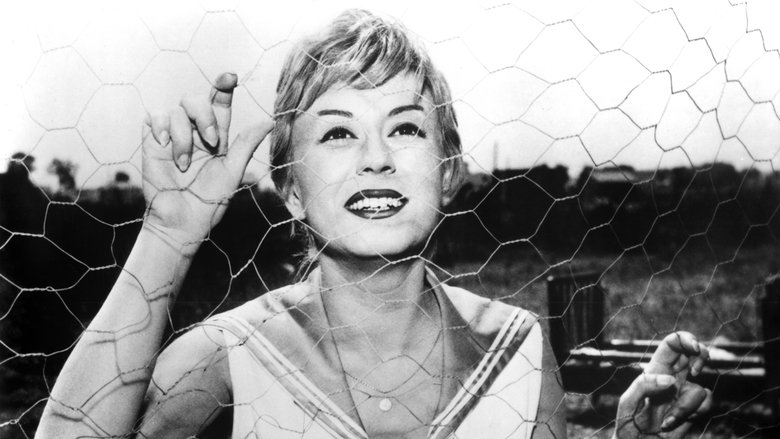
This is the ultimate destruction of her dream. The hidden meaning becomes clear: her hope is the very bait that traps her. The hypnotist scene, which seemed like a moment of public humiliation, was actually an audition for her victimhood; Oscar was in the audience and saw the depth of her desire for love, targeting her as the perfect mark. The film's final moments reveal its true message. As she stumbles back to civilization, utterly defeated, she is met by a group of cheerful, singing youths. Their spontaneous joy slowly penetrates her despair. In the iconic final shot, she looks directly into the camera, a tear streaking her makeup, and offers a small, resilient smile. The meaning is that even after being stripped of everything—love, home, money, and hope—the human spirit can find a reason to go on. Her salvation comes not from a man or a miracle, but from an anonymous moment of shared humanity and an internal decision to live.

Alternative Interpretations

While the dominant interpretation of the ending is one of uplifting resilience, some critics and viewers see it in a more tragic light. This perspective argues that Cabiria's smile is not one of profound strength, but a return to her naive, childlike state, indicating she has learned nothing from her repeated traumas and is doomed to repeat the cycle of hope and brutal disappointment. Her smile could be seen as a defense mechanism, a mask she puts on to survive, rather than a genuine expression of inner renewal.

Another interpretation focuses on the cyclical nature of her suffering as an inescapable fate. The film opens with her being pushed into water for her money and climaxes with a man about to do the same. This reading suggests that Cabiria cannot escape her destiny. The final parade of youths is not a symbol of new life, but merely a fleeting distraction before her tragic life continues. From this viewpoint, the ending is deeply pessimistic, highlighting her inability to change her circumstances and foreshadowing a future where she may end up like the old, homeless prostitute she once saw living in a cave.