Nights of Cabiria
A bittersweet, tragicomic poem to the lonely-hearted, where a spirited woman's resilient hope illuminates the shadowy streets of Rome like a defiant smile through tears.
Nights of Cabiria

Nights of Cabiria

Le notti di Cabiria

"The story of a betrayed but unquenchable little Roman street-walker."

03 October 1957 Italy 110 min ⭐ 8.0 (814)
Director: Federico Fellini
Cast: Giulietta Masina, François Périer, Franca Marzi, Amedeo Nazzari, Aldo Silvani
Drama
Hope and Resilience Innocence vs. Cynicism Search for Love and Salvation Social Alienation and Class
Box Office: $752,045

Overview

"Nights of Cabiria" (Le notti di Cabiria) is a 1957 Italian drama directed by Federico Fellini. The film follows Maria 'Cabiria' Ceccarelli (Giulietta Masina), a fiercely independent and eternally hopeful prostitute living on the outskirts of Rome. The story unfolds in a series of episodic encounters that test her seemingly unbreakable spirit. The film opens with her being robbed and left for dead by her lover, Giorgio, who pushes her into a river.

Surviving this betrayal, Cabiria navigates a world of fleeting highs and crushing lows. She spends a bizarre evening with a famous movie star, Alberto Lazzari (Amedeo Nazzari), only to be hidden away when his glamorous girlfriend returns. She seeks spiritual salvation on a religious pilgrimage with her friends, praying for her life to change, but leaves feeling disillusioned. Her journey is a poignant exploration of faith, disillusionment, and the desperate search for love and dignity in a world that consistently offers cruelty and disappointment.

Core Meaning

The core meaning of "Nights of Cabiria" lies in its profound exploration of human resilience, faith, and the enduring power of hope in the face of relentless despair. Fellini isn't just telling the story of a prostitute; he's crafting a parable about the indomitable nature of the human spirit. Cabiria is repeatedly betrayed, humiliated, and broken down, yet after every fall, she manages to pick herself up and continue searching for goodness and love. The film suggests that true grace and salvation are not found in grand miracles or societal acceptance, but in the simple, profound act of choosing to smile through tears and walk forward, even when all seems lost. It is a testament to the idea that one's inner light can persist even in the darkest of nights.

Thematic DNA

Hope and Resilience 40%
Innocence vs. Cynicism 25%
Search for Love and Salvation 20%
Social Alienation and Class 15%

Hope and Resilience

This is the central theme of the film. Cabiria's blind grip on hope is the core of her character. Despite being constantly victimized, robbed, and heartbroken, she maintains an almost childlike optimism that things will get better. The narrative is a cycle of hope rising and being brutally crushed. Yet, the famous final scene, where she manages a smile through her tears after the ultimate betrayal, embodies this theme perfectly. It suggests that her spirit, while battered, is ultimately unbreakable and that resilience is a form of grace in itself.

Innocence vs. Cynicism

Cabiria is a profound contradiction: a hardened prostitute with the heart and naivete of a child. She exists in a cynical world of pimps, users, and false promises, yet she desperately wants to believe in true love and human goodness. This innocence makes her vulnerable and is repeatedly exploited, most notably by the magician who puts her desires on display for a mocking audience, and by Oscar, who preys on her yearning for a different life. The film juxtaposes her purity of heart with the sordid reality of her environment.

Search for Love and Salvation

Cabiria's primary motivation is to find genuine love and escape her life. This quest takes both secular and spiritual forms. She falls for men who promise affection, like Giorgio and Oscar, only to be met with betrayal. She also seeks a form of spiritual salvation, joining a religious procession and praying to the Madonna to help her change her life, but this too ends in disappointment when no miracle occurs. The film questions whether true salvation can come from external sources (a man, the Church) or must be found within.

Social Alienation and Class

As a prostitute, Cabiria lives on the margins of society. The film starkly contrasts her world with that of the upper class, particularly during her encounter with the movie star Alberto Lazzari. She is awed by his opulent mansion but is ultimately treated as an inconvenience, hidden in the bathroom when his sophisticated mistress returns. This episode highlights her social invisibility and the vast, unbridgeable gap between her existence and the glamorous life she dreams of, reinforcing her status as an outsider.

Character Analysis

Maria 'Cabiria' Ceccarelli

Giulietta Masina

Archetype: The Indomitable Optimist / The Holy Fool
Key Trait: Resilient Hopefulness

Motivation

Cabiria's primary motivation is to find true love and achieve a life of dignity and happiness, far removed from her existence as a prostitute. She craves respectability and genuine human connection, believing that if she can find one good man to love her, her life will be redeemed.

Character Arc

Cabiria does not have a traditional character arc of profound change; rather, her journey is one of endurance. She begins as a hopeful, naive woman who is brutally betrayed, and she ends in the same position. However, her arc is internal. She moves from a fierce, defensive bitterness after the first betrayal to a state of complete, soul-crushing despair after the last. Her final act of raising her head and smiling suggests not a return to naivete, but the emergence of a more profound, resilient spirit that can acknowledge suffering and still choose life.

Oscar D'Onofrio

François Périer

Archetype: The Deceiver / False Savior
Key Trait: Manipulative

Motivation

Oscar's sole motivation is money. He preys on Cabiria's deep-seated desire for love and marriage, which he likely witnessed during the hypnotist show, to manipulate her into selling her home and handing over her life's savings. His interest is purely financial and predatory.

Character Arc

Oscar's arc is one of escalating deception. He presents himself as a kind, understanding man who sees Cabiria's inner goodness, a stark contrast to the others in her life. He carefully builds her trust through chaste meetings and promises of marriage. However, his kindness is revealed to be a predatory performance. His nervousness and guilt become more apparent as he leads her to the cliff, but he ultimately follows through with his cruel plan, revealing his true nature as a heartless thief.

Alberto Lazzari

Amedeo Nazzari

Archetype: The Indifferent Idol
Key Trait: Self-Absorbed

Motivation

Lazzari is motivated by ego and momentary impulse. He wants company and an audience after being humiliated by his girlfriend, Jessy. He is not interested in Cabiria as a person, but only as a placeholder to soothe his wounded pride for an evening.

Character Arc

Alberto Lazzari is a static character who represents the glittering, self-absorbed world of fame that is completely inaccessible to Cabiria. He picks her up on a whim after a fight with his girlfriend, treating her as a temporary distraction. His arc is minimal; he is briefly charming and then dismissive, quickly forgetting Cabiria the moment his glamorous life resumes. He doesn't change or learn anything; he merely uses and discards her.

Wanda

Franca Marzi

Archetype: The Grounded Friend / The Voice of Reason
Key Trait: Pragmatic

Motivation

Wanda's motivation is her friendship with Cabiria. She genuinely cares for her friend's well-being, even if she expresses it through gruff realism. She tries to protect Cabiria from her own naivete and offers comfort when her dreams inevitably shatter.

Character Arc

Wanda is a constant in Cabiria's life. She is more cynical and worldly-wise than Cabiria, acting as a grounding force. Her arc is flat; she remains the skeptical but loyal friend throughout. She is there to comfort Cabiria after Giorgio's betrayal and is implicitly skeptical of Oscar's sudden appearance. Wanda represents a form of pragmatic survival, a contrast to Cabiria's dreamy idealism.

Symbols & Motifs

The Final Smile

Meaning:

Cabiria's final, tear-stained smile symbolizes the ultimate triumph of the human spirit over adversity. It is an act of profound, almost defiant, hope. It signifies that while she has lost everything tangible—her money, her home, her dream of marriage—her core essence, her capacity for life and hope, remains intact. It is not a sign of naivete, but of a deep, resilient strength.

Context:

In the last sequence, after Oscar has robbed her and abandoned her on a cliffside, a devastated Cabiria stumbles back to the road. A group of young, joyful musicians and dancers surround her. As they play, her desolate expression slowly transforms into a fragile, knowing smile, and she looks directly at the camera, breaking the fourth wall and connecting her resilience directly with the audience.

Water (The River)

Meaning:

Water in the film symbolizes both betrayal and a form of baptism or forced transformation. It represents the recurring dangers Cabiria faces from those she trusts. Each immersion is a near-death experience that strips her of her possessions and illusions, forcing her to confront the cruelty of her world and start anew.

Context:

The film opens with Cabiria's lover, Giorgio, pushing her into the Tiber river to steal her purse. The film's climax sees her final love interest, Oscar, leading her to a cliff above a lake with the same intention, creating a horrifying narrative parallel that underscores the cyclical nature of her victimhood.

Cabiria's House

Meaning:

Her small, self-owned home symbolizes her fierce independence and her tangible stake in the world. It is the one thing that is truly hers, a source of immense pride in a life where she has little else. Selling it represents the ultimate sacrifice for her dream of love and a new life, making its loss all the more devastating.

Context:

Cabiria often boasts about owning her own house, complete with modern amenities like electricity and a thermometer. When she falls for Oscar, she joyfully sells her home to gather her dowry, believing she is trading her solitary independence for a future of shared happiness. This act makes Oscar's subsequent betrayal a complete and total devastation, as he takes not just her money but the foundation of her life.

Memorable Quotes

Guess there's some justice in the world. You suffer, you go through hell. Then happiness comes along for everyone.

— Maria 'Cabiria' Ceccarelli

Context:

Cabiria says this to Oscar during one of their meetings, explaining her optimistic outlook on life. She is fully invested in the belief that he is her reward for a life of hardship, making his eventual betrayal all the more devastating.

Meaning:

This quote perfectly encapsulates Cabiria's unwavering, almost theological belief in hope and cosmic fairness. It's the philosophy that allows her to endure constant suffering, a mantra she tells Oscar, believing he is the 'happiness' that has finally arrived after her hellish experiences. Its tragic irony is revealed when he becomes her worst hell.

Madonna, Madonna, help me to change my life. Bestow your grace on me too. Make me change my life.

— Maria 'Cabiria' Ceccarelli

Context:

Cabiria and her friends make a pilgrimage to the Sanctuary of the Madonna of Divine Love. Amidst a crowd of fervent believers, she passionately offers this prayer, hoping for a miracle that will alter the course of her life.

Meaning:

This is Cabiria's desperate plea for divine intervention. It reveals the depth of her desire to escape her circumstances and her faith that an external, higher power can grant her the salvation she cannot achieve on her own. The prayer highlights her vulnerability and her earnest wish for a moral and spiritual transformation.

He loves me! Wanda! He loves me!

— Maria 'Cabiria' Ceccarelli

Context:

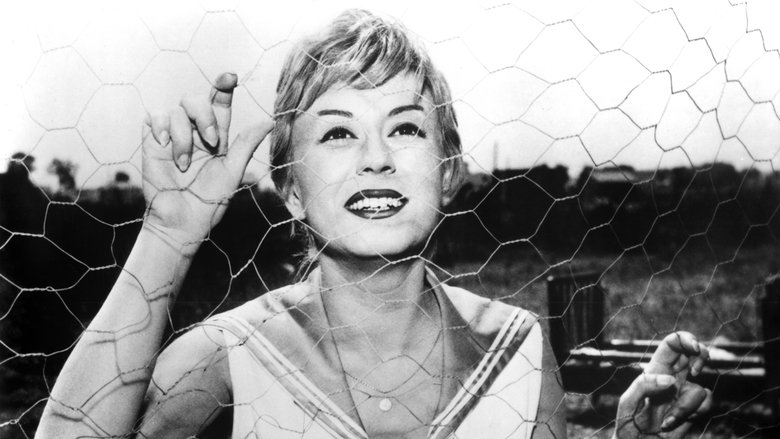
After Oscar proposes, Cabiria rushes to tell her friend Wanda the news. She yells this through a fence, radiating a joy so intense it is almost painful to watch, given the audience's suspicion of Oscar's motives.

Meaning:

This triumphant, ecstatic cry represents the peak of Cabiria's joy and the culmination of all her hopes. For a moment, she believes she has finally achieved the love and acceptance she has craved her entire life. The quote's power lies in its unrestrained, pure happiness, which the audience knows is tragically misplaced.

Philosophical Questions

What is the nature of hope in a seemingly hopeless world?

The film relentlessly questions whether hope is a saving grace or a curse. Cabiria's hope is what keeps her going, but it is also the very thing that makes her vulnerable to predators like Oscar. Each time she allows herself to hope for love and a better life, she is met with crushing disaster. The film explores if hope is an irrational, self-destructive force or the essential quality that defines our humanity and allows us to survive the unbearable. The ambiguous ending leaves this question open: is her final smile a triumph of hope, or the beginning of another cycle of foolish belief?

Can grace and purity exist in the most debased of circumstances?

Fellini presents Cabiria, a prostitute living a sordid life, as a figure of profound innocence and spiritual purity. She is a 'hooker with a heart of gold,' but the film treats this not as a cliché but as a serious theological proposition. Despite her profession and the cruelty she endures, her core self remains uncorrupted. The film contrasts the failed, organized religion of the pilgrimage with Cabiria's innate, personal grace. It asks whether sainthood is defined by piety and circumstance, or by an unyielding capacity for love and forgiveness in the face of degradation.

Is it better to be a knowing cynic or a hopeful fool?

The film contrasts Cabiria's worldview with that of her friend Wanda and the other prostitutes, who are more cynical and resigned to their fate. Wanda's pragmatism keeps her safe but also robs her of the ecstatic joy Cabiria experiences, however fleetingly. Cabiria's foolish hope leads to immense pain, but it also allows her moments of transcendent happiness. Fellini seems to champion the path of the 'holy fool,' suggesting that a life lived with an open, vulnerable heart, even if it leads to suffering, is more profound and ultimately more human than a life shielded by cynicism.

Alternative Interpretations

While the dominant interpretation of the ending is one of uplifting resilience, some critics and viewers see it in a more tragic light. This perspective argues that Cabiria's smile is not one of profound strength, but a return to her naive, childlike state, indicating she has learned nothing from her repeated traumas and is doomed to repeat the cycle of hope and brutal disappointment. Her smile could be seen as a defense mechanism, a mask she puts on to survive, rather than a genuine expression of inner renewal.

Another interpretation focuses on the cyclical nature of her suffering as an inescapable fate. The film opens with her being pushed into water for her money and climaxes with a man about to do the same. This reading suggests that Cabiria cannot escape her destiny. The final parade of youths is not a symbol of new life, but merely a fleeting distraction before her tragic life continues. From this viewpoint, the ending is deeply pessimistic, highlighting her inability to change her circumstances and foreshadowing a future where she may end up like the old, homeless prostitute she once saw living in a cave.

Cultural Impact

"Nights of Cabiria" is a landmark of Italian cinema, representing a crucial transition point for Federico Fellini. While rooted in the tenets of Italian Neorealism—focusing on the working class, using on-location shooting, and depicting social struggles—the film transcends the movement's political and sociological focus. Fellini shifts the perspective inward, concentrating on the main character's psychological and spiritual journey, what some critics have called a more moral or poetic form of neorealism. This evolution paved the way for the more surreal and fantastical works that would define his later career, such as "La Dolce Vita" and "8 1/2".

Giulietta Masina's performance is considered one of the greatest in cinema history, creating an unforgettable character often compared to Charlie Chaplin's Little Tramp for her blend of comedy, pathos, and resilience. The film was a critical success, winning the Oscar for Best Foreign Language Film. Its influence is widespread; the story was famously adapted into the Broadway musical and film "Sweet Charity." The film's final shot, with Cabiria breaking the fourth wall with a tearful smile, is one of cinema's most iconic and powerful endings, celebrated for its profound message of hope and the endurance of the human spirit.

Audience Reception

Audiences have overwhelmingly praised "Nights of Cabiria," largely due to Giulietta Masina's universally acclaimed performance. Viewers find the character of Cabiria to be one of the most sympathetic and memorable in cinema, describing her as naive, fierce, jaded, and always optimistic. Many are deeply moved by the film's blend of comedy and tragedy, finding it charming, hilarious, and heartbreaking, often all at once. The primary point of praise is the film's emotional core and its powerful message of resilience. The ending is frequently cited as one of the most devastating and ultimately uplifting conclusions in film history, with many viewers admitting it moved them to tears. Criticism is sparse, but some early reviews found the sordid atmosphere and the main character's 'farcical mannerisms' to be at odds with the realistic themes. However, the modern consensus is that the film is a masterpiece, with audiences celebrating its ability to find beauty and hope in the bleakest of circumstances.

Interesting Facts

  • The character of Cabiria first appeared in a brief scene in Fellini's earlier film, "The White Sheik" (1952), also played by Giulietta Masina.
  • Financing the film was difficult because producers were reluctant to back a movie featuring prostitutes as sympathetic main characters. Producer Dino De Laurentiis eventually agreed to fund it himself.
  • Fellini based some characters and situations on his encounters with a real-life prostitute and a philanthropist known as 'the man with the sack'.
  • The screenplay was co-written by Pier Paolo Pasolini, who was brought on to help with the authenticity of the dialogue of Rome's demimonde.
  • The film won the Academy Award for Best Foreign Language Film in 1958, the second consecutive win for Fellini and Masina after "La Strada" (1956).
  • A crucial seven-minute sequence featuring 'the man with the sack,' who gives aid to the poor, was cut from the original release by censors, allegedly due to pressure from the Church, but was restored in the 1998 re-release.
  • Giulietta Masina, the lead actress, was married to director Federico Fellini. This was one of their most celebrated collaborations.
  • Masina won the Best Actress award at the Cannes Film Festival for her performance.

⚠️ Spoiler Analysis

Click to reveal detailed analysis with spoilers

Frequently Asked Questions

Explore More About This Movie

Dive deeper into specific aspects of the movie with our detailed analysis pages

Comments (0)

Leave a comment

No comments yet. Be the first to share your thoughts!