Le notti di Cabiria
"The story of a betrayed but unquenchable little Roman street-walker."
Nights of Cabiria - Symbolism & Philosophy
Symbols & Motifs
The Final Smile
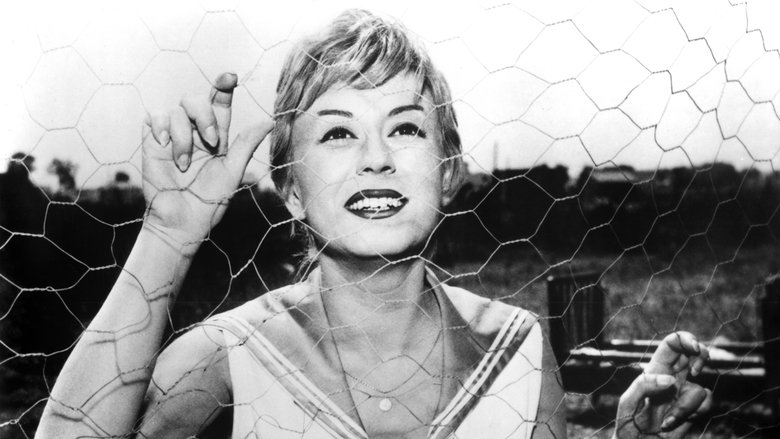
Cabiria's final, tear-stained smile symbolizes the ultimate triumph of the human spirit over adversity. It is an act of profound, almost defiant, hope. It signifies that while she has lost everything tangible—her money, her home, her dream of marriage—her core essence, her capacity for life and hope, remains intact. It is not a sign of naivete, but of a deep, resilient strength.
In the last sequence, after Oscar has robbed her and abandoned her on a cliffside, a devastated Cabiria stumbles back to the road. A group of young, joyful musicians and dancers surround her. As they play, her desolate expression slowly transforms into a fragile, knowing smile, and she looks directly at the camera, breaking the fourth wall and connecting her resilience directly with the audience.
Water (The River)
Water in the film symbolizes both betrayal and a form of baptism or forced transformation. It represents the recurring dangers Cabiria faces from those she trusts. Each immersion is a near-death experience that strips her of her possessions and illusions, forcing her to confront the cruelty of her world and start anew.
The film opens with Cabiria's lover, Giorgio, pushing her into the Tiber river to steal her purse. The film's climax sees her final love interest, Oscar, leading her to a cliff above a lake with the same intention, creating a horrifying narrative parallel that underscores the cyclical nature of her victimhood.
Cabiria's House
Her small, self-owned home symbolizes her fierce independence and her tangible stake in the world. It is the one thing that is truly hers, a source of immense pride in a life where she has little else. Selling it represents the ultimate sacrifice for her dream of love and a new life, making its loss all the more devastating.
Cabiria often boasts about owning her own house, complete with modern amenities like electricity and a thermometer. When she falls for Oscar, she joyfully sells her home to gather her dowry, believing she is trading her solitary independence for a future of shared happiness. This act makes Oscar's subsequent betrayal a complete and total devastation, as he takes not just her money but the foundation of her life.
Philosophical Questions
What is the nature of hope in a seemingly hopeless world?
The film relentlessly questions whether hope is a saving grace or a curse. Cabiria's hope is what keeps her going, but it is also the very thing that makes her vulnerable to predators like Oscar. Each time she allows herself to hope for love and a better life, she is met with crushing disaster. The film explores if hope is an irrational, self-destructive force or the essential quality that defines our humanity and allows us to survive the unbearable. The ambiguous ending leaves this question open: is her final smile a triumph of hope, or the beginning of another cycle of foolish belief?
Can grace and purity exist in the most debased of circumstances?
Fellini presents Cabiria, a prostitute living a sordid life, as a figure of profound innocence and spiritual purity. She is a 'hooker with a heart of gold,' but the film treats this not as a cliché but as a serious theological proposition. Despite her profession and the cruelty she endures, her core self remains uncorrupted. The film contrasts the failed, organized religion of the pilgrimage with Cabiria's innate, personal grace. It asks whether sainthood is defined by piety and circumstance, or by an unyielding capacity for love and forgiveness in the face of degradation.
Is it better to be a knowing cynic or a hopeful fool?
The film contrasts Cabiria's worldview with that of her friend Wanda and the other prostitutes, who are more cynical and resigned to their fate. Wanda's pragmatism keeps her safe but also robs her of the ecstatic joy Cabiria experiences, however fleetingly. Cabiria's foolish hope leads to immense pain, but it also allows her moments of transcendent happiness. Fellini seems to champion the path of the 'holy fool,' suggesting that a life lived with an open, vulnerable heart, even if it leads to suffering, is more profound and ultimately more human than a life shielded by cynicism.
Core Meaning
The core meaning of "Nights of Cabiria" lies in its profound exploration of human resilience, faith, and the enduring power of hope in the face of relentless despair. Fellini isn't just telling the story of a prostitute; he's crafting a parable about the indomitable nature of the human spirit. Cabiria is repeatedly betrayed, humiliated, and broken down, yet after every fall, she manages to pick herself up and continue searching for goodness and love. The film suggests that true grace and salvation are not found in grand miracles or societal acceptance, but in the simple, profound act of choosing to smile through tears and walk forward, even when all seems lost. It is a testament to the idea that one's inner light can persist even in the darkest of nights.