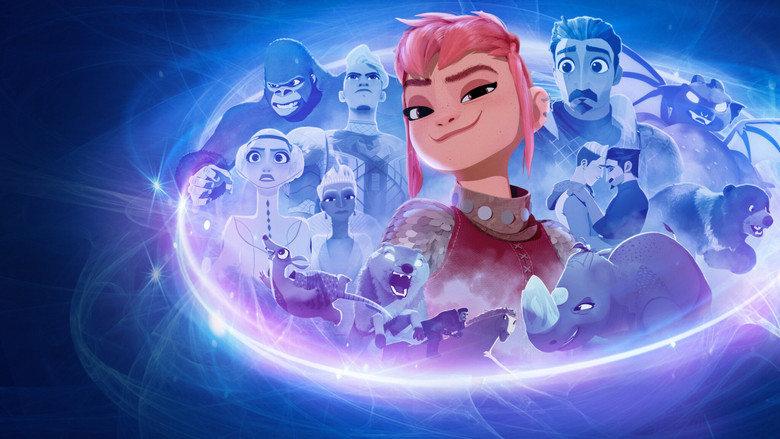
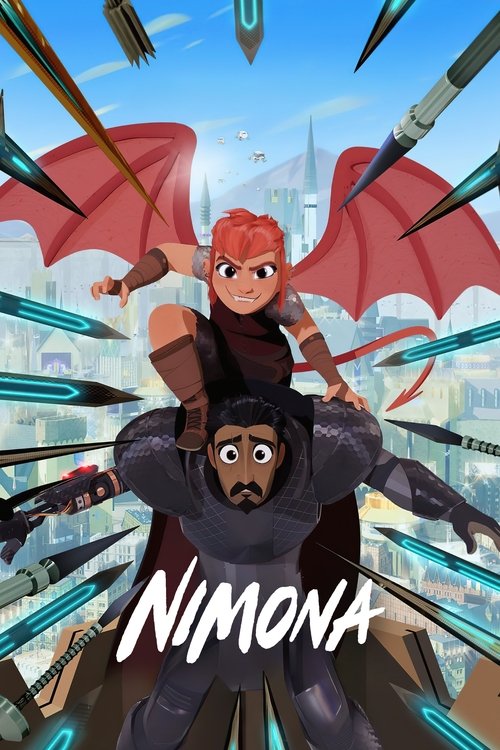
"A new hero takes shape."
Nimona - Symbolism & Philosophy
Symbols & Motifs
The Wall
The massive wall surrounding the kingdom symbolizes fear, isolation, and the enforcement of prejudice. It is a physical manifestation of the institution's doctrine to fear the unknown and reject anything different from their established norm. Its destruction at the end signifies the breaking down of these mental and social barriers.
The Wall is a constant presence, enclosing the techno-medieval city. It was built by the order of the legendary hero Gloreth to "protect" the kingdom from monsters. The Director uses the wall's defenses to maintain control. The film's climax involves the wall's partial destruction, revealing a normal, non-threatening world outside and symbolizing a new era of openness for the kingdom.
Shapeshifting
Nimona's shapeshifting is a direct and powerful symbol of fluid identity, particularly gender fluidity. It represents a refusal to be categorized or confined to a single form or label. It is her nature and her power, but it is also the source of the world's fear and prejudice against her. She explains that not shifting would be akin to not truly living.
Throughout the film, Nimona transforms into a vast array of animals and even other people to fight, cause chaos, and express her emotions. Her shifting is often explosive and vibrant, visually represented by the color pink. When Ballister asks her to be "girl you," she pushes back, asserting her identity is simply "Nimona." The fluidity of her form is central to her character and the film's message.
Gloreth's Sword and Statue
The sword and statue of Gloreth symbolize the glorification of a false history and the institutional power of a lie. The statue is a constant reminder of the kingdom's founding myth: the heroic defeat of a monster. The sword represents the weaponization of that myth to justify violence against anyone deemed "other."
The statue of Gloreth stands prominently in the city center. At the film's climax, a despairing Nimona, having transformed into the very monster of the legend, attempts to commit suicide by impaling herself on the statue's sword, showing her internalization of the world's hatred. Ballister stepping in front of the blade to save her is the ultimate rejection of this violent legacy.
The Color Pink
The color pink is intrinsically linked to Nimona and symbolizes her rebellious, chaotic, and unapologetic nature. It's a vibrant, punk-rock color that visually contrasts with the rigid, metallic order of the Institute. It represents her unrestrained life force and emotions.
Nimona's primary human form has pink hair, and her transformations are often accompanied by flashes or explosions of pink. Her final, sacrificial form is a giant, phoenix-like creature of pink/red light, turning the color of her chaotic energy into a symbol of heroic salvation.
Philosophical Questions
Are heroes and villains created by their actions or by the stories society tells about them?
The film deeply explores this question by presenting a society where 'hero' and 'monster' are rigidly defined roles based on a 1,000-year-old story. Ballister, a hero, is instantly turned into a villain by a single event he didn't commit. Nimona has been labeled a monster for centuries simply for being different. The film argues that these labels are social constructs used to maintain order. It suggests that true heroism lies in defying these narratives, questioning authority, and showing compassion to those who have been villainized.
What is the relationship between identity and form?
Through Nimona's shapeshifting, the film questions the idea that identity is tied to a stable, physical form. Nimona is not a girl who can turn into a rhino; she is simply Nimona, and both forms are equally her. This challenges traditional notions of a fixed self, presenting identity as something fluid, performative, and internally defined rather than externally categorized. Her resistance to being labeled reflects a philosophical stance that the self transcends physical appearance and societal classification.
Can a society built on a foundational lie ever be just?
The kingdom's entire social and political structure—the wall, the Institute, the knights' purpose—is based on the lie that Gloreth vanquished an evil monster. This lie fosters fear, xenophobia, and institutional prejudice. The film demonstrates that this foundation inevitably leads to injustice, as seen in the persecution of Nimona and the framing of Ballister. The narrative concludes that for justice to be possible, the foundational lie must be exposed and the structures it supports (like the wall) must come down, suggesting that a just society cannot be built on a bed of fear and deception.
Core Meaning
The core meaning of "Nimona" revolves around the themes of acceptance, the questioning of authority, and the danger of institutionalized fear. The film argues that history is often a narrative written by the powerful to justify prejudice and maintain control. It champions the idea that individuals should not be defined by societal labels or fear of the 'other'. Nimona's very existence as a shapeshifter defies easy categorization, making her a powerful symbol for gender fluidity and the rejection of rigid identities. The film's central message is a call for empathy and understanding, urging the audience to look past appearances and preconceived notions to see the person within, ultimately asserting that love and acceptance are more powerful forces than fear and tradition.