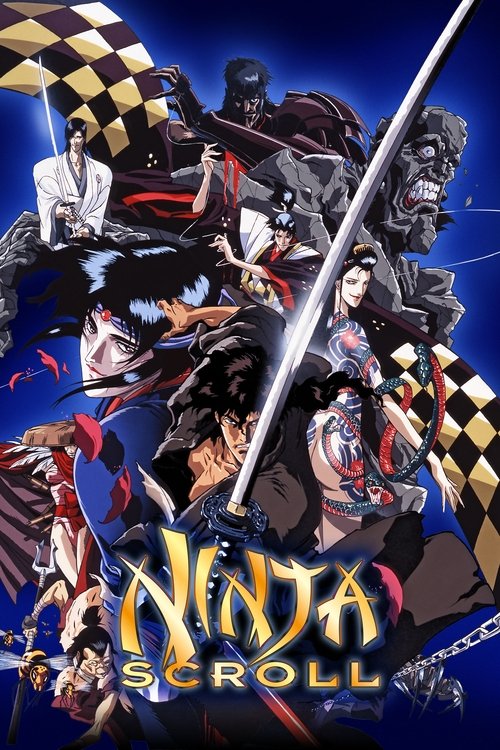
獣兵衛忍風帖
"Feudal Japan—a time of danger, intrigue and deception . . ."
Ninja Scroll - Symbolism & Philosophy
Symbols & Motifs
Kagero's Poison
Symbolizes her isolation and her dehumanization by society. It renders her untouchable and defines her as a weapon/tool rather than a human being. Ultimately, it becomes the paradox of the 'cure'—her toxic existence saves Jubei.
Used throughout the film as a barrier to intimacy (she cannot be touched) and finally as the antidote transferred through a kiss that saves Jubei's life.
Molten Gold
Represents the suffocating and destructive nature of material greed. It is not just wealth, but a heavy burden that leads to doom.
In the final battle, the ship catches fire, melting the gold shipment. Gemma falls into it, and despite his immortality, he is trapped at the bottom of the sea, encased in the very thing he coveted.
The Blue Light (Kawajiri Blue)
A visual motif representing the supernatural, the night, and the presence of death. It creates an otherworldly atmosphere that separates the 'demonic' world from the mundane.
Used extensively in night scenes, particularly during battles with the Eight Devils (e.g., the bamboo forest fight, the scene with Tessai).
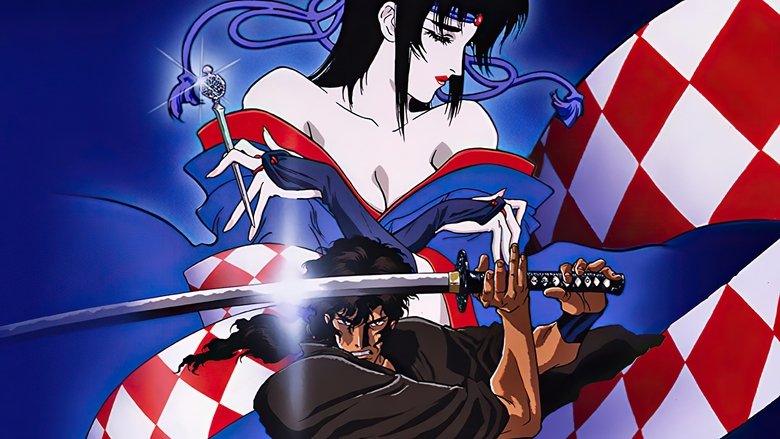
Kagero's Headband
Symbolizes memory, lost love, and the lingering human connection that survives death. It is the only tangible piece of Kagero that Jubei keeps.
After Kagero dies, Jubei ties her headband around his sword hilt. In the final shot, the wind blows the ribbons, showing she is still 'with' him as he wanders.
Philosophical Questions
Does a tool have a soul?
The film constantly refers to ninjas as 'tools' or 'weapons.' Jubei's journey is about rejecting this label, while Kagero struggles to find her humanity beneath her utility. The film asks if one can find worth when society views them only as an expendable asset.
Is redemption possible for the blood-stained?
Jubei is a killer who has slain his own comrades. The film explores whether such a man can find peace or if he is doomed to wander the 'path of the beast' forever. His act of love towards Kagero suggests a redemption through connection, even if fleeting.
Core Meaning
At its heart, Ninja Scroll is a rejection of the instrumentalization of human beings. In a world where ninjas are treated as disposable tools and women as mere vessels for poison or pleasure, Jubei stands out because he values individual life over clan loyalty or political gain. The film illustrates that while the 'strong do eat the weak' (as stated by the villain Gemma), true humanity lies in the refusal to treat others as objects. It explores the path of the outsider who retains his soul in an amoral world, suggesting that compassion is the only true defiance against a corrupt system.