Ninja Scroll
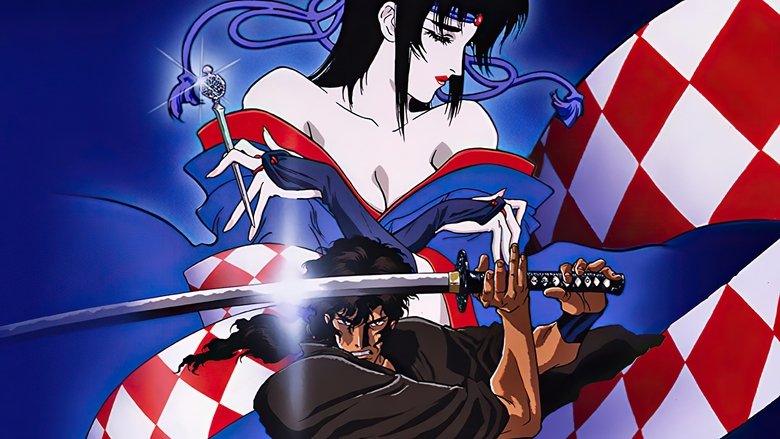
A visceral storm of blood, steel, and shadows where a wandering swordsman and a poison-cursed kunoichi battle demonic forces. It is a dark, erotic elegy to the fleeting nature of life, painted in shades of midnight blue and crimson.
Ninja Scroll

Ninja Scroll

獣兵衛忍風帖

"Feudal Japan—a time of danger, intrigue and deception . . ."

05 June 1993 Japan 94 min ⭐ 7.8 (711)
Director: Yoshiaki Kawajiri
Cast: Koichi Yamadera, Emi Shinohara, Takeshi Aono, Daisuke Gori, Ryuuzaburou Ootomo
Animation Fantasy Action Adventure
The Cost of Greed and Power Individuality vs. Collectivism Tragedy of the 'Cursed' Woman The Cycle of Violence

Overview

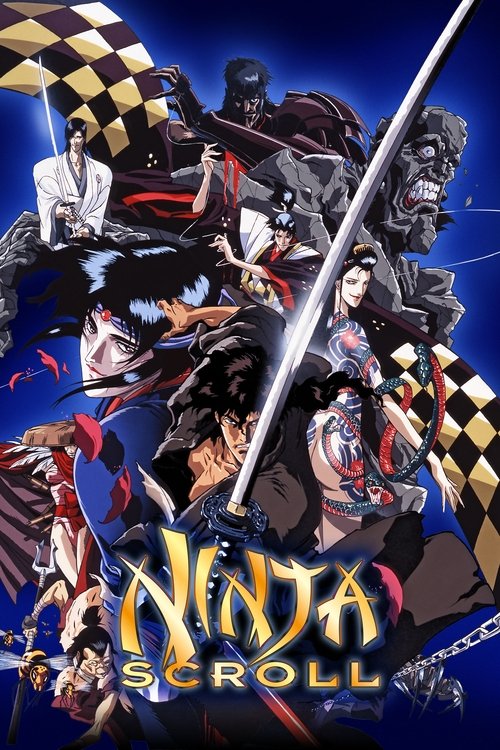
In feudal Japan, a village is wiped out by a mysterious plague, prompting the Mochizuki clan to send a team of ninjas to investigate. The team is brutally massacred by the Eight Devils of Kimon, a group of supernatural warriors with terrifying abilities. The sole survivor, Kagero, is a poison-taster whose body is lethal to the touch. She is rescued by Jubei Kibagami, a wandering masterless samurai (ronin) with a dark past, who reluctantly becomes entangled in the conflict through the machinations of Dakuan, a cunning government spy.

As Jubei and Kagero travel together, they uncover a conspiracy involving a massive shipment of gold intended to overthrow the Tokugawa Shogunate. The leader of the Devils is revealed to be Himuro Gemma, a man from Jubei's past who possesses the power of immortality. Jubei must face his own history while battling the grotesque and powerful Devils one by one.

The journey forces Jubei and Kagero to confront their own isolated existences. While fighting for survival, a tragic bond forms between the swordsman who seeks redemption and the woman whose very touch brings death. The story culminates in a fiery showdown on a ship of gold, where the weight of greed literally drags the villain to the depths of hell.
Core Meaning

At its heart, Ninja Scroll is a rejection of the instrumentalization of human beings. In a world where ninjas are treated as disposable tools and women as mere vessels for poison or pleasure, Jubei stands out because he values individual life over clan loyalty or political gain. The film illustrates that while the 'strong do eat the weak' (as stated by the villain Gemma), true humanity lies in the refusal to treat others as objects. It explores the path of the outsider who retains his soul in an amoral world, suggesting that compassion is the only true defiance against a corrupt system.

Thematic DNA

The Cost of Greed and Power 30%
Individuality vs. Collectivism 25%
Tragedy of the 'Cursed' Woman 25%
The Cycle of Violence 20%

The Cost of Greed and Power

The central conflict revolves around a shipment of gold meant to buy power. The film physically manifests the weight of this greed in the climax, where the villain Gemma is literally weighed down and drowned by the molten gold he sought to possess. It critiques the feudal politics where entire villages are sacrificed for secrets and power.

Individuality vs. Collectivism

Jubei represents the rugged individualist who rejects the 'ninja way' of blind obedience. In contrast, the ninjas (both the Koga clan and the Devils) operate as tools for their masters. Jubei's survival and moral victory come from his refusal to be a pawn, while those who serve systems are inevitably discarded.

Tragedy of the 'Cursed' Woman

Kagero's character explores the theme of bodily autonomy and objectification. She is a 'poison taster' first and a woman second, defined by her lethality and utility to men. Her tragedy is that her only means of intimacy—and her only way to save the man she loves—is through death and sacrifice.

The Cycle of Violence

The villains are often ghosts from the past (Gemma) or grotesque monstrosities created by violent arts. The film suggests that violence begets more violence, and the only escape is the wandering path of the ronin who walks away after the battle is done, refusing to build a kingdom on blood.

Character Analysis

Jubei Kibagami

Koichi Yamadera (JP) / Dean Wein (EN)

Archetype: The Reluctant Hero / Ronin
Key Trait: Cynical Pragmatism masking deep morality

Motivation

Initially money and survival, but shifts to personal honor and revenge for Kagero and his fallen comrades.

Character Arc

A former ninja who betrayed his clan to maintain his humanity, Jubei begins as a cynical wanderer. Through his interaction with Kagero, he confronts his past trauma involving Gemma. He moves from a mercenary who just wants to be left alone to a man who fights to avenge the dignity of a woman who was treated as a tool.

Kagero

Emi Shinohara (JP) / Wendee Lee (EN)

Archetype: The Tragic Heroine / Femme Fatale
Key Trait: Poisonous Body

Motivation

Duty to her clan, and later, the desperate desire for human connection and love.

Character Arc

She starts as a duty-bound tool of the Mochizuki clan, accepting her fate as a poison taster. Her journey is one of realizing her own desire to be treated as a human woman, not a weapon. Her death is a reclamation of her agency, choosing to die for love rather than duty.

Dakuan

Takeshi Aono (JP) / Rudy Luzion (EN)

Archetype: The Trickster / Mentor
Key Trait: Deceptive Cunning

Motivation

Service to the Tokugawa Shogunate and political stability.

Character Arc

A manipulative government spy who uses everyone around him. He does not change morally, serving as a constant reminder of the cold, utilitarian world Jubei rejects. He represents the system that uses people like Jubei and Kagero.

Himuro Gemma

Daisuke Gori (JP) / Richard Epcar (EN)

Archetype: The Shadow / The Immortal
Key Trait: Immortality / Reincarnation

Motivation

Absolute Power and greed (to become the Shogun of the Dark).

Character Arc

Jubei's former leader who faked his death. He has shed all humanity for power and immortality. He is static in his evil, serving as the dark mirror to Jubei—what a warrior becomes when they lose their code.

Symbols & Motifs

Kagero's Poison

Meaning:

Symbolizes her isolation and her dehumanization by society. It renders her untouchable and defines her as a weapon/tool rather than a human being. Ultimately, it becomes the paradox of the 'cure'—her toxic existence saves Jubei.

Context:

Used throughout the film as a barrier to intimacy (she cannot be touched) and finally as the antidote transferred through a kiss that saves Jubei's life.

Molten Gold

Meaning:

Represents the suffocating and destructive nature of material greed. It is not just wealth, but a heavy burden that leads to doom.

Context:

In the final battle, the ship catches fire, melting the gold shipment. Gemma falls into it, and despite his immortality, he is trapped at the bottom of the sea, encased in the very thing he coveted.

The Blue Light (Kawajiri Blue)

Meaning:

A visual motif representing the supernatural, the night, and the presence of death. It creates an otherworldly atmosphere that separates the 'demonic' world from the mundane.

Context:

Used extensively in night scenes, particularly during battles with the Eight Devils (e.g., the bamboo forest fight, the scene with Tessai).

Kagero's Headband

Meaning:

Symbolizes memory, lost love, and the lingering human connection that survives death. It is the only tangible piece of Kagero that Jubei keeps.

Context:

After Kagero dies, Jubei ties her headband around his sword hilt. In the final shot, the wind blows the ribbons, showing she is still 'with' him as he wanders.

Memorable Quotes

If you want to kill me, you mustn't make any sound at all.

— Utsutsu Mujuro

Context:

Said to Jubei during their duel in the bamboo forest, emphasizing Mujuro's reliance on hearing.

Meaning:

Highlights the supernatural skill level of the combatants and the tension of the blind warrior archetype.

Burn in hell.

— Jubei Kibagami

Context:

Jubei says this as he kicks Gemma into the molten gold, sealing his fate.

Meaning:

The ultimate rejection of the villain. It's not just a kill; it's a condemnation.

I thought rats usually leave a sinking ship.

— Jubei Kibagami

Context:

Said to Gemma during the final confrontation on the burning ship.

Meaning:

A sharp insult reflecting Jubei's wit and his view of Gemma as vermin despite his power.

My body is saturated with poison. It's so strong that even the touch of my lips will kill instantly. No one can touch me. Anyone who dares to... dies.

— Kagero

Context:

She explains to Jubei why she pushes people away and why she is used as a tool.

Meaning:

Explains her tragic condition and the impossibility of her having a normal life or love.

Philosophical Questions

Does a tool have a soul?

The film constantly refers to ninjas as 'tools' or 'weapons.' Jubei's journey is about rejecting this label, while Kagero struggles to find her humanity beneath her utility. The film asks if one can find worth when society views them only as an expendable asset.

Is redemption possible for the blood-stained?

Jubei is a killer who has slain his own comrades. The film explores whether such a man can find peace or if he is doomed to wander the 'path of the beast' forever. His act of love towards Kagero suggests a redemption through connection, even if fleeting.

Alternative Interpretations

The Political Allegory: Some critics view the film as a cynical critique of the Tokugawa Shogunate's stability. The government (Dakuan) is just as ruthless and manipulative as the demons (Gemma), suggesting that political order is maintained only through the exploitation of outcasts like Jubei and Kagero.

The Feminist Reading: While often criticized for its sexual violence, an alternative reading suggests the film highlights the tragedy of female objectification in a patriarchal warrior society. Kagero's struggle is to reclaim her body from being a 'vessel' (for poison or men) to being her own person, achieving this autonomy only in her final choice of sacrifice.

Cultural Impact

Ninja Scroll is widely considered one of the 'gateway drugs' for Western anime fandom in the 1990s, sitting alongside Akira and Ghost in the Shell as part of the 'Big Three' that defined the medium for international audiences. Its release by Manga Entertainment on VHS became legendary for its 'Adults Only' sticker, introducing Western viewers to the idea that animation could be hyper-violent, sexual, and morally complex.

Historically, it revitalized the chanbara (samurai cinema) genre in animation, blending it with dark fantasy and horror elements. Its influence on Hollywood is direct; the Wachowskis required the stunt team for The Matrix to watch Ninja Scroll to understand the physics-defying action they wanted to achieve. It cemented the 'cool, stoic anime swordsman' trope in the West and remains the gold standard for ninja-themed anime.

Audience Reception

Praised: The film is universally acclaimed for its fluid, high-octane animation, imaginative battle choreography, and the unique designs of the Eight Devils. The pacing is often cited as perfect, with no wasted scenes. Jubei is considered one of the coolest anime protagonists of all time.

Criticized: The primary criticism concerns the high level of sexual violence, specifically the rape scenes, which some modern viewers find gratuitous or exploitative. The plot is sometimes described as a 'video game structure' (fight boss, move to next boss).

Verdict: A cult classic and a masterpiece of the action genre, though it requires a strong stomach for gore and sexual content.

Interesting Facts

  • The film was written and directed by Yoshiaki Kawajiri, a legendary figure in 'midnight anime' known for his dark, stylish, and violent aesthetic.
  • The character of Jubei Kibagami is a loose homage to the historical samurai Yagyū Jūbei Mitsuyoshi, a frequent subject of Japanese pop culture.
  • The Wachowskis cited Ninja Scroll as a major influence on The Matrix, particularly for the action choreography and 'wire-fu' style fighting.
  • In the UK, the film was initially cut by approximately 52 seconds to remove scenes of sexual violence (specifically the rape scene) and shots involving shurikens (throwing stars), which were banned items at the time.
  • Kagero's character design and purple outfit are a visual homage to the film Lady Snowblood (1973).
  • Despite its massive popularity in the West (United States and Europe), the film was only a modest success in Japan, where it is often seen as a 'B-movie' style production.
  • Director Yoshiaki Kawajiri also designed the characters, ensuring his signature angular style was present in every frame.
  • A TV series sequel, Ninja Scroll: The Series, was released in 2003, but it was directed by Tatsuo Sato, not Kawajiri.

Easter Eggs

Futaro Yamada Homage

The entire film is a stylistic homage to the ninja novels of Futaro Yamada (specifically The Kouga Ninja Scrolls), which feature warring ninja clans with bizarre, supernatural abilities (insect users, poison users, immortals).

Lady Snowblood Costume

Kagero's purple kimono and overall look are a direct visual reference to the character Yuki from the famous revenge film Lady Snowblood, another story about a woman consumed by vengeance and death.

Vampire Hunter D Parallels

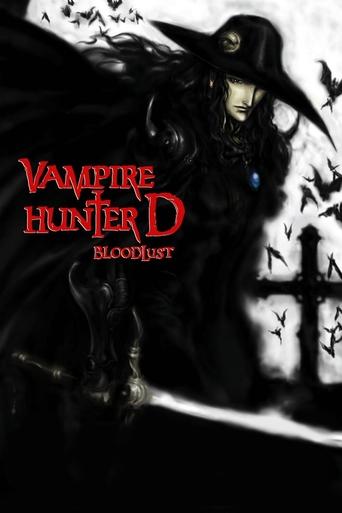
The character design of Jubei (wide-brimmed hat, long sword, stoic demeanor) shares DNA with D from Kawajiri's later film Vampire Hunter D: Bloodlust. Both are wandering outsiders fighting monsters.

⚠️ Spoiler Analysis

Click to reveal detailed analysis with spoilers

Frequently Asked Questions

Explore More About This Movie

Dive deeper into specific aspects of the movie with our detailed analysis pages

Comments (0)

Leave a comment

No comments yet. Be the first to share your thoughts!