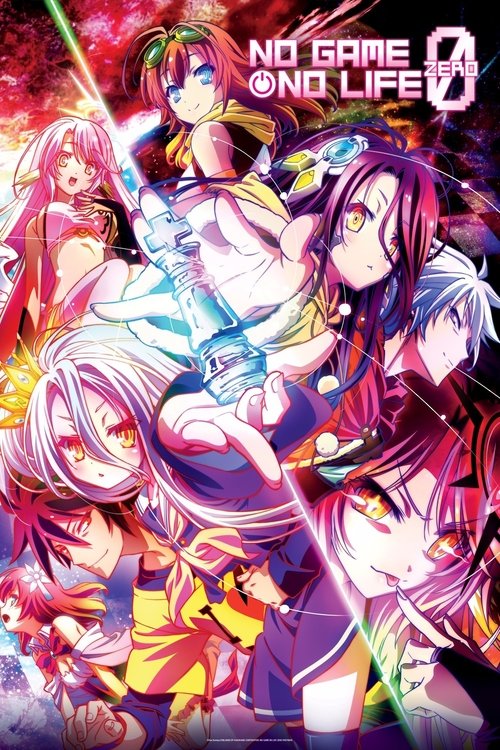
No Game, No Life: Zero
A haunting elegy of love and sacrifice amidst apocalyptic chaos, painting humanity's desperate last gamble with strokes of heartbreaking color and mechanical sorrow.
No Game, No Life: Zero

ノーゲーム・ノーライフ ゼロ

15 July 2017 Japan 106 min ⭐ 7.8 (419)
Director: Atsuko Ishizuka
Cast: Yoko Hikasa, Ai Kayano, Yoshitsugu Matsuoka, Kazuyuki Okitsu, Ryota Takeuchi
Drama Animation Fantasy Romance Adventure
The Power of the Human Heart Sacrifice for the Greater Good Winning Through Strategy, Not Strength Love and Legacy
Box Office: $6,356,284

No Game, No Life: Zero - Ending Explained

⚠️ Spoiler Analysis

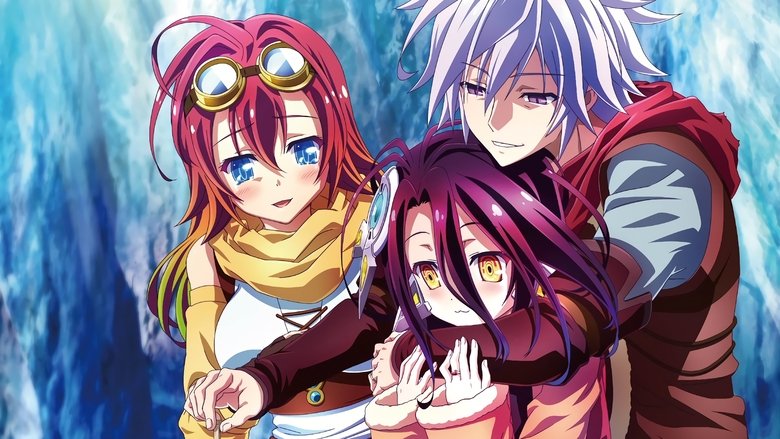
"No Game, No Life: Zero" builds towards a pyrrhic victory. Riku and Schwi's grand plan is to manipulate the most powerful races—the Elves, Flügel, and Dwarves—into firing their ultimate weapons at the same coordinate. The resulting energy convergence is meant to pierce the planet's core and summon the Suniaster, the prize of the Great War. However, the plan goes awry. Schwi is intercepted and ultimately killed by the Flügel Jibril while trying to complete the final step of the plan. Before her destruction, she successfully syncs her consciousness with the Ex-Machina hivemind, convincing them to aid Riku and accept him as their master.

Devastated by Schwi's death, Riku forces himself to see the plan through. The combined blast from the other races' weapons is redirected by the Ex-Machina. The massive energy beam pierces the planet's core, and the Suniaster appears before Riku. However, his body, ravaged by the corrupting magical energy, disintegrates as he reaches for it; the artifact rejects him. In his final moments, Riku prays to the fictional "God of Games" he used to believe in, begging someone to take the Suniaster and end the war. This powerful act of will and imagination gives birth to Tet, the God of Games. Tet takes the Suniaster, becomes the One True God, and remakes the world according to Riku's wish, establishing the Ten Pledges where all conflict is resolved through games. Riku and Schwi die as unsung heroes, their names erased from history, their victory a bittersweet draw that saves the world but costs them everything.

Alternative Interpretations

While the film is fairly direct, a key area of debate among fans is the nature of Sora and Shiro's relationship to Riku and Schwi. The most popular interpretation is the Reincarnation Theory, which posits that Sora and Shiro are the literal reincarnations of Riku and Schwi, brought to Disboard by Tet to finish what they started. This is supported by their identical voice actors, mirrored appearances and personalities, and lines of dialogue about being together in a "next life."

An alternative view is that they are not literal reincarnations but rather Spiritual Successors or thematic parallels. In this interpretation, Tet, knowing the story of Riku and Schwi, sought out two people from another world who embodied the same spirit and potential. He may have even embellished the tale he tells Izuna to make the parallels more pronounced, as a way of honoring the forgotten heroes. This reading focuses on the idea that humanity's potential is a recurring force, and Sora and Shiro are simply the next to embody it, independent of any direct supernatural connection to the past heroes.