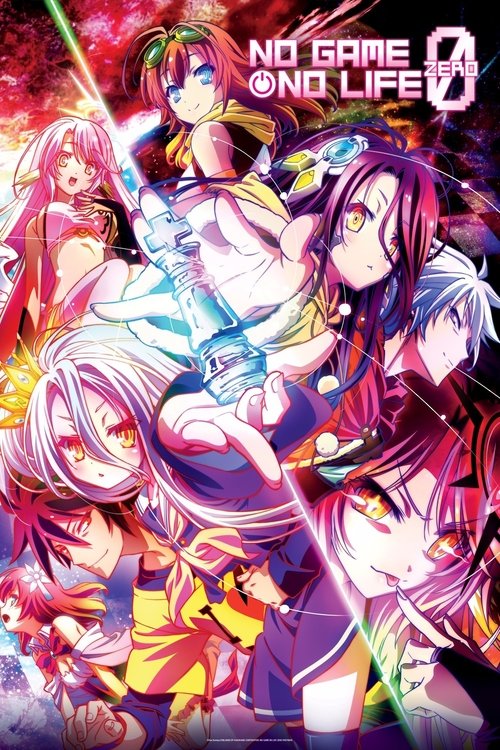
No Game, No Life: Zero
A haunting elegy of love and sacrifice amidst apocalyptic chaos, painting humanity's desperate last gamble with strokes of heartbreaking color and mechanical sorrow.
No Game, No Life: Zero

No Game, No Life: Zero

ノーゲーム・ノーライフ ゼロ

15 July 2017 Japan 106 min ⭐ 7.8 (419)
Director: Atsuko Ishizuka
Cast: Yoko Hikasa, Ai Kayano, Yoshitsugu Matsuoka, Kazuyuki Okitsu, Ryota Takeuchi
Drama Animation Fantasy Romance Adventure
The Power of the Human Heart Sacrifice for the Greater Good Winning Through Strategy, Not Strength Love and Legacy
Box Office: $6,356,284

Overview

"No Game, No Life: Zero" serves as a distant prequel to the main anime series, set 6,000 years in the past during the devastating Great War. The world, Disboard, is a brutal, war-torn landscape where powerful races and their gods fight for the Suniaster, an artifact that will grant the wielder the title of the One True God. Caught in the crossfire is humanity, or Imanity, a race with no magical abilities, pushed to the brink of extinction and hiding in underground colonies.

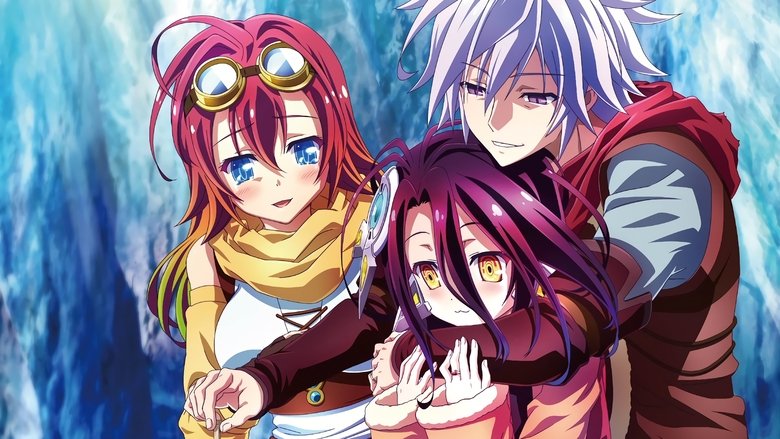
The story follows Riku Dola, a young but brilliant leader burdened by the immense guilt of sacrificing his comrades to ensure the survival of the remaining humans. His world changes when he encounters Schwi, an exiled female android (an "Ex-Machina") who has detached from her collective to understand the one thing that has allowed humanity to survive: the human heart. Together, this unlikely pair—one broken by emotion, the other seeking to understand it—devise an audacious plan to end the war, not through strength, but through unparalleled strategy and manipulation, playing a game where the entire world is the board.
Core Meaning

The core message of "No Game, No Life: Zero" is a powerful assertion of humanity's worth and potential, even when faced with impossible odds. It posits that the true strength of humanity lies not in physical power or magic, but in its unwavering will, its capacity for strategic thinking, and most importantly, the ability of the heart to love, hope, and sacrifice. The film contrasts the bleak, logic-driven warfare of gods with the passionate, often irrational, struggle of a single human and an android who learns to feel. It's a testament to the idea that even the weakest players can change the world if they possess the will to play the game to its absolute end, effectively arguing that victory can be achieved through ingenuity and heart, even if the heroes themselves are not remembered by history.

Thematic DNA

The Power of the Human Heart 35%
Sacrifice for the Greater Good 30%
Winning Through Strategy, Not Strength 25%
Love and Legacy 10%

The Power of the Human Heart

This is the central theme, explored through the Ex-Machina Schwi's quest. Exiled for her obsession with understanding human emotions, she believes the heart is the key to humanity's unlikely survival. Her relationship with Riku, who is emotionally shattered by the horrors of war, becomes a crucible. She learns about love, sacrifice, and irrational hope, while Riku rediscovers his own humanity through her. Schwi's ultimate sacrifice to protect Riku, driven by love, proves her hypothesis and becomes a pivotal moment in their plan to end the war.

Sacrifice for the Greater Good

The film is steeped in the theme of sacrifice. Riku is haunted by the calculated decisions he makes, ordering his comrades to their deaths to ensure the survival of the colony. This concept is elevated to a global scale as his master plan involves manipulating entire races into unleashing devastating power, all for the ultimate goal of ending the war permanently. The theme culminates in Riku and Schwi's own sacrifices; Schwi gives her life to protect Riku and ensure the plan's continuation, and Riku gives his life to create a new world order based on games, not war.

Winning Through Strategy, Not Strength

"No Game, No Life: Zero" establishes the foundational philosophy of the main series: the weakest can triumph over the strongest through superior intellect and strategy. Humanity, with no magic, is physically the weakest race. Riku and Schwi's plan doesn't involve direct confrontation but rather a massive, intricate manipulation of the powerful races against each other. They turn the entire Great War into a grand-scale chess game, proving that the will to play and the cleverness to outmaneuver your opponents are more valuable than raw power.

Love and Legacy

The love story between Riku, a human, and Schwi, a machine, forms the emotional core. Their bond transcends their different origins, culminating in a marriage proposal and a shared dream. Though they both perish, their legacy is immense. Their actions create the world governed by the Ten Pledges, and their memory is preserved in the necklace passed down through Corounne's lineage. The film strongly implies that Sora and Shiro from the main series are their spiritual reincarnations, destined to finish the game they started.

Character Analysis

Riku Dola

Yoshitsugu Matsuoka

Archetype: The Broken Hero
Key Trait: Strategic Genius

Motivation

Initially, his motivation is the grim survival of humanity. After meeting Schwi, it evolves into a passionate desire to end the Great War and create a world where no one has to die senselessly, proving that the "weak" can win.

Character Arc

Riku begins as a cold, pragmatic leader, crushed by the guilt of the sacrifices he's orchestrated. He sees himself as a monster, a "ghost" who has forfeited his humanity for the sake of survival. Meeting Schwi forces him to confront his trauma. Through their bond, he rediscovers hope and the will to fight not just to survive, but to win. His arc is tragic; he succeeds in his ultimate goal but dies before he can see the peaceful world he created, finding redemption through his final, selfless act.

Schwi Dola

Ai Kayano

Archetype: The Innocent Machine
Key Trait: Inquisitive

Motivation

Her primary motivation is to understand the human heart and why humanity has managed to survive against all odds. This intellectual curiosity transforms into a personal, emotional motivation: to be with Riku and help him achieve his dream.

Character Arc

Schwi starts as a logical, data-driven android, exiled from her collective for the error of trying to understand the illogical human heart. Her journey is one of profound discovery. Through her interactions with Riku, she moves beyond mere data collection to experience genuine emotions: curiosity, guilt, joy, and ultimately, love. Her arc culminates in her self-sacrifice for Riku, a completely illogical but deeply human act, proving she has finally found the heart she was searching for.

Corounne Dola

Yoko Hikasa

Archetype: The Steadfast Sibling
Key Trait: Loyal

Motivation

Her motivation is to protect her brother's spirit and ensure the survival and future of their family and the human race. She believes in Riku even when he doesn't believe in himself.

Character Arc

Corounne (or Couronne) serves as Riku's anchor to his humanity and the moral compass of their small community. She supports her brother unconditionally, even when his plans seem mad and the weight of his guilt threatens to consume him. Her arc is one of enduring hope and faith. She is the one who ultimately carries on their legacy, preserving the story of Riku and Schwi for future generations, becoming the ancestor of the Dola family (including Stephanie from the main series).

Tet

Rie Kugimiya

Archetype: The Emerging God
Key Trait: Playful

Motivation

As a newborn god, his motivation is to fulfill the wish of his creator, Riku. He ends the war and establishes a world order predicated on games, honoring the sacrifice that gave him life.

Character Arc

Tet is initially presented as a story's narrator and an abstract concept. He is born from Riku's desperate, final wish for a "God of Games" to exist. He manifests from Riku's belief and the immense magical energy present at the end of the war. His arc is one of creation; he takes Riku's will and uses the Suniaster's power to reshape the world, establishing the Ten Pledges and becoming the One True God who governs Disboard based on Riku's ideals.

Symbols & Motifs

Chess

Meaning:

Chess symbolizes the film's core philosophy of strategy and intellect over brute force. It represents Riku's worldview, where every move has a consequence and even a seemingly losing position can be turned around with the right plan. It's the ultimate game of wits, mirroring his grand strategy to end the Great War.

Context:

The film opens with the god Tet playing chess, framing the entire story as a game. Riku's first true connection with Schwi is formed when she challenges him to a game of chess. He sees the war itself as a chessboard, with the different races as pieces he must manipulate. His childhood belief in a "God of Games" also stems from chess.

The Wedding Ring

Meaning:

The ring symbolizes the promise, love, and humanity that Schwi finds with Riku. It is a physical manifestation of her "heart" and the bond that transcends her mechanical nature. It represents the idea that this emotional connection is worth protecting above all else, even her own life.

Context:

Riku proposes to Schwi with a simple, carved ring. During her fatal battle with the Flügel Jibril, Schwi uses the last of her power not to attack, but to shield the ring from destruction as her body is obliterated. This final act demonstrates that she has truly acquired a human heart, prioritizing their bond over her own existence.

The Suniaster (Star Grail)

Meaning:

The Suniaster is the ultimate prize, the symbol of absolute power and godhood. It represents the object of the Great War's conflict—a world order defined by strength. However, for Riku, it becomes a tool, a means to an end. His goal isn't to possess it for power, but to use it to create a world where power is no longer the deciding factor.

Context:

All the powerful races and Old Deus are fighting to be the "strongest" and claim the Suniaster. Riku and Schwi's plan involves creating a massive energy blast that will pierce the planet's core and force the Suniaster to appear. In the end, Riku is deemed unworthy to touch it, but his will creates Tet, who claims it and remakes the world according to Riku's vision.

Memorable Quotes

誰にも看取られず、誰にも知られず、ただ一人で死んでいった仲間たちの無念は、どうすればいい?

— Riku Dola

Context:

Riku says this during a moment of despair, reflecting on the countless lives sacrificed under his command. It is a raw expression of his inner turmoil and the immense burden he feels is his alone to bear.

Meaning:

Translated as: "What should I do about the pain of my comrades who died all alone, unnoticed and unknown by anyone?" This quote encapsulates the crushing weight of guilt Riku carries, highlighting the central theme of sacrifice and the emotional toll of his leadership.

心は、ここにある

— Schwi Dola

Context:

Schwi says this to Riku, placing his hand on her chest. It signifies the completion of her primary goal and the turning point in their relationship, where she transitions from a machine analyzing emotions to a being who truly feels them.

Meaning:

Translated as: "The heart is right here." This is Schwi's profound declaration that she has successfully found and understood what a heart is. It's not a physical object but an emotional core, which she now possesses, defined by her love for Riku.

Philosophical Questions

What is the true measure of a being's worth?

The film constantly challenges the idea that worth is determined by power. Humanity is the "weakest" of the sixteen races, possessing no magic and on the verge of annihilation. Yet, through Riku's strategic genius and Schwi's discovery of the heart, they achieve what gods and powerful magical beings could not: an end to the war. The film suggests that worth is found in ingenuity, willpower, the capacity for love, and the courage to make sacrifices for a belief, rather than in inherent strength.

Can a machine develop a soul?

Schwi's entire character arc revolves around this question. As an Ex-Machina, she is a being of pure logic and data. Her quest to understand the human heart leads her to experience emotions in a way her programming cannot explain. Her final act—sacrificing herself for love—is the ultimate proof that she has transcended her mechanical origins and developed something akin to a soul or, at the very least, a genuine consciousness defined by emotion.

Is it justifiable to sacrifice the few to save the many?

This is the ethical dilemma that torments Riku. As a leader, he makes cold, calculated decisions to sacrifice small groups of his people to gather information that will save the larger colony. The film doesn't provide an easy answer. It portrays his actions as both necessary for survival and psychologically devastating, suggesting that such choices, even if strategically sound, come at the cost of one's own humanity. Riku's ultimate goal is to create a world where such impossible choices are no longer necessary.

Alternative Interpretations

While the film is fairly direct, a key area of debate among fans is the nature of Sora and Shiro's relationship to Riku and Schwi. The most popular interpretation is the Reincarnation Theory, which posits that Sora and Shiro are the literal reincarnations of Riku and Schwi, brought to Disboard by Tet to finish what they started. This is supported by their identical voice actors, mirrored appearances and personalities, and lines of dialogue about being together in a "next life."

An alternative view is that they are not literal reincarnations but rather Spiritual Successors or thematic parallels. In this interpretation, Tet, knowing the story of Riku and Schwi, sought out two people from another world who embodied the same spirit and potential. He may have even embellished the tale he tells Izuna to make the parallels more pronounced, as a way of honoring the forgotten heroes. This reading focuses on the idea that humanity's potential is a recurring force, and Sora and Shiro are simply the next to embody it, independent of any direct supernatural connection to the past heroes.

Cultural Impact

"No Game, No Life: Zero" was a highly anticipated film for fans of the 2014 anime series, which had ended on a cliffhanger. Rather than continuing the story, the film chose to adapt the prequel novel, a decision that was met with both excitement and some initial disappointment. Upon release, however, it was widely praised by critics and audiences for its darker, more mature tone and emotional depth, which stood in stark contrast to the TV series' more comedic and fan-service-heavy approach.

Critics noted that by stripping away the frivolities, the film was able to focus more succinctly on the core themes of humanity's potential and the nature of games, in many ways surpassing the original series. It was praised as one of director Atsuko Ishizuka's best works, highlighting her skill in visual storytelling. While not a massive box office hit on a global scale, it performed well in Japan and had successful, albeit limited, theatrical runs internationally, demonstrating the dedicated fanbase of the franchise. The film solidified the 'No Game, No Life' universe's lore and added significant emotional weight to the overarching narrative, leaving fans even more eager for a second season of the anime to see the legacy of Riku and Schwi play out through Sora and Shiro.

Audience Reception

Audience reception for "No Game, No Life: Zero" was overwhelmingly positive, especially among existing fans of the franchise. Many viewers praised it as a masterpiece and a significant improvement over the TV series due to its serious, emotional, and darker tone. The tragic love story between Riku and Schwi was a major highlight, frequently cited as being deeply moving.

Points of praise often centered on the world-building, which provided a grim and fascinating look at Disboard before the establishment of the Ten Pledges. The focused narrative, free from the excessive fan service and comedy of the main series, was also seen as a major strength. Criticism was relatively minor but sometimes pointed to a rushed plot, particularly in the third act, with some feeling that the grand scale of the war and the intricacies of Riku's plan could have been fleshed out more. Despite this, the overall verdict from audiences was that it was a powerful, heartbreaking, and satisfying prequel that enriched the entire 'No Game, No Life' universe.

Interesting Facts

  • The film is an adaptation of the sixth volume of the 'No Game, No Life' light novel series.
  • The vast majority of the staff and cast from the 2014 anime television series returned to produce the film, including director Atsuko Ishizuka and animation studio Madhouse.
  • The protagonists of the film, Riku and Schwi, are voiced by the same actors who voice the main series protagonists, Sora (Yoshitsugu Matsuoka) and Shiro (Ai Kayano). This was an intentional choice to reinforce the connection and implied reincarnation between the pairs.
  • The character designs for Riku and Schwi intentionally mirror those of Sora and Shiro, but with inverted color schemes (e.g., Riku's white hair vs. Sora's dark hair).
  • The film's theme song, "There Is A Reason," was performed by Konomi Suzuki, who also performed the opening theme for the original anime series.

Easter Eggs

Jibril's First Appearance

The appearance of Jibril in the film is a significant moment for fans of the series. Here, she is portrayed as a terrifying, destructive force of the Great War, which contrasts sharply with her more comical and subservient personality in the main series. Her brutal and emotionless slaughter of Schwi provides a dark backstory and adds tragic weight to her character's later interactions with Sora and Shiro.

Corounne's Necklace

At the very end of the film, back in the present day, Stephanie Dola (a main character from the TV series) is shown to be a direct descendant of Riku's sister, Corounne. She wears a necklace that has been passed down, which bears the names of Riku and Schwi, serving as the only physical proof of their existence and sacrifice.

Reincarnation Hints

The movie is filled with dialogue and visual cues that heavily imply Sora and Shiro are the reincarnations of Riku and Schwi. Schwi's last wish is to be with Riku again, and Tet later tells Sora and Shiro they were "born in the wrong world." The names themselves are opposites: Riku (Land) vs. Sora (Sky), and Schwi (from German 'Schwarz' for Black) vs. Shiro (White).

⚠️ Spoiler Analysis

Click to reveal detailed analysis with spoilers

Frequently Asked Questions

Explore More About This Movie

Dive deeper into specific aspects of the movie with our detailed analysis pages

Comments (0)

Leave a comment

No comments yet. Be the first to share your thoughts!