ノーゲーム・ノーライフ ゼロ
No Game, No Life: Zero - Symbolism & Philosophy
Symbols & Motifs
Chess
Chess symbolizes the film's core philosophy of strategy and intellect over brute force. It represents Riku's worldview, where every move has a consequence and even a seemingly losing position can be turned around with the right plan. It's the ultimate game of wits, mirroring his grand strategy to end the Great War.
The film opens with the god Tet playing chess, framing the entire story as a game. Riku's first true connection with Schwi is formed when she challenges him to a game of chess. He sees the war itself as a chessboard, with the different races as pieces he must manipulate. His childhood belief in a "God of Games" also stems from chess.
The Wedding Ring
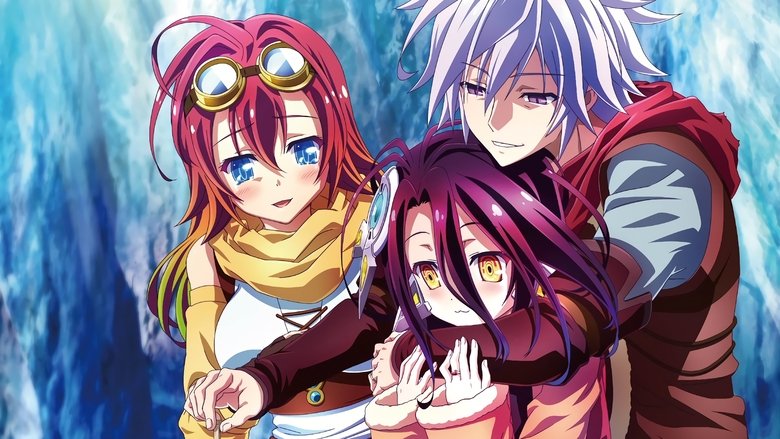
The ring symbolizes the promise, love, and humanity that Schwi finds with Riku. It is a physical manifestation of her "heart" and the bond that transcends her mechanical nature. It represents the idea that this emotional connection is worth protecting above all else, even her own life.
Riku proposes to Schwi with a simple, carved ring. During her fatal battle with the Flügel Jibril, Schwi uses the last of her power not to attack, but to shield the ring from destruction as her body is obliterated. This final act demonstrates that she has truly acquired a human heart, prioritizing their bond over her own existence.
The Suniaster (Star Grail)
The Suniaster is the ultimate prize, the symbol of absolute power and godhood. It represents the object of the Great War's conflict—a world order defined by strength. However, for Riku, it becomes a tool, a means to an end. His goal isn't to possess it for power, but to use it to create a world where power is no longer the deciding factor.
All the powerful races and Old Deus are fighting to be the "strongest" and claim the Suniaster. Riku and Schwi's plan involves creating a massive energy blast that will pierce the planet's core and force the Suniaster to appear. In the end, Riku is deemed unworthy to touch it, but his will creates Tet, who claims it and remakes the world according to Riku's vision.
Philosophical Questions
What is the true measure of a being's worth?
The film constantly challenges the idea that worth is determined by power. Humanity is the "weakest" of the sixteen races, possessing no magic and on the verge of annihilation. Yet, through Riku's strategic genius and Schwi's discovery of the heart, they achieve what gods and powerful magical beings could not: an end to the war. The film suggests that worth is found in ingenuity, willpower, the capacity for love, and the courage to make sacrifices for a belief, rather than in inherent strength.
Can a machine develop a soul?
Schwi's entire character arc revolves around this question. As an Ex-Machina, she is a being of pure logic and data. Her quest to understand the human heart leads her to experience emotions in a way her programming cannot explain. Her final act—sacrificing herself for love—is the ultimate proof that she has transcended her mechanical origins and developed something akin to a soul or, at the very least, a genuine consciousness defined by emotion.
Is it justifiable to sacrifice the few to save the many?
This is the ethical dilemma that torments Riku. As a leader, he makes cold, calculated decisions to sacrifice small groups of his people to gather information that will save the larger colony. The film doesn't provide an easy answer. It portrays his actions as both necessary for survival and psychologically devastating, suggesting that such choices, even if strategically sound, come at the cost of one's own humanity. Riku's ultimate goal is to create a world where such impossible choices are no longer necessary.
Core Meaning
The core message of "No Game, No Life: Zero" is a powerful assertion of humanity's worth and potential, even when faced with impossible odds. It posits that the true strength of humanity lies not in physical power or magic, but in its unwavering will, its capacity for strategic thinking, and most importantly, the ability of the heart to love, hope, and sacrifice. The film contrasts the bleak, logic-driven warfare of gods with the passionate, often irrational, struggle of a single human and an android who learns to feel. It's a testament to the idea that even the weakest players can change the world if they possess the will to play the game to its absolute end, effectively arguing that victory can be achieved through ingenuity and heart, even if the heroes themselves are not remembered by history.