
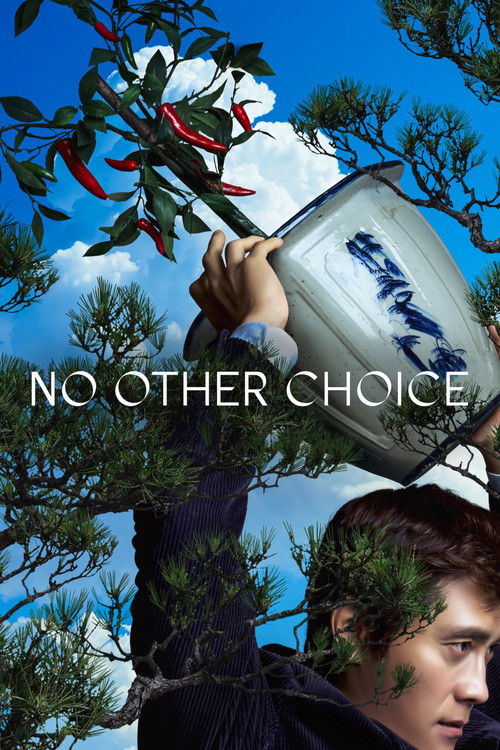
어쩔수가없다
No Other Choice - Symbolism & Philosophy
Symbols & Motifs
The House
Symbolizes Man-su's status, success, and the trap of the middle-class dream. It is the physical manifestation of what he is killing to protect.
Man-su obsessively tends to the house and garden even while unemployed. The threat of selling it triggers his murderous plan.
The Toothache and Extraction
Represents guilt, festering inner conflict, and the painful shedding of humanity.
Man-su suffers from a toothache he refuses to treat professionally. In a pivotal scene, he extracts it himself with pliers, symbolizing his decision to rip out his conscience to become a killer.
The Eel
A symbol of false gratitude and the severance of ties. A "gift" that masks the brutality of his firing.
In the opening scene, the company sends him expensive eels just before firing him, turning a celebratory meal into a memory of betrayal.
The Automated Factory
Represents the cold, indifferent future where human effort is rendered meaningless.
The film ends with Man-su standing alone in a massive, noisy, fully automated factory, emphasizing his isolation and the hollowness of his "victory."
Notes on Hand
Symbolizes Man-su's anxiety, lack of confidence, and desperate need for control.
He writes interview answers and plans on his hand. By the end, he stops doing this, signaling his transformation into a cold, confident killer who no longer doubts himself.
Philosophical Questions
Is morality a luxury of the comfortable?
The film asks whether ethical behavior is possible when one's survival (or lifestyle) is threatened. Man-su abandons his morals the moment his security is breached, suggesting that civilization is a thin veneer over primal survival instincts.
Does the end justify the means if the system offers 'no other choice'?
Man-su rationalizes his murders as the only logical path to survival in a rigged game. The film challenges the audience to draw the line between desperate survival and monstrous selfishness.
What is the cost of efficiency?
Through the motif of automation and the 'culling' of candidates, the film explores the human cost of a society obsessed with efficiency, where people are treated as disposable inputs in an economic machine.
Core Meaning
At its heart, No Other Choice is a scathing indictment of late-stage capitalism and the fragility of modern masculinity. Director Park Chan-wook uses the absurdity of a "murderous job search" to expose how corporate systems pit individuals against one another, turning ordinary people into monsters to maintain their social standing. The film suggests that in a world prioritizing efficiency and profit (symbolized by the looming threat of AI), human morality becomes an unaffordable luxury. Man-su's victory is ultimately ironic; he fights to become a cog in a machine that no longer needs him.