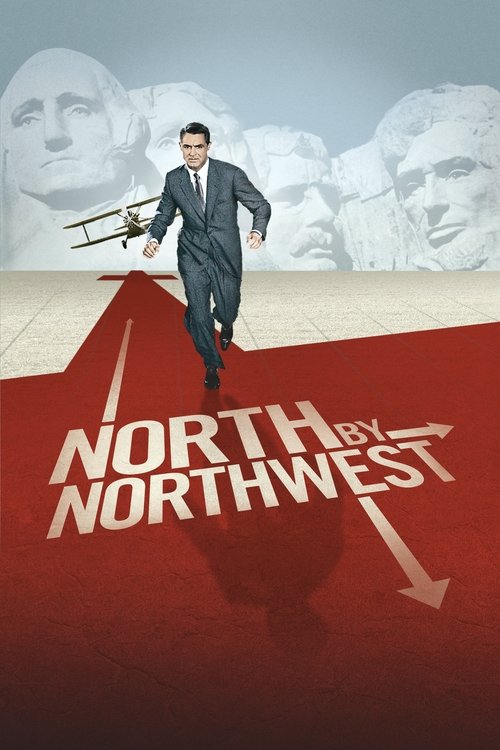
"It's a deadly game of "tag" and Cary Grant is "it"!"
North by Northwest - Symbolism & Philosophy
Symbols & Motifs
The Crop Duster Plane
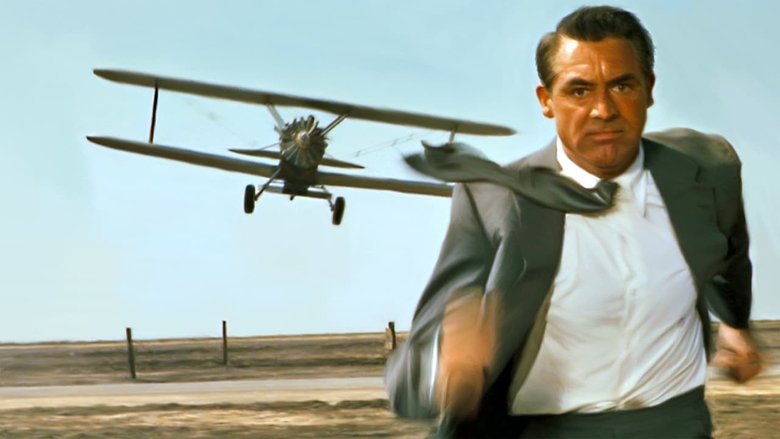
The crop duster symbolizes a threat emerging from the mundane and unexpected. In a wide-open, sunlit field where one should feel safe, a common agricultural tool becomes a terrifying instrument of death. It represents the film's core idea that danger can erupt from anywhere, turning the ordinary into the menacing and highlighting the protagonist's profound isolation and vulnerability.
In one of the film's most iconic scenes, Roger Thornhill is lured to a deserted bus stop in the middle of prairie land. After a long, tense wait in complete silence, a crop duster plane appears in the distance, seemingly dusting crops where there are none, before it turns and relentlessly attacks him.
Mount Rushmore
The monumental faces of the presidents symbolize the grand, unyielding, and public face of American democracy and history. The climactic chase across these faces represents the clash between national ideals and the dirty, clandestine realities of Cold War espionage. It brings the hidden conflict out onto the surface of a national shrine, reducing a political struggle to a perilous human drama on a massive scale.
The film's climax takes place on and around the Mount Rushmore National Memorial. Roger Thornhill and Eve Kendall are pursued by Vandamm's henchmen across the giant, carved faces of the presidents as they try to escape.
George Kaplan
George Kaplan, the man who doesn't exist, is a symbol of manufactured identity and the power of illusion. He is a 'MacGuffin'—a plot device that motivates the characters but has no real substance. His non-existence highlights the film's theme of appearance versus reality; a complete fiction is the catalyst for all the real-world danger and forces Thornhill to become the hero Kaplan was invented to be.
From the beginning, Thornhill is mistaken for George Kaplan, a fictional government agent created by the CIA to distract Vandamm. Thornhill's entire ordeal is a result of him trying to prove he is not this imaginary person, a quest that ultimately leads him to embody the very role he's been forced into.
The Train
The train serves as a space of transition, intimacy, and deception. It is where Roger and Eve's romantic and duplicitous relationship begins. More symbolically, the final shot of the train entering a tunnel, immediately following Roger and Eve's embrace in a sleeper car, is a famously suggestive Freudian symbol for sexual intercourse, a cheeky final wink from Hitchcock that bypassed the censors of the era.
Roger Thornhill meets Eve Kendall on the 20th Century Limited train while fleeing the police. They share a romantic dinner and she hides him in her compartment. The film concludes with a shot of the train plunging into a tunnel right after the newly-married Thornhills are shown together in their bunk.
Philosophical Questions
What constitutes a person's identity?
The film relentlessly explores whether identity is an inherent quality or a social construct. Roger Thornhill knows who he is, but the world around him, from villains to the police, insists he is someone else. His credentials, his mother's testimony, and his own protests are useless against the fabricated reality imposed upon him. This raises the question of whether our identity is defined by our own self-knowledge or by how others perceive us. The film suggests that in the face of overwhelming external pressure, an individual's perceived identity can completely supplant their real one, forcing them to either succumb or radically transform themselves to survive.
Can order and morality be maintained in a world of chaos and deception?
"North by Northwest" presents a world where traditional institutions of order—the police, the government—are either inept or morally compromised. Thornhill is a man living in an orderly world of schedules and advertising campaigns who is suddenly plunged into total chaos. The U.S. intelligence agency, supposedly a force for good, operates with the same deceit and disregard for human life as the spies they are fighting. The film questions whether it's possible to adhere to a moral code when surrounded by duplicity, and it suggests that survival in such a world requires one to adopt the very methods of deception they are fighting against.
Core Meaning
The core meaning of "North by Northwest" revolves around the fragility and arbitrary nature of identity in the modern world. Director Alfred Hitchcock explores how easily a person's life and sense of self can be dismantled by forces beyond their control. Roger Thornhill's journey is not just a physical one, but an existential quest to reclaim his identity after it is stolen by a simple misunderstanding. The film suggests that in an era of Cold War paranoia and powerful, faceless organizations, the individual is vulnerable and can be forced into roles they never chose. Ultimately, Thornhill must abandon his superficial advertising persona and become the resourceful, heroic figure he was mistaken for in order to survive, suggesting that true identity is forged through action and adversity rather than social standing.