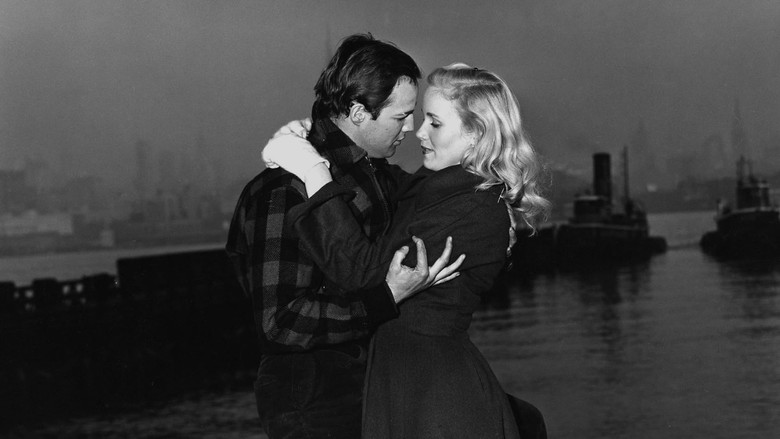

"The man lived by the jungle law of the docks!"
On the Waterfront - Symbolism & Philosophy
Symbols & Motifs
Pigeons
The pigeons Terry raises on the tenement rooftop symbolize the dockworkers. Like the workers, they are trapped in a system, cooped up, and preyed upon by "hawks" (representing Johnny Friendly's mob). They also represent Terry's own gentle and vulnerable side, a spirit that dreams of freedom but is confined by the harsh environment of the waterfront.
Terry's rooftop pigeon coop is his sanctuary, a place where he can escape the corruption of the docks. When Joey Doyle, who also kept pigeons, is killed, Terry takes care of his birds. The killing of Terry's pigeons by the mob near the end of the film is a final violation that solidifies his resolve to testify, symbolizing the mob's destruction of the very innocence and community they claim to protect.
Joey's Jacket
The jacket belonging to the murdered Joey Doyle symbolizes honor, resistance, and the passing of a moral mantle. By wearing the jacket, a character signifies their alignment with the cause of justice against the mob.
After Kayo Dugan is killed for agreeing to testify, he is wearing Joey's jacket, which Edie had given him. In the final confrontation, Terry wears the same jacket when he goes to the docks. By putting on the jacket, he is explicitly identifying with the victims of the mob and publicly accepting his role as the one to carry on their fight.
The Hudson River
The Hudson River functions as a symbolic barrier, separating the grim, oppressive world of the Hoboken docks from the promise and opportunity of Manhattan, visible in the distance. For the longshoremen, it represents an impassable border between their constrained lives and a world of freedom and success they can see but not reach.
The river is a constant visual presence in the film. The skyline of Manhattan is often seen through fog or behind fences, emphasizing the sense of isolation and entrapment felt by the characters on the New Jersey side. It visually reinforces their status and the seemingly inescapable nature of their circumstances.
Gloves
Gloves appear in key moments to symbolize vulnerability, connection, and shifts in power dynamics. They represent a delicate, almost intimate, part of a person's identity.
The most significant use is when Edie drops her white glove in the park. Terry picks it up and, instead of returning it immediately, playfully puts it on his own rough hand. This act is a turning point in their relationship, a moment of gentle intimacy where his tough exterior is breached, and he symbolically tries on a piece of her more innocent world.
Philosophical Questions
What is the true nature of loyalty and betrayal?
The film delves into the complex nature of loyalty. Is it more important to be loyal to a corrupt group that provides protection and a sense of belonging, or to a higher moral principle of justice? Terry's journey is a painful exploration of this question. His decision to testify is seen as a betrayal by the longshoremen and his brother, but from his and Father Barry's perspective, the true betrayal was his long-standing silence and complicity with the evil of the mob. The film forces the audience to question to whom or what our ultimate loyalty is owed.
Can an individual's moral action truly defeat a corrupt system?
"On the Waterfront" explores the power and limitations of individual action. Terry's singular act of courage does break Johnny Friendly's immediate hold on the docks. However, the film leaves the answer to the larger question ambiguous. The workers follow him, but are they truly liberated, or have they just switched allegiance from one leader to another? The ending can be read as both a testament to the power of one person to inspire change and a cautionary note about the fragility of such victories against entrenched, systemic corruption.
What is the relationship between suffering and redemption?
The film strongly suggests that redemption requires suffering. Terry cannot simply apologize for his past; he must go through a trial by fire. This is most evident in the final act, where he is brutally beaten by Friendly's thugs. This physical suffering acts as a public penance for his sins, purging his guilt and solidifying his moral transformation. It is only after he endures this beating and staggers to his feet that he earns the respect of the other men and fully reclaims his dignity, linking redemption directly to sacrifice and pain.
Core Meaning
The core meaning of "On the Waterfront" revolves around the profound moral struggle of an individual's conscience against a corrupt and oppressive system. Director Elia Kazan, through Terry Malloy's journey, explores the immense pressure and profound cost of breaking a code of silence. The film serves as a powerful allegory for speaking truth to power, regardless of the personal consequences.
Furthermore, the film is widely interpreted as Kazan's personal and public justification for his own controversial decision to testify before the House Un-American Activities Committee (HUAC), where he named former colleagues as communists. Terry's climactic cry, "I'm glad what I done!" is seen by many as a direct reflection of Kazan's own feelings about his testimony, framing the act of informing not as a betrayal, but as a painful yet necessary moral imperative to combat a greater evil. The film champions the idea that individual integrity and redemption are attainable, but often through great personal suffering and sacrifice.