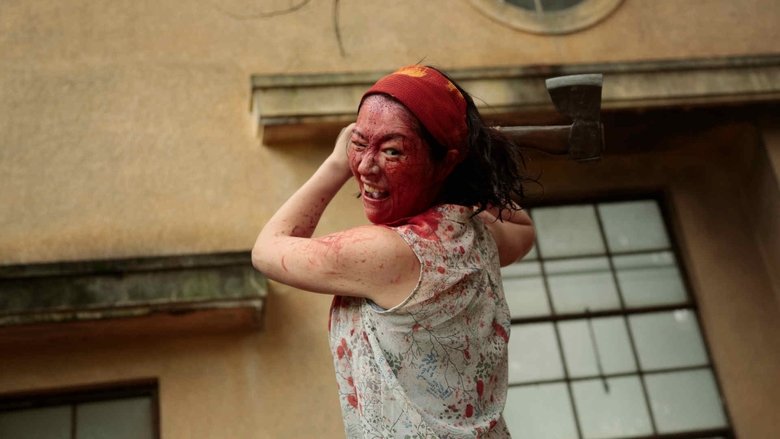
The entire film hinges on a massive structural twist. The first 37 minutes are presented as a continuous, one-take zombie survival film called One Cut of the Dead, which appears to be full of terrible acting, weird pauses, and bizarre camera angles. Once this film ends, the credits roll, and the narrative suddenly shifts to one month prior. We learn that what we just watched was actually a live television broadcast for a new zombie channel. The third act then shows us the real-time, behind-the-scenes chaos of that 37-minute live broadcast. Every 'mistake' we saw in the first act is revealed to be the result of a catastrophic behind-the-scenes emergency: a cameraman passing out causes the camera to sit on the ground; a drunken actor forces the cast to improvise and stall for time; and a broken crane leads the entire cast and crew to build a human pyramid to achieve the final overhead shot. The ending beautifully recontextualizes the cheap horror movie into an inspiring triumph of human spirit and teamwork.
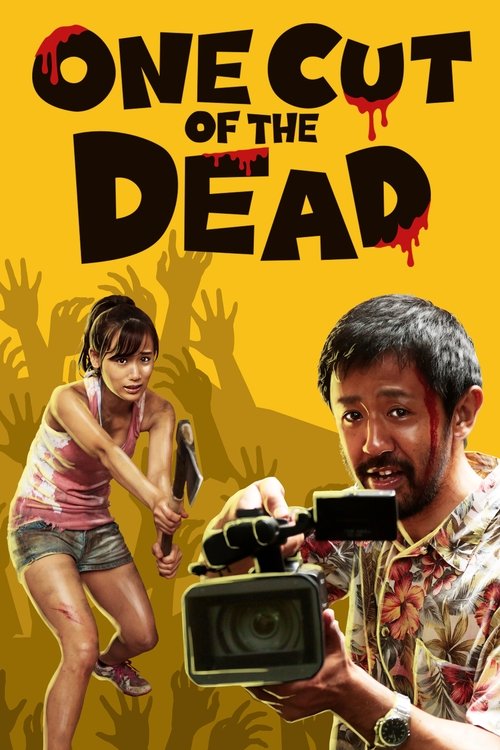
カメラを止めるな!
"Don't Stop Shooting!"
Director: Shinichiro Ueda
Cast: Takayuki Hamatsu, Yuzuki Akiyama, Kazuaki Nagaya, Harumi Shuhama, Mao
One Cut of the Dead — Ending Explained
⚠️ Spoiler Analysis
Alternative Interpretations
While primarily viewed as a meta-comedy about filmmaking, the film can also be interpreted as a commentary on the demanding, often exploitative nature of the Japanese entertainment industry. The network executives are shown to be completely detached from the physical and emotional toll the live broadcast takes on the crew, demanding an impossible one-take show just for a cheap gimmick. In this light, the film is a critique of 'content mills' and corporate expectations. Additionally, some philosophical readings view the film as an exploration of 'post-truth' and artificial reality; it demonstrates how easily audiences can be manipulated by what is placed inside the frame, while the chaotic truth of human experience exists just outside the camera's view.
Explore More About This Movie
Dive deeper into specific aspects of the movie with our detailed analysis pages