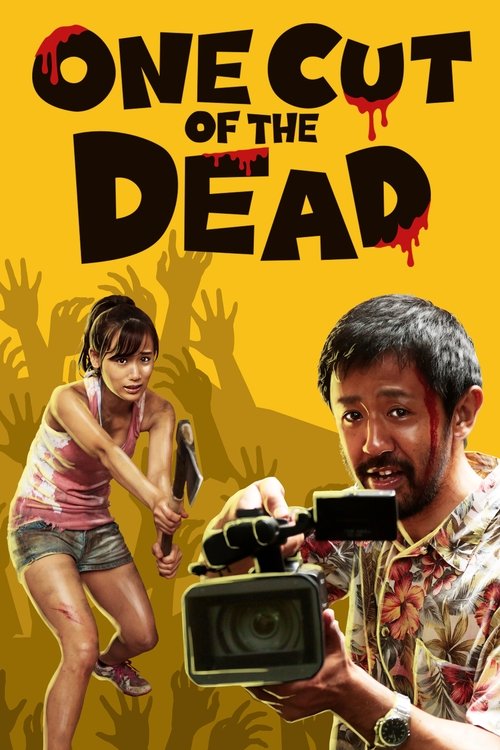
One Cut of the Dead
カメラを止めるな!
"Don't Stop Shooting!"
Overview
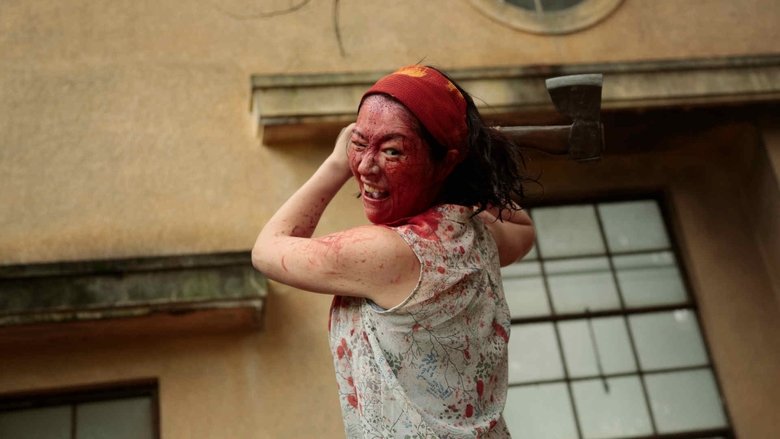
One Cut of the Dead begins with a familiar and seemingly amateurish setup: a hack director and a small film crew are shooting a low-budget zombie movie in an abandoned WWII water filtration plant. The production is plagued by bad acting, a frustrated director, and a shoestring budget. However, the stakes are suddenly raised when real zombies attack the set. Instead of stopping the production, the manic director insists that the cameras keep rolling, forcing his terrified cast and crew to fight for their lives while unwittingly creating the ultimate authentic horror film.
What starts as a schlocky, 37-minute single-take zombie film soon morphs into something entirely unexpected and deeply endearing. Without revealing its brilliant narrative shifts, the film evolves into a multi-layered exploration of the chaotic, unglamorous, and often hilarious realities of independent filmmaking. It shifts focus from a simple fight for survival to a comedic and touching drama about the eccentric personalities that populate a film set, exploring the relentless dedication required to pull off a creative vision against all odds.
Core Meaning
At its core, One Cut of the Dead is a joyous, triumphant declaration of love for the art of filmmaking and the unsung heroes who make it happen. Director Shin'ichirō Ueda uses the framework of a B-movie zombie flick to strip away the glamour of cinema, revealing the messy, stressful, and chaotic reality of production. The film argues that the true magic of cinema doesn't lie in flawless execution or big budgets, but in the passion, teamwork, and sheer willpower of a crew refusing to give up. Furthermore, it carries a touching message about familial reconciliation, illustrating how shared creative struggles can bridge the gap between a father and his estranged, perfectionist daughter, ultimately showing that art is a collaborative, human endeavor built on compromise and heart.
Thematic DNA
The Magic and Chaos of Filmmaking
The film acts as a meta-narrative about the creative process [2.12]. It highlights how much behind-the-scenes problem-solving, improvisation, and pure panic go into producing even the most seemingly amateurish works of art. The crew's desperate attempts to keep the live broadcast running mirror the universal struggles of artists trying to realize their vision on a shoestring budget.
Family Dynamics and Reconciliation
Beneath the blood and comedy lies a touching story of a father trying to reconnect with his daughter. Higurashi, a director who compromises for a paycheck, and Mao, his stubbornly idealistic daughter, find common ground in the chaotic crucible of the film set, ultimately working together to save the production.
Illusion vs. Reality
The narrative structure constantly plays with the audience's perception of what is real. By layering a movie within a movie within a movie, the film examines how cinema manufactures reality. "Mistakes" in the first act are later revealed to be frantic real-world solutions, completely shifting the meaning of the initial footage.
Teamwork and Overcoming Adversity
The production of the zombie broadcast is a disaster from the start, plagued by missing actors, broken equipment, and drunken crew members. The film demonstrates that success is rarely a solo achievement; it relies on the collective, often literal, support of a community—beautifully symbolized by the human pyramid.
Character Analysis
TakayukiHigurashi
TakayukiHamatsu
Motivation
To successfully deliver the live, one-take television broadcast against impossible odds, and to bond with his cinema-loving daughter.
Character Arc
Hebeginsasamild-mannered, "fast, cheap, butaverage"directorwhosimplydoeswhathe'stoldtopaythebills[1.1]. When the live broadcast descends into chaos, he is forced to step up, becoming a passionate, improvisational leader who earns his daughter's respect.
Nao / Harumi
Harumi Shuhama
Motivation
To support her husband's project while finally getting a chance to unleash her repressed acting talents.
Character Arc
A former actress who retired because she became too deeply immersed in her roles, Harumi starts as a supportive wife but is forced to step in as the make-up artist. She completely loses herself in the character, using real martial arts moves and becoming a genuine menace to the production that the rest of the crew must wrangle.
Mao
Mao
Motivation
To uphold the artistic integrity of cinema, refusing to accept half-measures, which eventually shifts to bonding with her father.
Character Arc
Mao starts as a cynical, stubborn aspiring filmmaker who looks down on her father's willingness to compromise. By witnessing the sheer willpower required to save the live broadcast, she learns the value of collaboration and steps in to help her father finish the film.
Chinatsu
Yuzuki Akiyama
Motivation
To protect her brand and idol image, which slowly shifts into a desperate drive to just survive the chaotic shoot and finish the scene.
Character Arc
Initially a somewhat superficial idol actress who struggles to show genuine emotion or fear to maintain her image. As the production derails, she is forced to genuinely react, scream, and improvise, ultimately delivering the authentic performance the director wanted.
Symbols & Motifs
TheCamera
Thecamerarepresentsthepersistenceoftheartisticvisionandtheabsolutenecessitytokeepmovingforward.Itembodiesthefilm'sJapanesetitle, KameraoTomeruna!(Don'tStoptheCamera!)[1.2].
Throughout the film, keeping the camera rolling is the ultimate goal, driving the characters to absurd and heroic lengths, even when the operator passes out or the equipment literally breaks.
The Human Pyramid
It is a literal and figurative manifestation of teamwork, support, and the collective effort required to create art. It symbolizes the crew and family coming together to uplift the final product.
When the camera crane is broken before the final, crucial aerial shot, the cast and crew scramble to form a human pyramid, allowing the cameraman to capture the ending just as the broadcast runs out of time.
The Blood Pentagram
Initially appearing as a generic, cheesy horror movie trope used to summon the undead, it later becomes a symbol of hitting one's mark and the meticulous (yet chaotic) planning of the production.
In the final moments of the one-take film, Chinatsu must stand exactly on the pentagram to finish the scene. It anchors the wild improvisation back to the original script's required ending.
Memorable Quotes
Don'tstopthecamera!(Kameraotomeruna!)
— TakayukiHigurashi
Context:
Yelled frantically by the real director to the booth to prevent the network from cutting to an error screen during the disastrous live shoot.
Meaning:
Thisliteraltranslationofthefilm'sJapanesetitleservesastheultimatethesisofthemovie:nomatterwhatgoeswrong, theshowmustgoon[1.2].
Give me real emotions! The true face of fear!
— Takayuki Higurashi
Context:
Higurashi screams this at the lead actress Chinatsu while demanding a perfect, terrified performance amidst the actual zombie attack.
Meaning:
It encapsulates the manic drive of the fictional director who refuses to let a real zombie apocalypse ruin his film, pushing his actors to their breaking point.
An axe... lucky me.
— Chinatsu
Context:
After the movie has gone wildly off-script, the crew frantically throws an axe onto the ground so Chinatsu can find it and defend herself in the final confrontation.
Meaning:
A hilarious meta-commentary on convenient horror movie tropes and deus ex machina resolutions.
Philosophical Questions
What constitutes 'reality' in art and media?
The film plays constantly with layers of reality. We watch a fictional broadcast that purports to be 'real' within its own universe, only to pull back the curtain and show the manufactured, chaotic reality behind it [2.6]. It asks the audience to question how much of the media we consume is a carefully constructed illusion masking a frantic, messy truth.
Does the end justify the means in the creative process?
The fictional director Higurashi terrorizes his actors to get genuine reactions, mirroring the toxic traits of real-life demanding auteurs. The film asks whether achieving 'authentic' art is worth the psychological and physical stress placed on the collaborators, ultimately contrasting this with the real director's path of supportive, albeit chaotic, teamwork to achieve success.
Alternative Interpretations
While primarily viewed as a meta-comedy about filmmaking, the film can also be interpreted as a commentary on the demanding, often exploitative nature of the Japanese entertainment industry. The network executives are shown to be completely detached from the physical and emotional toll the live broadcast takes on the crew, demanding an impossible one-take show just for a cheap gimmick. In this light, the film is a critique of 'content mills' and corporate expectations. Additionally, some philosophical readings view the film as an exploration of 'post-truth' and artificial reality; it demonstrates how easily audiences can be manipulated by what is placed inside the frame, while the chaotic truth of human experience exists just outside the camera's view.
Cultural Impact
One Cut of the Dead achieved a miraculous Cinderella-story success, starting its run in a small cinema in Japan for a six-day run before expanding to a massive international release fueled purely by word-of-mouth. It reinvigorated both the found-footage and zombie subgenres, which many critics had deemed stagnant, by subverting audience expectations and turning a horror trope into a heartwarming meta-comedy. The film holds a rare 100% approval rating on Rotten Tomatoes. Culturally, it became a global anthem for independent filmmakers, proving that immense heart, a clever script, and passionate execution can triumph over multi-million dollar studio budgets. It also inspired a French remake titled Final Cut (Coupez!) by Michel Hazanavicius and influenced the tone of modern zombie works like the manga Zom 100: Bucket List of the Dead.
Audience Reception
Audience reception to One Cut of the Dead has been overwhelmingly positive, though it requires a specific commitment from the viewer. The most common point of discussion among audiences is the film's first 37 minutes; many viewers initially felt confused or unimpressed by the seemingly amateurish, slow, and awkward zombie B-movie. However, those who stayed for the second and third acts universally praised the film for its ingenious bait-and-switch. The payoff in the final act, where every awkward pause and bizarre line delivery from the first act is hilariously recontextualized, is widely considered a masterstroke. Audiences frequently celebrate the film's immense heart, its clever script, and the joyful feeling of camaraderie it leaves you with. The only minor criticism is that the middle act (the flashback to pre-production) can feel a bit slow as it sets up the pieces for the chaotic finale, but the overall verdict is that it is a comedic masterpiece.
Interesting Facts
- Thefilmwasmadeonamicro-budgetofjust¥3million(approximately$25, 000)andwentontogrossover$30millionworldwide, makingboxofficehistorybyearningover1, 000timesitsbudget[1.2].
- It was originally created as the final project for an acting workshop at the Enbu Seminar in Tokyo, using a cast of entirely unknown actors.
- The 37-minute opening segment was genuinely filmed as an unbroken long-take, which required extensive rehearsals and coordination to achieve.
- The film's massive success and inventive structure led to a French remake titled 'Final Cut' (Coupez!), directed by Oscar-winner Michel Hazanavicius.
- It holds the rare distinction of receiving a 100% rating on Rotten Tomatoes, where it is ranked as one of the best found-footage films ever made.
Easter Eggs
The camera wipe
During the first act, blood splatters on the lens and a mysterious hand reaches from behind the camera to wipe it off. While it seems like a glaring continuity error for a 'found footage' film, the third act hilariously reveals it was the frantic real-world crew desperately trying to clean the lens to save the broadcast [1.3].
The long pause on the ground
At one point in the one-take, the camera falls to the ground and stays perfectly still on an awkward angle for an uncomfortably long time. It looks like bad filmmaking, but the flashback reveals the cameraman threw his back out and passed out, and the crew was scrambling to find a replacement to pick it up.
Stalling tactics and repeating dialogue
In the first act, characters randomly ask awkward questions like 'Do you have any hobbies?' or repeat a romantic fake-out beat multiple times. This is later shown to be the actors desperately stalling for time because the crew behind the scenes was frantically dealing with an off-screen crisis or building a human pyramid.
⚠️ Spoiler Analysis
Click to reveal detailed analysis with spoilers
Frequently Asked Questions
Explore More About This Movie
Dive deeper into specific aspects of the movie with our detailed analysis pages
Comments (0)
No comments yet. Be the first to share your thoughts!