"If he's crazy, what does that make you?"
One Flew Over the Cuckoo's Nest - Symbolism & Philosophy
Symbols & Motifs
The Fog Machine (more prominent in the novel)
In the novel, the fog symbolizes the state of mental confusion, conformity, and escape from reality that Nurse Ratched imposes on the patients. It represents a loss of insight and individuality, a way for the patients to hide from the harsh realities of their situation and Ratched's control.
Chief Bromden frequently hallucinates a thick fog rolling into the ward, controlled by the staff. McMurphy's arrival and actions are seen as an attempt to clear this fog, to force the men to see and confront their reality rather than hiding in a medicated haze.
The Hydrotherapy Control Panel
The massive, unmovable control panel symbolizes the oppressive and seemingly insurmountable power of the institution. It represents the system that holds the patients captive.
McMurphy makes a bet with the other patients that he can lift the heavy marble panel and throw it through a window to escape, but fails. At the end of the film, after McMurphy has been lobotomized, Chief Bromden, inspired by McMurphy's spirit, successfully lifts the panel and uses it to break free, symbolizing that McMurphy's rebellion, while costing him his life, ultimately empowered others to achieve freedom.
Gambling and Games
Gambling and games serve as a motif for rebellion and McMurphy's approach to life. They represent risk-taking, the assertion of free will, and the challenging of established rules. McMurphy's entire life is a gamble against the system.
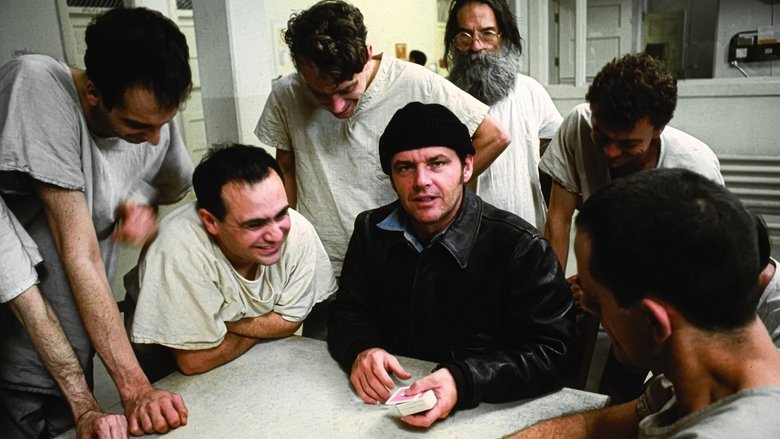
McMurphy constantly organizes card games, bets on various outcomes (like lifting the control panel), and turns therapy sessions and chores into contests. The most significant instance is his organization of the basketball game and the unauthorized fishing trip, which are direct acts of defiance that foster camaraderie and a sense of freedom among the patients.
Christian Symbolism
McMurphy is often interpreted as a Christ-like figure who sacrifices himself for the salvation of others. His actions are meant to redeem the other patients from their state of despair and submission.
Several scenes allude to Christian iconography. The fishing trip involves twelve "disciples." McMurphy undergoes electroconvulsive therapy on a table shaped like a cross, which can be seen as a form of crucifixion. His final act of being smothered by Chief is a mercy killing that allows his spirit of rebellion to live on and inspires Chief's "resurrection" into the outside world.
Philosophical Questions
What is the true definition of sanity, and who has the right to define it?
The film relentlessly questions societal standards of 'normalcy'. McMurphy feigns insanity but acts with more vitality and humanity than his 'sane' caretakers. The other patients are often victims of societal and familial pressure rather than being clinically 'insane'. The film suggests that sanity is not about conformity but about self-awareness, freedom of expression, and the courage to be oneself. It forces the audience to question whether the true madness lies within the individuals or the institution that seeks to control them.
Is rebellion against an oppressive system justified even if it leads to tragic consequences?
McMurphy's rebellion brings joy, laughter, and a sense of self-worth to the patients, but it also leads directly to Billy Bibbit's suicide and McMurphy's own lobotomy. The film doesn't offer an easy answer. It presents the moral complexity of the struggle for freedom. While McMurphy is ultimately destroyed by the system, his actions inspire Chief Bromden to escape. This raises the question of whether a moral victory and the liberation of one person is worth the ultimate sacrifice of another, suggesting that the spirit of rebellion is a vital human impulse, regardless of the cost.
To what extent can an individual's spirit overcome institutional dehumanization?
The core of the film is the battle between McMurphy's indomitable spirit and the institution's efforts to crush it. For most of the film, his spirit seems to be winning, as he awakens the dormant humanity in the other patients. However, the institution has the final say with the lobotomy, a procedure that physically destroys the part of the brain associated with personality and spirit. The film's ending is ambiguous on this point. While McMurphy's individual spirit is extinguished, it is transferred to Chief Bromden, who carries it out into the world. This suggests that while an institution can destroy an individual, the spirit of freedom itself is harder to kill.
Core Meaning
"One Flew Over the Cuckoo's Nest" serves as a powerful allegory for the struggle of the individual against oppressive systems of control. The film, directed by Miloš Forman who had experienced totalitarian rule in his native Czechoslovakia, critiques institutional authority that stifles personal freedom and enforces conformity. McMurphy's rebellion is not just against Nurse Ratched, but against a society that demands obedience and labels nonconformists as 'insane' or 'unfit'. The central message is a celebration of the human spirit, suggesting that true sanity lies in embracing one's individuality, even if it comes at a great personal cost. McMurphy's ultimate sacrifice becomes a catalyst for the liberation of others, particularly Chief Bromden, symbolizing that the fight for freedom, even if lost by one, can inspire it in others.