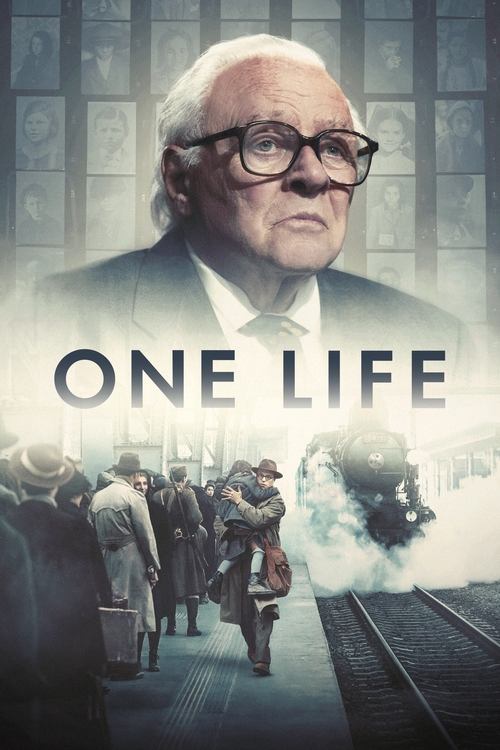
One Life
A poignant historical drama radiating quiet heroism and the burden of memory. Like a dusty scrapbook opened after decades, it reveals how the ripples of a single act of kindness can outlast the darkest chapters of history.
One Life
One Life

"Save one life, save the world."

21 December 2023 Australia 109 min ⭐ 7.8 (897)
Director: James Hawes
Cast: Anthony Hopkins, Johnny Flynn, Lena Olin, Romola Garai, Alex Sharp
Drama History
The Burden of Memory and Guilt Ordinary Heroism Collective vs. Individual Action The Power of Storytelling
Box Office: $51,437,352

One Life - Ending Explained

⚠️ Spoiler Analysis

The film's emotional impact relies on the convergence of its two timelines.

  • The Tragic Twist: In the 1939 timeline, the audience learns the fate of the ninth train. It was scheduled to leave on September 1st, the day Hitler invaded Poland. The borders were closed instantly, and the train, carrying 250 children (the largest group yet), was stopped. These children were never seen again, likely perishing in concentration camps. This failure is the source of Old Nicky's deep depression.
  • The Catharsis: In 1988, after the scrapbook is given to the BBC, Nicky is invited to a taping of That's Life!. Initially, he meets one survivor. He is invited back for a second show. In the famous reveal, the host Esther Rantzen asks, "Is there anyone in the audience who owes their life to Nicholas Winton?" The entire audience stands up. They are all the children he saved, now adults.
  • The Resolution: Overwhelmed, Nicky stands and acknowledges them. The film ends with him finally at peace, hosting a gathering of survivors at his home, the burden of the "ninth train" finally lifted by the gratitude of the 669 living worlds he created.

Alternative Interpretations

While largely a straightforward biopic, the film offers room for deeper readings regarding memory and trauma.

  • The 'Selfish' Act of Saving: Some critics have discussed whether Winton's initial motivation was purely altruistic or a way to find purpose in a mundane life. The film hints at his dissatisfaction with his stockbroker career.
  • The Ethics of the 'Good German': The film subtly explores the tension of Winton's German heritage (through his mother) and how his family's assimilation into British culture drove their desire to prove their loyalty and humanity against the German Nazi regime.
  • Survivor's Guilt vs. Savior's Guilt: The film juxtaposes the guilt of those who survived with the guilt of the one who saved them—suggesting they are two sides of the same traumatic coin. Winton feels he didn't do enough; the survivors feel they must justify their survival.