One Life
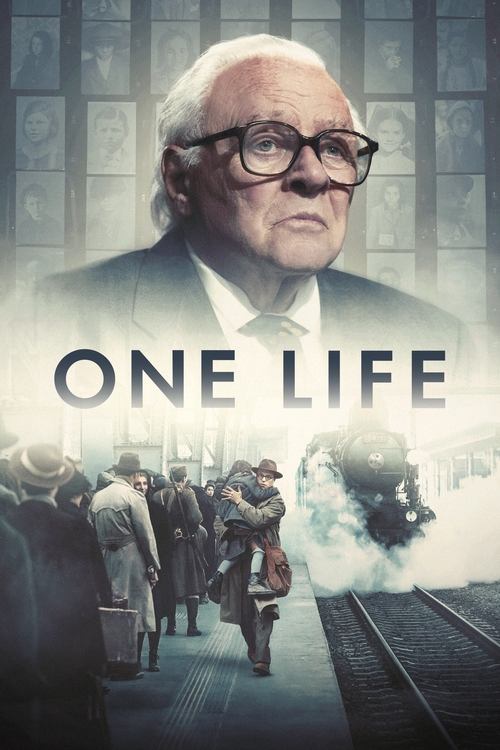
A poignant historical drama radiating quiet heroism and the burden of memory. Like a dusty scrapbook opened after decades, it reveals how the ripples of a single act of kindness can outlast the darkest chapters of history.
One Life

One Life

"Save one life, save the world."

21 December 2023 Australia 109 min ⭐ 7.8 (897)
Director: James Hawes
Cast: Anthony Hopkins, Johnny Flynn, Lena Olin, Romola Garai, Alex Sharp
Drama History
The Burden of Memory and Guilt Ordinary Heroism Collective vs. Individual Action The Power of Storytelling
Box Office: $51,437,352

Overview

One Life weaves a dual-narrative structure, alternating between the eve of World War II in 1938 and the comfortable yet haunted suburbs of Maidenhead in 1988. In the 1930s, a young stockbroker named Nicholas 'Nicky' Winton cancels a ski trip to visit Prague, where he is struck by the squalid conditions of refugees fleeing the Nazi advance. Driven by a moral imperative, he mobilizes a scrappy committee to transport hundreds of predominantly Jewish children from Czechoslovakia to safety in Britain before the borders close.

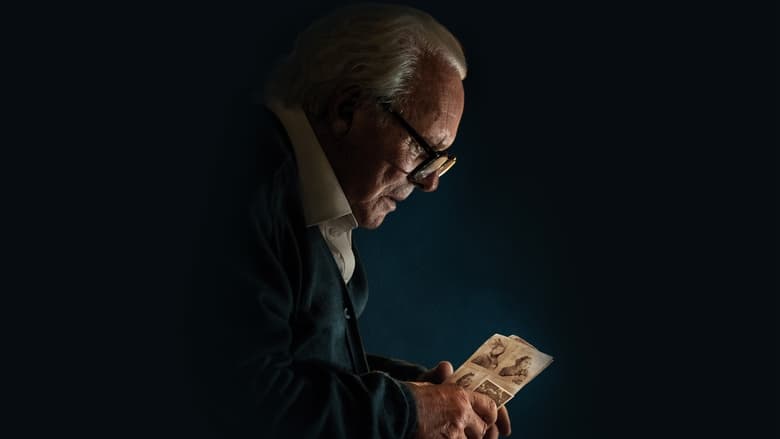
Fifty years later, an elderly Winton lives a quiet life, still possessed by the clutter of his past—specifically a scrapbook containing the names and photos of the children he saved, and the many he could not. While his wife urges him to declutter, Winton struggles to find a proper home for the documents that prove his extraordinary deed. His journey toward self-forgiveness culminates when the scrapbook finds its way to the production team of the BBC television show That's Life!, leading to a public revelation that changes his life forever.
Core Meaning

The film posits that ordinary decency is a radical force. It challenges the "Great Man" theory of history by showing that heroism is often bureaucratic, tedious, and collaborative rather than solitary and action-packed. Ultimately, it explores the persistence of guilt in the face of partial success—suggesting that saving hundreds can still feel like failure if one focuses on the thousands lost, until the living proof of one's impact is undeniably presented.

Thematic DNA

The Burden of Memory and Guilt 30%
Ordinary Heroism 25%
Collective vs. Individual Action 25%
The Power of Storytelling 20%

The Burden of Memory and Guilt

While the world sees Winton as a hero, he sees himself through the lens of the "ninth train"—the final transport that never made it. The film portrays memory not as a source of pride, but as a haunting archive of the lost. His reluctance to share the scrapbook stems from a feeling of unfinished business rather than modesty.

Ordinary Heroism

Nicky is not a soldier or a spy; he is a stockbroker armed with a pen, stamps, and a telephone. The film emphasizes that saving lives was a logistical grind involving visas, foster families, and funding, highlighting the power of administrative resistance against tyranny.

Collective vs. Individual Action

Although the title is One Life, the narrative painstakingly corrects the "lone savior" myth. It explicitly highlights the essential work of Doreen Warriner, Trevor Chadwick, and Winton's mother, Babi, showing that Winton was the catalyst and organizer, but the rescue was a team effort.

The Power of Storytelling

The scrapbook sits gathering dust until it is "activated" by the media. The film examines how a story must be told and witnessed to offer catharsis. The transition from a private archive to a public broadcast on That's Life! demonstrates how media can bridge the gap between history and the present.

Character Analysis

Nicholas 'Nicky' Winton (Old)

Anthony Hopkins

Archetype: The Humble Sage / Reluctant Hero
Key Trait: Self-effacing humility

Motivation

To tidy his affairs before he dies and to ensure the history of the children is preserved, even if he feels unworthy of praise.

Character Arc

Starts as a man quietly tormented by the past, hoarding his memories as evidence of failure. Through the intervention of his wife and the media, he moves from private guilt to public acceptance, finally understanding that his efforts were enough.

Nicholas 'Nicky' Winton (Young)

Johnny Flynn

Archetype: The Idealist / The Catalyst
Key Trait: Determination

Motivation

The moral impossibility of doing nothing after witnessing the suffering in the Prague refugee camps.

Character Arc

Transforms from a comfortable socialist bystander into a relentless activist. He learns that good intentions are useless without logistical execution, hardening his resolve against bureaucracy.

Babi Winton

Helena Bonham Carter

Archetype: The Matriarch / The Enforcer
Key Trait: Ferocity

Motivation

Protecting her son and saving her people from the tyranny she knows is coming.

Character Arc

She serves as Nicky's rock and strategic partner in London. A German-Jewish immigrant herself, she uses her fierce articulation and experience with prejudice to bully the British bureaucracy into compliance.

Grete Winton

Lena Olin

Archetype: The Anchor
Key Trait: Insightful patience

Motivation

To help her husband find peace and to declutter their home.

Character Arc

She pushes Nicky to confront his hoarding and his past. She is the gentle force that steers the scrapbook out of the house and into the world, facilitating his catharsis.

Symbols & Motifs

The Scrapbook

Meaning:

It represents the tangible proof of existence. For Winton, it is a ledger of debt and loss; for the world, it is a monument of salvation. Its weight (physical and metaphorical) anchors the 1988 timeline.

Context:

Kept in a locked drawer, carried in a worn leather briefcase, and finally opened by Esther Rantzen on national television.

The Swimming Pool

Meaning:

A place of reflection and cleansing. The water offers a silent space where the noise of the world and the clutter of the office fade away, symbolizing Winton's internal state.

Context:

Winton is frequently seen cleaning his pool or staring into it; it is where he retreats when the memories become too loud.

Dark Chocolate

Meaning:

A symbol of human connection and innocence amidst despair. It is a small luxury that bridges the gap between the well-off Englishman and the refugee children.

Context:

Young Nicky gives a piece of dark chocolate to a refugee girl in the camps, a gesture that breaks the ice and cements his resolve to help.

The Whistle

Meaning:

The sound of finality and separation. It marks the irreversible moment of departure where safety begins but family bonds are severed.

Context:

Used prominently during the train station sequences in Prague, signaling the heartbreaking moments when parents must let go of their children's hands.

Memorable Quotes

If something is not impossible, then there must be a way to do it.

— Nicholas Winton (Young)

Context:

Spoken when facing the daunting logistics of moving hundreds of children across Nazi territory without official support.

Meaning:

The film's central mantra. It encapsulates the refusal to accept bureaucratic dead ends when lives are at stake. It defines Winton's pragmatic approach to problem-solving.

I have seen this and I cannot unsee it.

— Nicholas Winton (Young)

Context:

Nicky explaining to his mother why he must return to Prague and dedicate himself to the rescue mission.

Meaning:

The definition of the moral witness. Once he has witnessed the suffering in the camps, returning to his normal life is no longer an option.

Save one life, save the world.

— Various / Talmudic proverb

Context:

referenced implicitly throughout the film's marketing and explicitly in the ethos of the committee's work.

Meaning:

The spiritual core of the film. It reframes the rescue of 669 children not as a statistic, but as 669 entire worlds preserved for the future.

We're not just moving children, we're fighting for their future.

— Doreen Warriner

Context:

During a strategy meeting in Prague as the Nazi threat looms larger.

Meaning:

Highlights that the mission was not just about survival, but about preserving the potential of a generation.

Philosophical Questions

Does the value of a life diminish if you cannot save everyone?

The film explores this through Winton's obsession with the "ninth train." Despite saving 669 children, he is haunted by the 250 he lost. The film argues that while the loss is tragic, it does not negate the value of the lives saved—challenging the utilitarian view of heroism.

What is the responsibility of the ordinary citizen in times of atrocity?

Nicky is not a person of great power or influence; he is a stockbroker. The film posits that the responsibility to act lies not with those who can easily do so, but with those who see the need. "I have seen it, so I must act" is the film's categorical imperative.

Is an act of goodness complete if it remains secret?

Winton kept his story hidden for 50 years. The film asks whether the public acknowledgment of the act was necessary for the act's completion, or if it was necessary only for Winton's own psychological healing.

Alternative Interpretations

While largely a straightforward biopic, the film offers room for deeper readings regarding memory and trauma.

  • The 'Selfish' Act of Saving: Some critics have discussed whether Winton's initial motivation was purely altruistic or a way to find purpose in a mundane life. The film hints at his dissatisfaction with his stockbroker career.
  • The Ethics of the 'Good German': The film subtly explores the tension of Winton's German heritage (through his mother) and how his family's assimilation into British culture drove their desire to prove their loyalty and humanity against the German Nazi regime.
  • Survivor's Guilt vs. Savior's Guilt: The film juxtaposes the guilt of those who survived with the guilt of the one who saved them—suggesting they are two sides of the same traumatic coin. Winton feels he didn't do enough; the survivors feel they must justify their survival.

Cultural Impact

One Life reignited global interest in the story of the Kindertransport and the Holocaust in the UK. While the story was known (primarily due to the viral YouTube clip of the 1988 TV show), the film brought a new level of emotional intimacy to the events.

  • Historical Context: Released during a time of renewed global refugee crises, the film drew sharp parallels between the Jewish refugees of 1939 and modern displacement, urging audiences to see "refugees" as individuals rather than statistics.
  • Cinematic Influence: Critics frequently compared it to Schindler's List, dubbing it the "British Schindler's List," though noting its more understated, bureaucratic focus. It cemented Anthony Hopkins' late-career status as a master of portraying vulnerable, elderly men (following The Father).
  • Educational Value: The film has been cited by educators as a vital tool for teaching the Holocaust, specifically emphasizing the role of the bystander and the power of individual agency.

Audience Reception

The film received a warm and emotional reception from audiences, frequently described as a "tearjerker" that earned its sentiment.

  • Praised: Anthony Hopkins' subtle, heartbreaking performance was universally acclaimed. The recreation of the That's Life! scene was cited by almost every viewer as the emotional high point. The film's restraint—avoiding graphic violence in favor of psychological tension—was appreciated.
  • Criticized: Some critics felt the film was too "safe" or "conventional" in its filmmaking style, resembling a high-quality TV movie (fitting, given the director's background). A few reviews noted that the flashback structure sometimes slowed the pacing.
  • Verdict: A solid, deeply moving, if traditional, biopic that succeeds largely due to the power of the true story and Hopkins' acting masterclass.

Interesting Facts

  • The film features a recreation of the famous BBC 'That's Life!' audience scene. Many of the extras in the audience for this scene were the actual children or grandchildren of the people Winton saved.
  • Anthony Hopkins met the real Nicholas Winton's daughter, Barbara Winton, before she passed away. She had specifically requested that Hopkins play her father.
  • Helena Bonham Carter, who plays Winton's mother, has a personal connection to the story: her own grandfather, Eduardo Propper de Callejón, was a Spanish diplomat who saved thousands of Jews during WWII.
  • The film was shot on location in Prague, including at the actual train station (Praha hlavní nádraží) where the Kindertransports departed in 1939.
  • Johnny Flynn and Anthony Hopkins worked together to coordinate their mannerisms, specifically a subtle way of adjusting their glasses and a specific stutter/hesitation in speech.
  • The real scrapbook shown in the film is a replica, but the details within it are accurate to Winton's actual archives, which are now held at Yad Vashem.
  • Director James Hawes actually worked as a young researcher on the 'That's Life!' show in real life, giving him a unique personal connection to the TV studio scenes.

Easter Eggs

Descendants in the Audience

In the climactic scene where the host asks, "Is there anyone in the audience who owes their life to Nicholas Winton?", the people who stand up are actual descendants of the Kindertransport survivors, bridging the gap between the film and reality.

The 'That's Life!' Set Accuracy

The production design team recreated the 1988 That's Life! studio set with painstaking detail, matching the exact layout, lighting, and even the host Esther Rantzen's outfit from the original broadcast footage.

Vera Gissing

The character of Vera, who sits next to Winton in the TV audience, represents the real Vera Gissing, one of the most vocal survivors who later wrote extensively about Winton. Her presence acknowledges the real people behind the numbers.

⚠️ Spoiler Analysis

Click to reveal detailed analysis with spoilers

Frequently Asked Questions

Explore More About This Movie

Dive deeper into specific aspects of the movie with our detailed analysis pages

Comments (0)

Leave a comment

No comments yet. Be the first to share your thoughts!