Skip to content
One Night Only
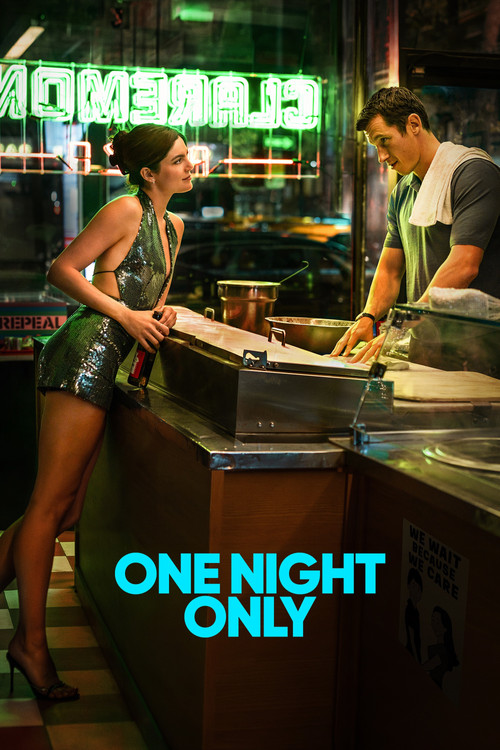
A neon-lit New York rom-com where desire is rationed by law, and two lonely singles drift through a city of frantic hookups, looking for one real spark in a twelve-hour window.
One Night Only

One Night Only

"12 hours can change everything."

06 August 2026 United States of America 103 min 6.4 (207)

Director: Will Gluck

Cast: Monica Barbaro, Callum Turner, Maya Hawke, King Princess, Molly Ringwald

Comedy Romance Choice versus coercion in intimacy Authentic connection versus casual sex Commodification and surveillance Romantic comedy and one-night structure Loopholes and marginalized experience
Budget: $25,000,000
Box Office: $25,112,730

Overview

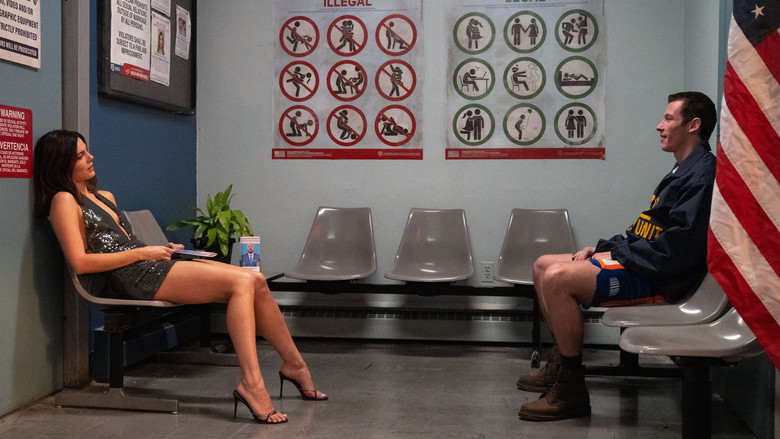
One Night Only (2026), directed by Will Gluck from a script by Travis Braun, is set in an alternate near-future United States. Premarital sex has been outlawed for three years, with a single twelve-hour exemption each year. Wrist tattoos from a company called Rexton Labs change color to mark the window, and the government monitors compliance.

Owen (Callum Turner), a pizzeria owner, plans to use the night to propose to his girlfriend. She instead tells him she intends to sleep with someone else. Allie (Monica Barbaro) is a singer stuck recording pharmaceutical jingles, and she wants a meaningful connection rather than a quick encounter. The two keep crossing paths across Manhattan as side quests and missteps pull them apart.

The film is a night-long odyssey in the tradition of screwball and "one crazy night" comedies. Maya Hawke, King Princess, Molly Ringwald, Julia Fox and LeVar Burton fill out the ensemble. Critics split on whether the dystopian premise is a clever hook or an uncomfortable one.

Core Meaning

On the surface the film argues that real intimacy is something chosen, not something scheduled or mandated. Its closing narration, per the available quote listings, says the mandate made sex feel new because it forced people to ask who they would choose for this one night. The film's romantic thesis is that choice itself is romantic.

Critics disagreed sharply about whether this holds together. Some read the film as endorsing the mandate, or at least declining to satirize it. Others saw a sweet rom-com whose politics are only a pretext. The intended message is probably that connection beats casual sex, but the dystopian frame complicates it.

Thematic DNA

Choice versus coercion in intimacy 30%
Authentic connection versus casual sex 27%
Commodification and surveillance 18%
Romantic comedy and one-night structure 15%
Loopholes and marginalized experience 10%

Choice versus coercion in intimacy

A law that allows sex only one night a year turns desire into a deadline. Allie and Owen resist the pressure to settle for a hookup and look for someone they actually choose.

Authentic connection versus casual sex

Allie says casual sex has left her feeling empty. The film sets her search against the city's frantic pairing off, and one couple chooses to wait.

Commodification and surveillance

Rexton Labs wrist tattoos, dopamine-monitoring biosensors, and Allie's pharmaceutical jingles show a world where bodies and feelings are managed by corporations and the state. Critics noted the film barely engages this satirically.

Romantic comedy and one-night structure

Missteps, mistaken pairings and detours follow the classic night-long romp, in which the person you need is closer than you think.

Loopholes and marginalized experience

A line about gay people dancing around such laws since before the Bible hints at how different groups would live under the mandate. Reviewers felt this was thinly explored.

Character Analysis

Owen

Callum Turner

Archetype: Hopeful romantic / lovable loser Key Trait: Earnest and self-deprecating

Motivation

To find real love and companionship rather than just use the exemption.

Character Arc

He begins the night planning a proposal and is instead dumped. He drifts through failed hookups and detours until he sees what he actually wants.

Allie

Monica Barbaro

Archetype: Idealistic seeker Key Trait: Sharp-witted but guarded

Motivation

To find commitment and a deeper bond, and to find her own voice beyond jingles.

Character Arc

She starts out disillusioned by emptiness from casual encounters, and ends up choosing connection on her own terms.

All 4 characters and cast

Symbols & Motifs

The color-changing wrist tattoo

Meaning:

State and corporate control of the body, and the countdown on desire.

Context:

Rexton Labs tattoos change color to mark the twelve-hour exemption window.

Pizza

Meaning:

Comfort, ordinary appetite and unpretentious warmth as opposed to transactional lust.

Context:

Owen owns a pizzeria, and Allie jokes about ordering a pizza with extra cheese and no lubricant.

The Empire State Building

Meaning:

Romantic cliché that the characters deflate. They prefer real connection to movie-style grand gestures.

Context:

Allie calls it a tired reference and describes it as a long escalator ride to a fence.

Jingles and covers

Meaning:

Borrowed, commercialized emotion, and Allie's search for her own voice.

Context:

Allie sings pharmaceutical jingles that rip off pop standards, and she has stage fright.

New York at night

Meaning:

A city of crowds where isolation is most acute.

Context:

The couple wander a Manhattan full of couples, with nearly everyone else paired off.

Memorable Quotes

Maybe the fascists were right about this one.
— Ezra Stone

Context

From a closing reflection about how the mandate gave sex new meaning.

Meaning

The line that most divided viewers. It is read either as a wry joke or as the film endorsing the mandate.

Choice itself is romantic.
— Ezra Stone

Context

The same reflection, asking who you choose to be with for this one night.

Meaning

Compresses the film's thesis about agency.

All 6 quotes

Philosophical Questions

Does restricting a freedom make its exercise more meaningful?

The closing reflection suggests that scarcity gave sex new meaning, which the film treats ambivalently and critics found troubling.

Can authentic love exist under state compulsion?

Allie and Owen try to choose each other despite a law that makes the night a transaction with a deadline.

Is casual intimacy fulfilling?

Allie says it left her feeling empty, and the film sets her search against the city's frenzy.

How It Ends

Alternative Interpretations

One reading sees a harmless romp in which the dystopia is just a device to accelerate courtship, as Variety suggested. Another sees an unintentionally conservative film that endorses restricted sex, a view voiced by Roger Ebert's reviewer and some viewers. Plugged In read it approvingly as a case for commitment and fidelity. A third reading is that the satire is intentionally toothless, a comment on how people adapt to oppressive systems with a shrug.

Full ending explanation

Cultural Impact

The film arrived as a high-concept R-rated studio rom-com, and critics frequently summarized it as "The Purge, for sex," with its dystopian mandate reminiscent of that franchise's one-night-a-year premise. Its release followed Gluck's Anyone but You and was framed as an attempt to keep the theatrical romcom alive.

Critical response was mixed. Variety found it too creepy to be cute, while The Hollywood Reporter praised its leads as sparkling. Roger Ebert's site gave it a thumbs down as sex-negative, and Letterboxd users mocked the "fascists were right" line. It under-performed financially.

Audience Reception

Audiences and critics praised the chemistry of Monica Barbaro and Callum Turner, the New York setting, and occasional strong one-liners, especially the parodic jingles. The main criticisms were the dystopian premise treated as a mere gimmick, a lack of political bite, an uncomfortable closing note, and humor that sometimes missed, with a shock-value child character singled out. Overall verdict: mixed, and charming leads in an uneven film.

Interesting Facts

  • The film was directed and produced by Will Gluck, whose previous romcom Anyone but You was a big multiplex hit, per Variety.
  • Screenwriter Travis Braun's script was on the Black List, according to a Moviefone interview.
  • Jacqueline Monetta produced with Gluck through Olive Bridge Entertainment.
  • It premiered at the SVA Theater in Manhattan on August 3, 2026, and was released in the US on August 7, 2026 by Universal.
  • The budget was $25 million and it grossed about $25.1 million, which Wikipedia describes as a box-office bomb.
  • Music is by Este Haim and Christopher Stracey, and King Princess provides a cover of 'Love Is in the Air' heard in the film.
  • The cast includes Flavor Flav and Mike Birbiglia, with LeVar Burton as Owen's mother's partner.

Frequently Asked Questions

Explore More About This Movie

Dive deeper into specific aspects of the movie with our detailed analysis pages

Comments (0)

Leave a comment

No comments yet. Be the first to share your thoughts!

Similar Movies