Skip to content
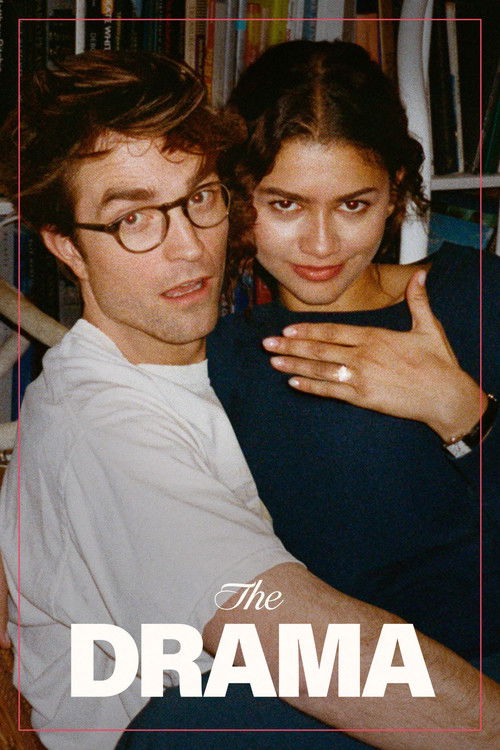
The Drama
A suffocatingly tense romantic black comedy where pristine pre-nuptial bliss fractures into paralyzing paranoia, like a delicate crystal wedding goblet shattering under the crushing weight of an unburied, unthinkable truth.
The Drama

The Drama

"Witness the wedding of the year."

01 April 2026 United States of America 105 min 6.9 (1,392)

Director: Kristoffer Borgli

Cast: Zendaya, Robert Pattinson, Alana Haim, Mamoudou Athie, Hailey Benton Gates

Drama Comedy Romance Performative Morality and Hypocrisy Moral Anxiety and Perception vs. Reality The Burden of Intimacy and Secrecy Forgiveness and "Starting Over"
Budget: $28,000,000
Box Office: $132,227,793

Overview

The Drama opens with an utterly charming meet-cute in a cozy Boston café. Charlie Thompson, a soft-spoken British art curator, stumbles through a pick-up attempt with Emma Harwood, a literary editor. After a quick miscommunication caused by Emma’s partial hearing loss, she graciously invites him to "start over". Fast-forward two years: Charlie and Emma are deep in the chaotic preparation for their dream wedding, surrounded by stylish city apartments and high-end catering.

The narrative shifts dramatically during a wine-soaked pre-wedding dinner party with Charlie’s best man, Mike, and Emma’s maid of honor, Rachel. What begins as playful premarital chatter turns dark when the group decides to play a casual confession game: "What is the worst thing you’ve ever done?". While the others share embarrassing misdeeds and moral lapses, Emma divulges a deeply unsettling, secret chapter from her teenage past.

In an instant, the romantic comedy atmosphere evaporates. As the wedding day rapidly approaches, Charlie finds himself trapped in a psychological spiral, questioning whether the woman he loves is truly who she claims to be or an enigma incapable of redemption. The Drama transforms into an excruciatingly awkward and incisive study of trust, anxiety, and the terrifying realization of how little we may know about our partners.
Core Meaning

Director Kristoffer Borgli (Sick of Myself, Dream Scenario) uses The Drama to interrogate modern performative morality, hypocritical social judgment, and the terrifying conditions of total intimacy. The film questions whether romantic love requires unconditional acceptance of a partner's entire history—including their darkest, most disturbing impulses—or if certain past secrets shatter the unspoken contract of marriage beyond repair.

Through Charlie’s paranoid unraveling, Borgli exposes how easily humans default to pseudo-psychological rationalizations (such as searching for neat Freudian trauma) to digest unmanageable information. The film argues that modern society eagerly ranks sins through a lens of performative outrage: friends tolerate cruelty and selfishness within their own lives while standing in absolute judgment of another's confessed flaws. Ultimately, The Drama suggests that true intimacy cannot survive on an idealized pedestal; it requires confronting raw human defectiveness and deciding whether to condemn or grant grace.

Thematic DNA

Performative Morality and Hypocrisy 35%
Moral Anxiety and Perception vs. Reality 25%
The Burden of Intimacy and Secrecy 20%
Forgiveness and "Starting Over" 20%

Performative Morality and Hypocrisy

Revealed through the dinner party scene and its aftermath. While Rachel and Mike comfortably laugh off their own shocking acts of cruelty (e.g., deserting a disabled child in an abandoned RV or using a girlfriend as a human shield against a dog), they instantly ostracize Emma for her past. The characters engage in moral high-grounding to mask their own personal failings.

Moral Anxiety and Perception vs. Reality

Explored through Charlie’s inner breakdown. Once Emma reveals her past, Charlie’s perception shifts entirely. He begins reading malice into mundane daily objects and actions, demonstrating how fear and anxiety can distort a loving relationship into a nightmare of hyper-vigilance.

The Burden of Intimacy and Secrecy

Embodied in the conflict of full disclosure. The movie explores whether complete honesty is a prerequisite for marriage or a destructive force. Emma’s secret acts as an unexploded bomb sitting beneath their shared life.

Forgiveness and "Starting Over"

Highlighted in the film's climax and resolution. The narrative pits society's urge to cancel and punish individuals against the personal capacity for empathy, grace, and resetting narrative expectations.

Character Analysis

Charlie Thompson

Robert Pattinson

Archetype: Bumbling Romantic / Anxiety-Ridden Protagonist Key Trait: Intellectual over-analyzer prone to internalizing social anxiety

Motivation

Seeking absolute certainty, moral cleanliness, and peace of mind before taking marriage vows.

Character Arc

Begins as an idyllic, prime-rom-com groom. Upon hearing Emma’s secret, he devolves into an obsessive, paranoid wreck who attempts to rationalize trauma before finally hitting rock bottom and accepting moral ambiguity.

Emma Harwood

Zendaya

Archetype: Enigmatic Heroine / Vulnerable Penitent Key Trait: Quiet resilience and unflinching, uncomfortable honesty

Motivation

Desires unconditional love and acceptance without having to suppress or lie about her past.

Character Arc

Starts as a charming, composed literary editor. After making her vulnerable confession, she withstands public shaming and hostility, ultimately extending grace and offering Charlie a fresh start.

All 4 characters and cast

Symbols & Motifs

Partial Hearing Loss / Eardrum

Meaning:

Symbolizes selective perception, hidden physical trauma, and incomplete communication.

Context:

Emma’s blown-out eardrum serves as the literal meet-cute catalyst and the secret physical marker of her adolescent crisis.

The "Coffee or I'll Shoot" Novelty Mug

Meaning:

Symbolizes how paranoia alters meaning.

Context:

Initially a harmless, quirky item in their kitchen, it becomes an object of terrifying menace for Charlie after Emma’s confession.

White Wedding Dress & Puffy Orange Jacket

Meaning:

Symbolizes the clash between pristine romantic expectations and messy, protective reality.

Context:

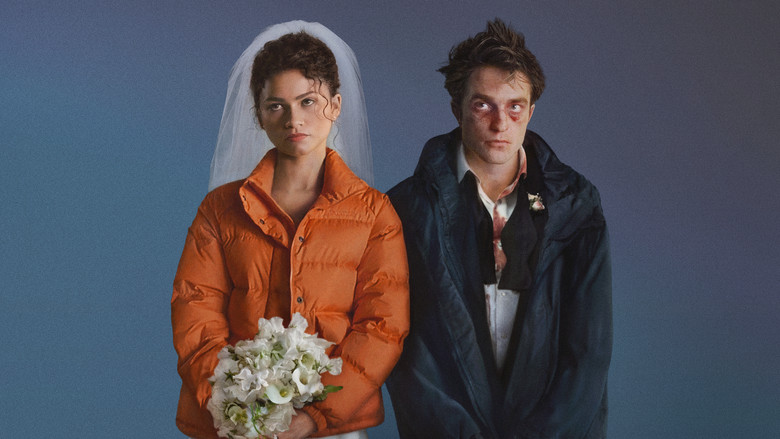
In the finale, Emma wearing an oversized orange jacket over her wedding gown represents her refusal to play the perfect bride figure, choosing practical self-preservation instead.

The Late-Night Diner

Meaning:

Symbolizes a secular sanctuary and a place of psychological reset.

Context:

It acts as the neutral ground where societal expectations fade, allowing Charlie and Emma to re-enact their initial meeting.

The "Worst Thing You've Ever Done" Dinner Game

Meaning:

A motif for performative vulnerability that metastasizes into real, uncontainable horror.

Context:

Used as the inciting prompt over wine at the dinner tasting between Charlie, Emma, Mike, and Rachel.

Memorable Quotes

Unexpressed emotions will never die. They are buried alive and will come forth later in uglier ways.
— Charlie

Context

Said while Charlie frantically tries to diagnose Emma's past, quoting Sigmund Freud.

Meaning

Illustrates Charlie's need to reduce Emma's complex history to a neat psychoanalytic trauma.

What’s the worst thing you’ve ever done?
— Rachel

Context

The inciting prompt over wine at the dinner tasting.

Meaning

Sets off the narrative domino effect, showcasing how casual social games can unleash unmanageable truths.

All 4 quotes

Philosophical Questions

Does knowledge of a person's darkest secret demand a moral verdict, or can it coexist unresolved?

The film demonstrates Charlie’s desperate, failing attempt to organize Emma's confession into a neat moral judgment.

Are humans defined by their worst past impulses or their daily actions to be better?

Explored through Emma's post-adolescent life of empathy versus Rachel's total condemnation of her past.

Is absolute honesty a destructive ideal in romantic relationships?

Investigated by showing how a single moment of unvarnished truth completely unravels a functioning partnership.

Alternative Interpretations

The Optimistic Reading (Radical Grace): Charlie and Emma’s diner reunion represents genuine growth. By shedding societal expectations and resetting their relationship to "strangers," they choose unconditional love, acknowledging that past mistakes do not negate a person's present capacity for good.

Full ending explanation

Cultural Impact

The Drama debuted in early 2026 amid heightened cultural discussions surrounding cancel culture, relationship honesty, and public trauma discourse. Directed by a Norwegian filmmaker operating inside the American indie system, the movie brings a European, absurdity-inflected lens to hot-button American social anxieties—specifically adolescent violence and moral outrage.

Upon release, the film provoked significant public debate. Some gun violence prevention activists criticized the narrative choice to feature a planned school shooting within a dark romantic comedy setting, while film critics praised it as a daring, razor-sharp exploration of performative morality. It consolidated Borgli’s reputation alongside Yorgos Lanthimos and Ruben Östlund as a master of high-concept social discomfort cinema.

Audience Reception

Critical Consensus (Rotten Tomatoes: 82%, Metacritic: 59): Critics praised the stellar performances of Zendaya and Robert Pattinson, Daniel Pemberton’s claustrophobic score, and Borgli's tight editing. Many applauded the film's audacity to turn a rom-com premise into an uncomfortable moral pressure cooker.

Main Points of Criticism: A subset of reviewers felt the third-act climax was overly farcical or that the ending let the central characters off too easily after raising such heavy themes.

Audience Reactions: Highly divided. Viewers were shocked by the early plot twist, with internet forums debating whether Rachel or Emma was the true villain of the narrative.

Interesting Facts

  • Zendaya and Robert Pattinson filmed The Drama back-to-back with two other major projects—Christopher Nolan’s The Odyssey and Denis Villeneuve’s Dune: Part Three—building a close real-life friendship during production.
  • Director Kristoffer Borgli specifically directed Robert Pattinson to channel prime 1990s Hugh Grant rom-com tropes (bumbling demeanor, floppy hair, named "Charlie" like in Four Weddings and a Funeral) for the first act to heighten the contrast when the film turns pitch-black.
  • Produced on a modest $28 million budget by A24 and Ari Aster’s Square Peg, The Drama grossed $132.5 million worldwide, making it A24’s fifth highest-grossing release.
  • A24 placed a fake wedding announcement for "Emma Harwood and Charlie Thompson" in the Boston Globe and released an enigmatic "35mm Camera Test" teaser showing Pattinson bloodied, sparking massive online speculation prior to release.
  • Pattinson admitted in interviews that he spiraled over analyzing the central dinner scene, writing pages of textual analysis trying to unlock Charlie's emotional breakdown.

Easter Eggs

Sound Design Auditory Hint

In the opening café scene, the audio track subtly drops to mono and muffles on the right side when Charlie speaks to Emma, giving attentive viewers an early clue about her eardrum injury before she explains her hearing loss.

Method Dressing Narrative

During the film's promotional press tour, Zendaya wore a series of bridal-inspired red-carpet gowns that gradually darkened from pure white to jet-black, hinting at the film’s narrative descent.

Scandi Comedy Lineage

Borgli inserts subtle visual nodes to Scandinavian cringe cinema (such as Ruben Östlund’s Force Majeure and Thomas Vinterberg’s The Celebration), particularly in how awkward silence is edited during group meals.

The "Coffee or I'll Shoot" Mug

Appears casually background-canned in an early montage before becoming the centerpiece of Charlie's paranoia later in the film.

Frequently Asked Questions

Explore More About This Movie

Dive deeper into specific aspects of the movie with our detailed analysis pages

Comments (0)

Leave a comment

No comments yet. Be the first to share your thoughts!

Similar Movies