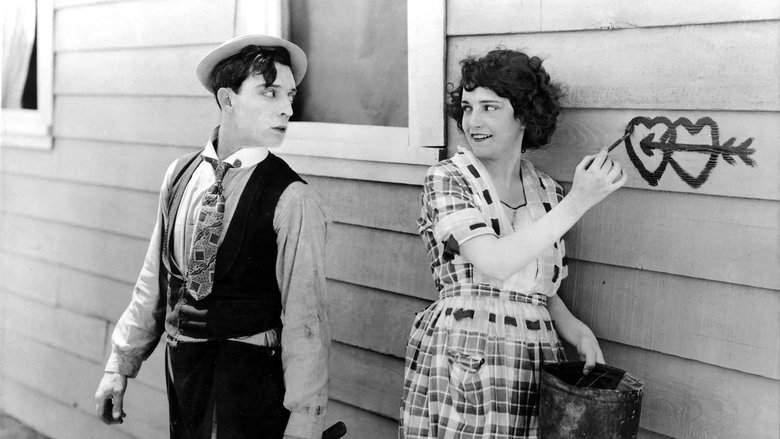
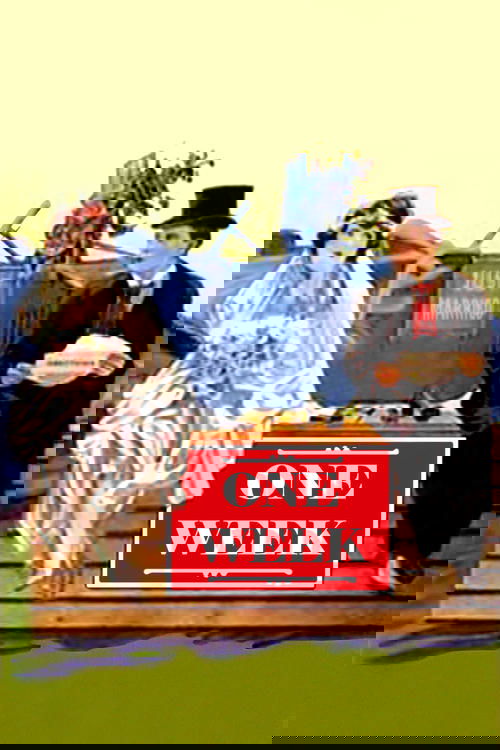
"Two reels of side-splitting fun arising from the trials of honeymooners…"
One Week - Symbolism & Philosophy
Symbols & Motifs
The DIY House
The build-it-yourself house symbolizes the hopes and dreams of the newlywed couple and, by extension, the promise of the American Dream. Its flawed and chaotic construction represents the difficulties and unexpected challenges of building a life and a home together. The house itself becomes a character in the film, an antagonist that the couple must constantly battle.
The central plot of the film revolves around the construction of this house from a prefabricated kit. A rejected suitor's sabotage by renumbering the crates leads to the house being built in a surreal and nonsensical manner, which is the source of most of the film's gags.
The Train
The train represents the unstoppable and often destructive force of modernity and industrialization. Its final, devastating appearance wipes out the couple's hard work in an instant, highlighting the vulnerability of individual aspirations in the face of overwhelming external forces. It serves as a powerful and unsentimental punchline to their week of struggles.
After discovering they've built their house on the wrong lot, the couple attempts to move it. The house gets stuck on railroad tracks, and after a tense near-miss with one train, another one unexpectedly comes from the opposite direction and demolishes it completely.
The Calendar
The daily turning of the calendar pages marks the passage of time and structures the narrative into a seven-day ordeal. It also serves as a visual reminder of the film's title and the one-week deadline the couple is supposed to meet, adding a sense of mounting pressure and comedic irony as their progress is constantly derailed.
The film's timeline is explicitly marked by intertitles showing the days of the week, often accompanied by a shot of a calendar page being torn off. This device was borrowed from the educational film "Home Made" (1919) which "One Week" parodies.
Philosophical Questions
Can we build a stable life in a chaotic and unpredictable world?
The film explores this question through the central metaphor of house-building. The couple's attempt to construct a stable, orderly home is constantly undermined by sabotage, storms, and their own mistakes, mirroring the way human plans are often thwarted by unforeseen circumstances. The surreal, ever-changing nature of the house suggests that the foundations of our lives are perhaps not as solid as we believe. The ultimate destruction of the house poses the question of whether true stability is ever achievable, or if we are always at the mercy of a chaotic world, symbolized by the train.
What is the true foundation of a home?
"One Week" humorously deconstructs the idea of a physical house as the sole component of a home. The couple has all the materials, but they fail to build a functional shelter. Their perseverance, partnership, and shared experience of the absurd disaster, however, build a bond between them. When the physical structure is destroyed, they still have each other. The film suggests that the true foundation of a home is not wood and nails, but the relationship and resilience of the people within it.
Core Meaning
"One Week" is a comedic exploration of the trials and tribulations of newly married life and the pursuit of the American dream. The chaotic construction of the house serves as a metaphor for the challenges and uncertainties a couple faces as they attempt to build a life together. The film suggests that love, resilience, and a sense of humor are essential for navigating the unpredictable and often absurd obstacles that life throws in one's path. Ultimately, it's a testament to the enduring spirit of a couple who, even when their dreams literally fall apart, still have each other.