One Week
A whirlwind comedic ballet of chaos and resilience, where a newlywed couple's dream home becomes a surrealist nightmare of precarious angles and spinning walls.
One Week

One Week

"Two reels of side-splitting fun arising from the trials of honeymooners…"

29 August 1920 United States of America 25 min ⭐ 7.9 (301)
Director: Buster Keaton Edward F. Cline
Cast: Buster Keaton, Sybil Seely, Joe Roberts
Comedy
The Fragility of the American Dream Human vs. Machine/Modernity Resilience and Partnership in Marriage Chaos and Order

Overview

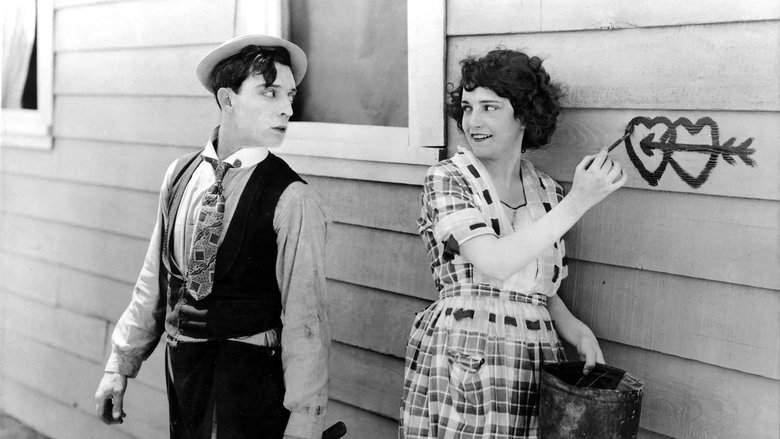
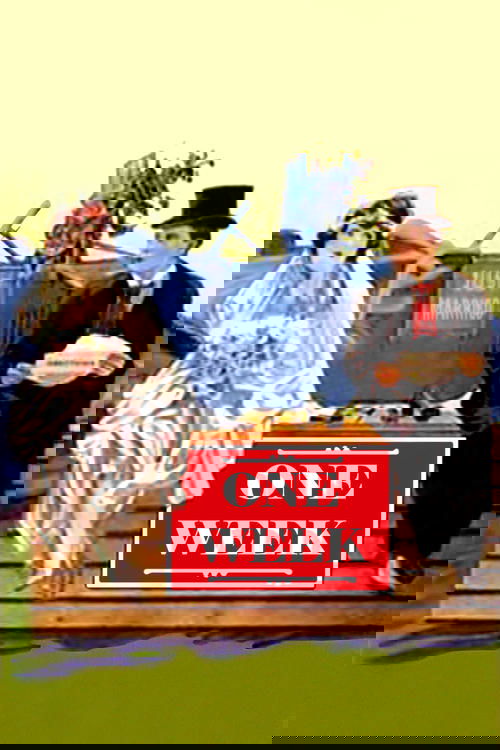
"One Week" chronicles the tumultuous first seven days of married life for a young couple, portrayed by Buster Keaton and Sybil Seely. As a wedding present, they receive a build-it-yourself house in a box, with instructions to assemble it in one week. However, a disgruntled former suitor of the bride secretly renumbers the packing crates, leading to a hilariously distorted and unstable construction.

The film follows their daily struggles and calamitous attempts to build a life together amidst the architectural absurdity. From a house that spins like a merry-go-round during a storm to doors that open to perilous drops, their dream home quickly becomes a comical deathtrap. Their perseverance is tested at every turn, culminating in a frantic effort to move the misplaced house before it's demolished by an oncoming train.
Core Meaning

"One Week" is a comedic exploration of the trials and tribulations of newly married life and the pursuit of the American dream. The chaotic construction of the house serves as a metaphor for the challenges and uncertainties a couple faces as they attempt to build a life together. The film suggests that love, resilience, and a sense of humor are essential for navigating the unpredictable and often absurd obstacles that life throws in one's path. Ultimately, it's a testament to the enduring spirit of a couple who, even when their dreams literally fall apart, still have each other.

Thematic DNA

The Fragility of the American Dream 35%
Human vs. Machine/Modernity 30%
Resilience and Partnership in Marriage 25%
Chaos and Order 10%

The Fragility of the American Dream

The film humorously critiques the idealized concept of domestic bliss and homeownership, a cornerstone of the American Dream in the 1920s. The couple's earnest efforts to build their own home, a symbol of stability and prosperity, are constantly thwarted by external forces and their own ineptitude, resulting in a chaotic and surreal parody of domesticity. The ultimate destruction of the house by a train underscores the precariousness of these aspirations in an increasingly industrialized and unpredictable world.

Human vs. Machine/Modernity

"One Week" reflects the anxieties of a society grappling with rapid industrialization. The prefabricated house, a product of modern efficiency, becomes a source of chaos rather than convenience. The film is filled with gags involving technology and machinery, culminating in the train that destroys their home, symbolizing the overwhelming and often destructive power of the modern, mechanized world against the individual's endeavors.

Resilience and Partnership in Marriage

Despite the never-ending series of disasters, the newlywed couple faces each challenge together. Their unwavering partnership and resilience in the face of absurdity are central to the film's narrative. They may be clumsy and unlucky, but their shared determination and affection for one another never falter. Even after their house is destroyed, they walk away hand-in-hand, suggesting that their bond is stronger than any physical structure.

Chaos and Order

The film is a masterclass in controlled chaos. The entire premise revolves around the disruption of order, as the renumbered crates turn a systematic building process into a nonsensical nightmare. The resulting house is a physical manifestation of chaos, with its illogical angles and dysfunctional features. Keaton's comedic genius lies in his character's persistent attempts to impose order on this chaotic environment, leading to a series of hilarious and inventive gags.

Character Analysis

The Groom

Buster Keaton

Archetype: The Everyman/The Stoic
Key Trait: Stoic Resilience

Motivation

His primary motivation is to build a home for his new wife and begin their life together, fulfilling the societal expectations of a husband in the 1920s. He is driven by a desire to create order and stability, a goal that is comically unattainable given the circumstances.

Character Arc

The Groom begins as a hopeful newlywed, ready to embrace the domestic ideal of building a home for his bride. He is the quintessential 'everyman' thrown into an absurd situation. His arc is not one of dramatic change, but of persistent, stoic resilience. Despite his deadpan expression, his actions convey a desperate and hilarious struggle against the chaos he has inadvertently created. He endures physical punishment and the complete destruction of his dream, yet in the end, he simply takes his wife's hand and walks away, undefeated in spirit.

The Bride

Sybil Seely

Archetype: The Partner/The Ingénue
Key Trait: Unflappable

Motivation

Like the Groom, her motivation is to build a home and start a life with her new husband. She is an enthusiastic, if not always helpful, participant in their shared dream.

Character Arc

The Bride is an active and equal partner in the chaotic endeavor. She is not a passive damsel in distress but gamely participates in the construction, often with disastrous but comical results. Her character arc mirrors the Groom's; she maintains her cheerful disposition and loyalty despite the escalating pandemonium. Her resilience and unwavering support for her husband highlight the film's theme of partnership.

Handy Hank (The Rival)

Unknown

Archetype: The Antagonist/The Trickster
Key Trait: Vengeful

Motivation

His motivation is simple revenge. Spurned by the Bride, he seeks to ruin the newlyweds' happiness by sabotaging their first home.

Character Arc

Handy Hank is the catalyst for the entire plot. As the rejected suitor, his act of sabotage sets the chaotic events in motion. He appears briefly at the beginning to renumber the crates and then disappears, his trickster-like intervention having long-lasting and hilarious consequences for the protagonists. He represents the unpredictable, external forces that can disrupt even the best-laid plans.

Piano Mover

Joe Roberts

Archetype: The Strongman
Key Trait: Superhuman Strength

Motivation

His motivation is simply to deliver the piano to the new house.

Character Arc

The piano mover is a minor character who serves a single, memorable comedic purpose. He demonstrates superhuman strength by effortlessly carrying a piano on his back, adding to the film's surreal and cartoonish logic. His brief appearance provides a moment of absurd visual comedy that is distinct from the main chaos of the house construction.

Symbols & Motifs

The DIY House

Meaning:

The build-it-yourself house symbolizes the hopes and dreams of the newlywed couple and, by extension, the promise of the American Dream. Its flawed and chaotic construction represents the difficulties and unexpected challenges of building a life and a home together. The house itself becomes a character in the film, an antagonist that the couple must constantly battle.

Context:

The central plot of the film revolves around the construction of this house from a prefabricated kit. A rejected suitor's sabotage by renumbering the crates leads to the house being built in a surreal and nonsensical manner, which is the source of most of the film's gags.

The Train

Meaning:

The train represents the unstoppable and often destructive force of modernity and industrialization. Its final, devastating appearance wipes out the couple's hard work in an instant, highlighting the vulnerability of individual aspirations in the face of overwhelming external forces. It serves as a powerful and unsentimental punchline to their week of struggles.

Context:

After discovering they've built their house on the wrong lot, the couple attempts to move it. The house gets stuck on railroad tracks, and after a tense near-miss with one train, another one unexpectedly comes from the opposite direction and demolishes it completely.

The Calendar

Meaning:

The daily turning of the calendar pages marks the passage of time and structures the narrative into a seven-day ordeal. It also serves as a visual reminder of the film's title and the one-week deadline the couple is supposed to meet, adding a sense of mounting pressure and comedic irony as their progress is constantly derailed.

Context:

The film's timeline is explicitly marked by intertitles showing the days of the week, often accompanied by a shot of a calendar page being torn off. This device was borrowed from the educational film "Home Made" (1919) which "One Week" parodies.

Philosophical Questions

Can we build a stable life in a chaotic and unpredictable world?

The film explores this question through the central metaphor of house-building. The couple's attempt to construct a stable, orderly home is constantly undermined by sabotage, storms, and their own mistakes, mirroring the way human plans are often thwarted by unforeseen circumstances. The surreal, ever-changing nature of the house suggests that the foundations of our lives are perhaps not as solid as we believe. The ultimate destruction of the house poses the question of whether true stability is ever achievable, or if we are always at the mercy of a chaotic world, symbolized by the train.

What is the true foundation of a home?

"One Week" humorously deconstructs the idea of a physical house as the sole component of a home. The couple has all the materials, but they fail to build a functional shelter. Their perseverance, partnership, and shared experience of the absurd disaster, however, build a bond between them. When the physical structure is destroyed, they still have each other. The film suggests that the true foundation of a home is not wood and nails, but the relationship and resilience of the people within it.

Alternative Interpretations

While primarily a slapstick comedy, "One Week" can be interpreted in several ways. Some see it as a surrealist film, with the distorted, nightmarish house reflecting the absurdity of modern life. The illogical construction and the characters' acceptance of it create a dreamlike (or nightmarish) logic that aligns with surrealist sensibilities. The film's gags often defy the laws of physics, pushing it beyond simple comedy into the realm of the fantastical.

Another interpretation views the film through a more philosophical lens, seeing the couple's struggle as a metaphor for the human condition. They strive to create order and meaning in a chaotic universe, but their efforts are ultimately futile. The final destruction of the house could be seen as a nihilistic punchline, suggesting the indifference of the universe to human endeavor. However, the couple walking away together at the end offers a more optimistic reading, emphasizing the importance of human connection and resilience in the face of meaninglessness.

Cultural Impact

Released in 1920, "One Week" established Buster Keaton as a major comedic force and set the template for his future work, which would be characterized by intricate visual gags, breathtaking stunts, and a stoic, deadpan persona. The film was a top-grossing release of 1920 and was met with critical acclaim, with critics praising its originality and comedic brilliance. Film critic Walter Kerr later wrote, "To sit through dozens and dozens of short comedies of the period and then to come upon One Week is to see the one thing no man ever sees: a garden at the moment of blooming."

The film's satirical take on the American Dream and the anxieties surrounding modernization resonated with post-WWI audiences. The idea of a prefabricated, build-it-yourself home was a very contemporary topic, and Keaton's parody of it was both timely and timeless. The film's influence can be seen in countless comedies that followed, particularly those that use a physical space (like a house) as a central source of gags and conflict. Its blend of slapstick, surrealism, and subtle social commentary has ensured its place as a landmark of silent comedy and a work of significant cultural and historical importance, as recognized by its inclusion in the National Film Registry.

Audience Reception

"One Week" was a major success with audiences in 1920, becoming one of the top-grossing films of the year. Viewers were captivated by Buster Keaton's incredible physical comedy, the innovative and daring stunts, and the film's relentless pace of inventive gags. Sybil Seely's charming and game performance as the bride was also praised, creating a likable and modern-feeling couple that audiences could root for.

The film's humor has proven to be timeless, and it is still widely praised today by both critics and general audiences for its comedic genius and technical brilliance. The sight gags, particularly the spinning house and the falling facade, are considered iconic moments in cinema history. There is little to no criticism of the film; it is almost universally regarded as a masterpiece of the silent comedy genre and a perfect introduction to the work of Buster Keaton.

Interesting Facts

  • "One Week" was the first film Buster Keaton released under his own production company, Buster Keaton Productions, though it was the second one he made after "The High Sign". He felt "One Week" was a stronger debut.
  • The film was a parody of an educational short film from 1919 produced by the Ford Motor Company called "Home Made", which promoted the virtues of prefabricated housing.
  • Many of the stunts were real and not special effects. The house was built on a large turntable to create the effect of it spinning during the storm scene.
  • The famous gag where the side of a building falls on Keaton, who is saved by an open window, was used here and later famously reprised in "Steamboat Bill, Jr." (1928).
  • Buster Keaton badly injured himself during the stunt where he falls two stories from the bathroom door. His arms and back swelled up significantly.
  • The film's title is a pun on a popular and scandalous 1907 novel by Elinor Glyn titled "Three Weeks." Keaton joked that his film was "one-third as scandalous".
  • In 2008, "One Week" was selected for preservation in the United States National Film Registry by the Library of Congress as being "culturally, historically, or aesthetically significant."
  • The risqué scene where Sybil Seely drops her soap in the bathtub and a hand covers the camera lens is a famous example of "breaking the fourth wall" and pre-Hays Code humor.

⚠️ Spoiler Analysis

Click to reveal detailed analysis with spoilers

Frequently Asked Questions

Explore More About This Movie

Dive deeper into specific aspects of the movie with our detailed analysis pages

Comments (0)

Leave a comment

No comments yet. Be the first to share your thoughts!