鬼婆
"The most daring film import ever...From Japan!"
Onibaba - Symbolism & Philosophy
Symbols & Motifs
TheSusuki(Pampas)Grass
Itsymbolizesnature'scompleteindifferencetohumansufferingandthelabyrinthine, shiftingmoralboundariesofthecharacters[1.3].
The grass fills nearly every frame of the film, obscuring the characters' sins, trapping them, and isolating them from the broader world.
The Deep Pit (The Hole)
The hole operates as a gateway to hell, a primal womb/tomb motif, and a physical manifestation of the accumulating weight of the women's karmic debt.
Hidden in the grass, it is where the women dump the bodies of the murdered soldiers, and where the older woman eventually springs her trap.
The Hannya Mask
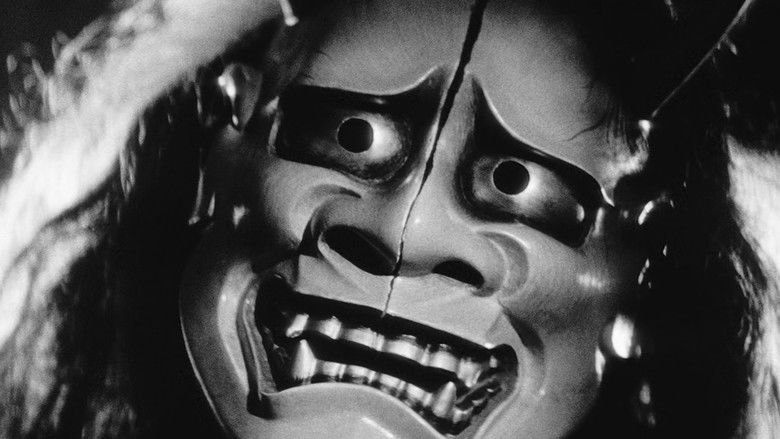
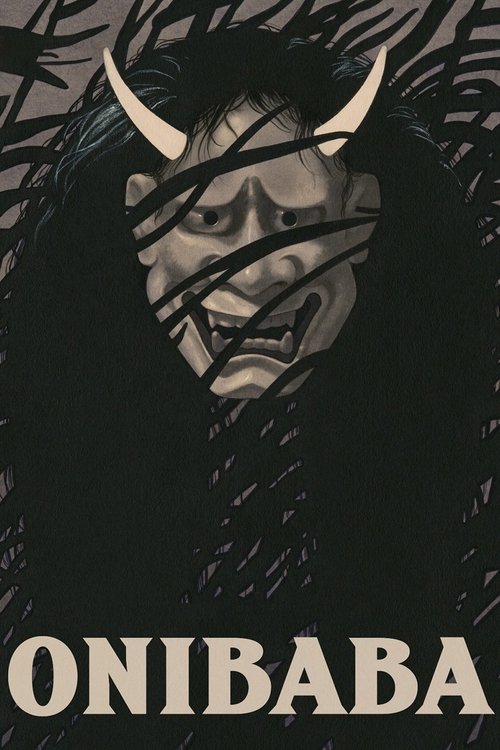
Representing jealousy and deceit in traditional Japanese culture, the mask symbolizes the ugly reality of human nature. Allegorically, it represents the devastating radioactive burns of the atomic bomb.
Stolen from a dead samurai, the older woman wears it to terrorize her daughter-in-law, only to have it permanently fuse to her own flesh.
Philosophical Questions
Is morality merely a luxury of the comfortable?
The film explores how extreme deprivation and the threat of starvation strip away societal ethics, forcing ordinary humans to adopt a predatory, animalistic existence just to survive [2.3].
Are demons supernatural entities, or manifestations of human trauma and malice?
By having the human protagonist literally morph into a 'demon hag' due to her own jealousy and actions, the film suggests that hell is a condition of the human soul rather than a supernatural realm.
How does the violence of war infect the civilian soul?
The film highlights the collateral spiritual damage of conflict, showing how war turns civilians into scavengers who must feed off the very military system that ruined their lives.
Core Meaning
Director Kaneto Shindō intended Onibaba as a fierce anti-war allegory and an exploration of the primal urge for survival. Shindō suggests that the devastating conditions of war strip away all societal morality, reducing humans to their most animalistic, violent instincts. Furthermore, as a native of Hiroshima, Shindō deeply infused the film with the trauma of the atomic bomb. The gruesome disfigurement caused by the cursed mask serves as a direct, powerful metaphor for the keloid radiation scars suffered by the hibakusha (atomic bomb victims). Ultimately, the film posits that humanity is capable of both profound vitality and horrific evil, creating its own hell on earth through jealousy, war, and selfishness.