"A Legend for Today"
Ordet - Symbolism & Philosophy
Symbols & Motifs
The Clock
The grandfather clock in the Borgen home symbolizes the passage of time, mortality, and the mundane reality that governs the characters' lives. It represents the rational, predictable world where miracles are not expected.
The ticking of the clock is a constant, almost oppressive sound throughout the film. Significantly, Anders stops the clock after Inger's death, an act of solidarity that momentarily halts the progression of ordinary time, creating a space outside of normal reality where the miracle can occur.
Light
Light in "Ordet" symbolizes divine presence, spiritual truth, and revelation. Dreyer's meticulous use of lighting is not merely aesthetic but central to the film's thematic concerns.
The stark, bright, and often ethereal light flooding the Borgen's minimalist white-walled rooms creates a sense of spiritual intensity and purity. Beams of light often isolate characters or illuminate faces at moments of spiritual crisis or revelation, suggesting a divine gaze and making the invisible tangible. The final scene, in particular, is bathed in a transcendent glow.
The Empty Landscape
The desolate, windswept fields of rural Jutland symbolize a spiritual wasteland, reflecting the characters' internal struggles and the perceived absence of God in a faithless age.
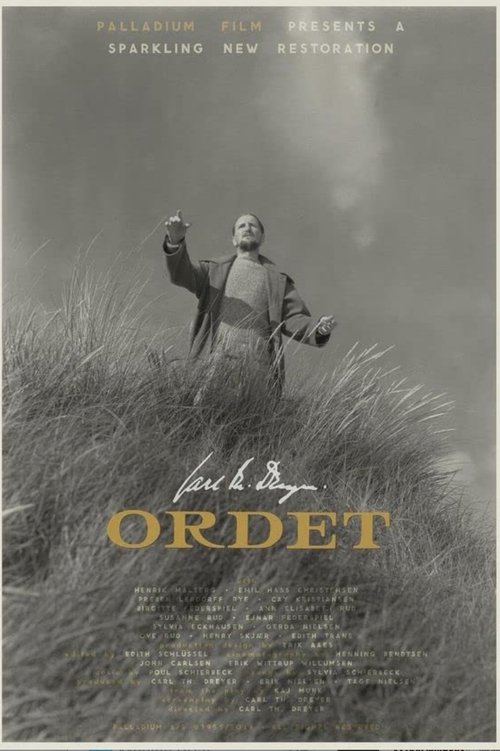
The film opens with Johannes wandering this barren landscape, preaching to an unseen crowd. The setting establishes a mood of austerity and isolation, a physical manifestation of the spiritual emptiness that plagues the community.
Philosophical Questions
What is the true nature of faith, and how does it differ from religious dogma?
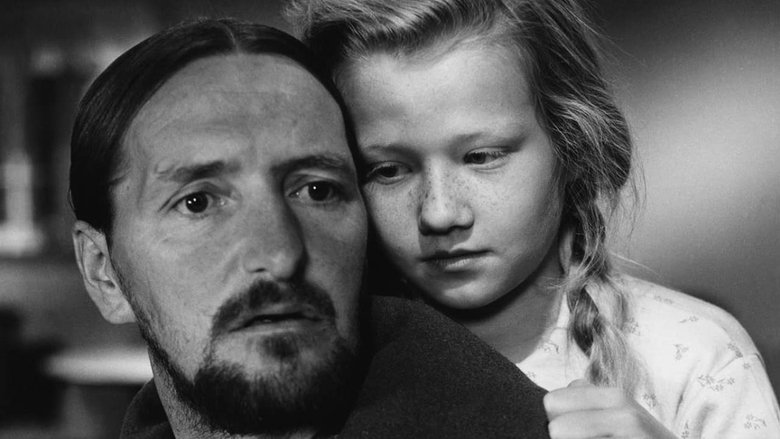
The film contrasts various forms of belief: Morten's traditional but prideful faith, Peter's rigid and intolerant fundamentalism, the pastor's rational but powerless creed, and Inger's simple, loving belief. Through their conflicts and the ultimate failure of dogmatic faith to provide comfort or solutions, the film suggests that true faith is not about adherence to rules but an unwavering, childlike openness to divine possibility, as embodied by Inger and her young daughter Maren.
Can miracles exist in a rational, modern world?
"Ordet" directly confronts modern skepticism. The characters of the doctor and the pastor represent the scientific and theological rationalism that dismisses miracles as things of the past. The film's stark, realistic style makes the final miracle jarring and powerful, refusing to offer a simple, rational explanation. It challenges the audience to suspend disbelief and consider that the spiritual realm can intersect with the material one, suggesting that it is a lack of faith, not an absence of God, that prevents miracles.
Is there a conflict between divine love and human love?
The film, drawing from the theology of playwright Kaj Munk, argues against a separation between sacred and profane love. Peter the Tailor's harsh faith causes him to wish death upon Inger in the name of Jesus, a perversion of religious belief. In contrast, the film culminates in an intensely sensual and human kiss between the resurrected Inger and her husband Mikkel. This suggests that divine acts do not negate but rather affirm and restore earthly life and love in their fullest, most physical forms.
Core Meaning
"Ordet" is a profound exploration of the nature of faith, questioning its various forms—from dogmatic and judgmental to compassionate and childlike. Director Carl Theodor Dreyer doesn't advocate for one specific religious viewpoint but rather scrutinizes the human struggle with belief itself. The film suggests that true faith transcends rigid doctrine and intellectualism, residing instead in a simple, heartfelt openness to the possibility of the divine and the power of love. It contrasts the emptiness of a faith that is merely spoken with the transformative power of "the Word" when it is genuinely felt and embodied, culminating in a cinematic miracle that challenges both the characters' and the audience's perceptions of reality.