Ordet
A starkly beautiful and deeply spiritual drama where familial tensions, rooted in conflicting faiths, culminate in a profound and unforgettable test of belief.
Ordet

Ordet

"A Legend for Today"

09 January 1955 Denmark 125 min ⭐ 8.0 (390)
Director: Carl Theodor Dreyer
Cast: Henrik Malberg, Birgitte Federspiel, Emil Hass Christensen, Preben Lerdorff Rye, Cay Kristiansen
Drama
The Nature and Crisis of Faith Miracles and the Limits of Reason Love and Intolerance The Power of the Word

Overview

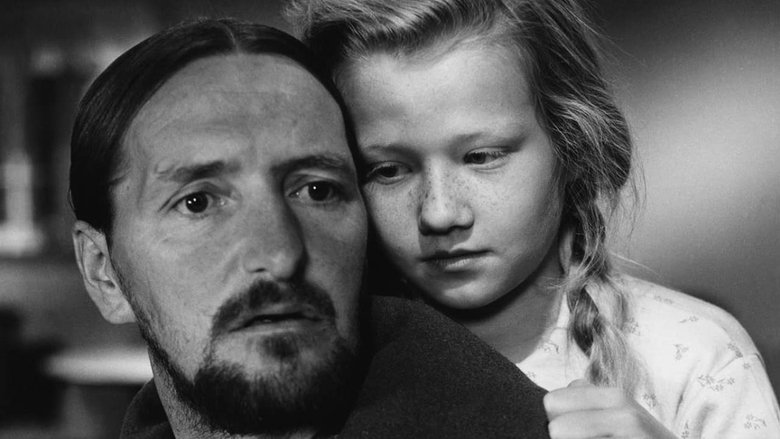
Set in a devoutly religious farming community in rural Denmark in 1925, "Ordet" centers on the Borgen family, headed by the patriarch Morten. His three sons each represent a different spiritual path: Mikkel, the eldest, has lost his faith and is married to the gentle and pious Inger; Johannes, who went insane while studying the philosopher Søren Kierkegaard, now believes he is Jesus Christ; and the youngest, Anders, is in love with Anne, the daughter of Peter the Tailor, the leader of a rival fundamentalist sect.

The family's internal conflicts and their clash with Peter's stern and unyielding faith are brought to a head when Anders's desire to marry Anne is rejected on religious grounds. This rejection triggers a confrontation between the two fathers, exposing the pride and intolerance underlying their differing interpretations of Christianity. The situation escalates dramatically when Inger, the loving heart of the family, experiences severe complications with her pregnancy, forcing everyone to confront the limits of their faith, reason, and love in the face of life and death.


Core Meaning

"Ordet" is a profound exploration of the nature of faith, questioning its various forms—from dogmatic and judgmental to compassionate and childlike. Director Carl Theodor Dreyer doesn't advocate for one specific religious viewpoint but rather scrutinizes the human struggle with belief itself. The film suggests that true faith transcends rigid doctrine and intellectualism, residing instead in a simple, heartfelt openness to the possibility of the divine and the power of love. It contrasts the emptiness of a faith that is merely spoken with the transformative power of "the Word" when it is genuinely felt and embodied, culminating in a cinematic miracle that challenges both the characters' and the audience's perceptions of reality.

Thematic DNA

The Nature and Crisis of Faith 40%
Miracles and the Limits of Reason 30%
Love and Intolerance 20%
The Power of the Word 10%

The Nature and Crisis of Faith

The film presents a spectrum of belief and doubt. Morten's faith is traditional but wavering, shaken by his son Johannes's madness. Mikkel represents agnosticism and reason, while his wife Inger embodies a simple, unwavering, and loving faith. Peter the Tailor's faith is rigid and exclusionary. Johannes, in his delusion, paradoxically speaks profound truths about the lack of genuine faith in those around him. The film explores what it means to truly believe, contrasting intellectual or dogmatic faith with a more profound, experiential one.

Miracles and the Limits of Reason

A central question in "Ordet" is whether miracles still happen in the modern world. The new pastor and the doctor represent the modern, rationalist view that they do not. Johannes, however, insists on his ability to perform them. The film meticulously builds a realistic, almost mundane world, making the final, miraculous event all the more shocking and profound. It forces a confrontation between rational skepticism and the possibility of divine intervention, suggesting that true miracles can only be perceived through the eyes of faith.

Love and Intolerance

The conflict between Morten's 'life-affirming' Grundtvigian Christianity and Peter's dour, 'death-longing' Inner Mission faith highlights religious intolerance. Their refusal to allow their children to marry is based on sectarian pride. Inger stands as a symbol of unifying love and compassion; she believes in Mikkel's inherent goodness despite his lack of faith and tries to bridge the gap between the two families. The film posits love—both human and divine—as the force that can overcome dogmatic divisions.

The Power of the Word

The title itself, "The Word," has multiple layers of meaning. It refers to the scriptures, the conflicting religious rhetoric of the characters, and the divine, creative power mentioned in the Gospel of John ("In the beginning was the Word"). The characters are masters of words, engaging in theological debates, yet their words are often hollow. The film's climax reveals the ultimate "Word" not as a spoken argument, but as a divine act that brings life from death, made possible through pure, childlike faith.

Character Analysis

Morten Borgen

Henrik Malberg

Archetype: The Patriarch
Key Trait: Proud

Motivation

His primary motivation is to uphold his family's legacy and his version of Christianity. He is driven by a deep-seated, though often prideful, desire for his sons to share his faith and for God's presence to be made manifest in his life.

Character Arc

Morten begins as a proud and stubborn man, confident in his traditional faith but deeply troubled by his sons' spiritual paths and his own unanswered prayers. He is initially opposed to Anders's marriage out of sectarian pride. Inger's death shatters his pride, leading him to reconcile with his rival, Peter. By the end, he witnesses a true miracle that humbles him and renews his shaken faith.

Johannes

Preben Lerdorff Rye

Archetype: The Holy Fool / The Prophet
Key Trait: Visionary

Motivation

While delusional, his motivation is to awaken the world to what he sees as its spiritual decay. After regaining his sanity, his motivation is driven by the pure, innocent faith of Inger's daughter, Maren, which compels him to ask God for a miracle.

Character Arc

Johannes spends most of the film in a state of delusion, believing he is Jesus Christ. He speaks in parables and condemns the 'faithlessness' of those around him. The shock of Inger's death appears to restore his sanity. In the film's climax, now lucid but retaining a pure connection to the divine, he acts as a conduit for the miracle, demonstrating that true spiritual power comes not from delusion but from a clear, simple faith.

Inger Borgen

Biritte Federspiel

Archetype: The Heart / The Innocent
Key Trait: Compassionate

Motivation

Inger is motivated by love for her family and a simple, profound faith in God and in the inherent goodness of people. She seeks to create harmony and believes that her faithless husband, Mikkel, will eventually come to believe because he has a good heart.

Character Arc

Inger is the spiritual and emotional core of the Borgen family. She embodies a faith that is gentle, accepting, and rooted in love rather than dogma. Her tragic death is the catalyst for the film's central crisis. Her arc is completed posthumously, through her resurrection, which serves as the ultimate affirmation of her loving faith and the catalyst for the spiritual rebirth of her family, especially her husband Mikkel.

Mikkel Borgen

Emil Hass Christensen

Archetype: The Skeptic
Key Trait: Agnostic

Motivation

His motivation is his deep love and devotion to his wife, Inger. While he rejects religion, his actions are guided by a fundamental decency and love for his family.

Character Arc

Mikkel starts the film as a kind-hearted agnostic who loves his wife deeply but cannot share her faith. He represents a modern, rationalist worldview. He is devastated by Inger's death. The miracle of her resurrection shatters his skepticism, and he tearfully proclaims that he has finally found faith, beginning a new life with his wife.

Symbols & Motifs

The Clock

Meaning:

The grandfather clock in the Borgen home symbolizes the passage of time, mortality, and the mundane reality that governs the characters' lives. It represents the rational, predictable world where miracles are not expected.

Context:

The ticking of the clock is a constant, almost oppressive sound throughout the film. Significantly, Anders stops the clock after Inger's death, an act of solidarity that momentarily halts the progression of ordinary time, creating a space outside of normal reality where the miracle can occur.

Light

Meaning:

Light in "Ordet" symbolizes divine presence, spiritual truth, and revelation. Dreyer's meticulous use of lighting is not merely aesthetic but central to the film's thematic concerns.

Context:

The stark, bright, and often ethereal light flooding the Borgen's minimalist white-walled rooms creates a sense of spiritual intensity and purity. Beams of light often isolate characters or illuminate faces at moments of spiritual crisis or revelation, suggesting a divine gaze and making the invisible tangible. The final scene, in particular, is bathed in a transcendent glow.

The Empty Landscape

Meaning:

The desolate, windswept fields of rural Jutland symbolize a spiritual wasteland, reflecting the characters' internal struggles and the perceived absence of God in a faithless age.

Context:

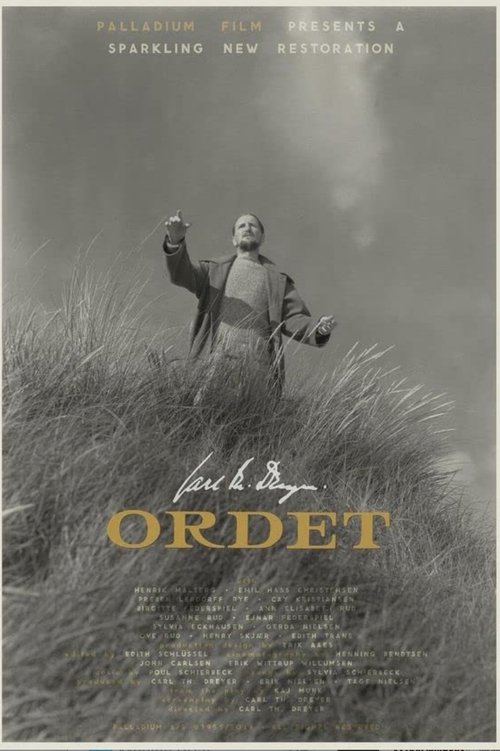
The film opens with Johannes wandering this barren landscape, preaching to an unseen crowd. The setting establishes a mood of austerity and isolation, a physical manifestation of the spiritual emptiness that plagues the community.

Memorable Quotes

Miracles no longer happen.

— The Pastor

Context:

The new, modern-minded pastor says this to the Borgen family, dismissing Johannes's claims and reflecting a faith that has become theoretical and detached from the possibility of divine intervention in the present day.

Meaning:

This line encapsulates the modern, institutionalized religious viewpoint that has lost its connection to the supernatural. It represents the rationalism that has seeped into the church itself, contrasting sharply with the film's miraculous climax.

I think Christianity is the fullness of life. My faith is for all day long and joy in life. Yours is longing for death.

— Morten Borgen

Context:

Morten says this during his heated argument with Peter the Tailor, criticizing Peter's fundamentalist sect for what he sees as their joyless and morbid piety.

Meaning:

This quote clearly delineates the central theological conflict of the film between two opposing views of Christianity: one that embraces life (Grundtvigianism) and one that is perceived as dour and world-denying (Inner Mission).

Give me the Word, the word that can make the dead come to life.

— Johannes

Context:

At Inger's coffin, prompted by the simple faith of the child Maren, Johannes looks to heaven and asks God for the power to perform the resurrection.

Meaning:

This is the pivotal request that precedes the miracle. Johannes, now sane, acknowledges that the power is not his own but must be granted by God. It signifies the transition from his delusion of being Christ to being a humble vessel for divine power.

Life, yes... Life. Yes. Life.

— Inger Borgen

Context:

These are Inger's first words after being resurrected. She says them in response to her husband Mikkel, who, embracing her, says, "Now life begins for us." Her words confirm and celebrate the miracle in the most profound and human way.

Meaning:

Inger's final words are a simple, wondrous affirmation of life itself. After Mikkel proclaims his newfound faith, her response grounds the miracle not in complex theology, but in the precious, tangible gift of life, which she has just regained.

Philosophical Questions

What is the true nature of faith, and how does it differ from religious dogma?

The film contrasts various forms of belief: Morten's traditional but prideful faith, Peter's rigid and intolerant fundamentalism, the pastor's rational but powerless creed, and Inger's simple, loving belief. Through their conflicts and the ultimate failure of dogmatic faith to provide comfort or solutions, the film suggests that true faith is not about adherence to rules but an unwavering, childlike openness to divine possibility, as embodied by Inger and her young daughter Maren.

Can miracles exist in a rational, modern world?

"Ordet" directly confronts modern skepticism. The characters of the doctor and the pastor represent the scientific and theological rationalism that dismisses miracles as things of the past. The film's stark, realistic style makes the final miracle jarring and powerful, refusing to offer a simple, rational explanation. It challenges the audience to suspend disbelief and consider that the spiritual realm can intersect with the material one, suggesting that it is a lack of faith, not an absence of God, that prevents miracles.

Is there a conflict between divine love and human love?

The film, drawing from the theology of playwright Kaj Munk, argues against a separation between sacred and profane love. Peter the Tailor's harsh faith causes him to wish death upon Inger in the name of Jesus, a perversion of religious belief. In contrast, the film culminates in an intensely sensual and human kiss between the resurrected Inger and her husband Mikkel. This suggests that divine acts do not negate but rather affirm and restore earthly life and love in their fullest, most physical forms.

Alternative Interpretations

While the film's ending is presented as a genuine miracle, several alternative interpretations exist. Some viewers interpret the resurrection psychologically, suggesting Inger was not truly dead but in a deep coma, and Johannes's powerful words simply roused her. Dreyer himself filmed two versions of the scene: one that hinted at this ambiguity and the one he ultimately used, which presents the event as an unambiguous miracle. A more metaphorical reading suggests the resurrection isn't a literal event but a symbolic representation of the family's spiritual rebirth. Inger's return to life signifies the healing of their divisions, the restoration of faith in the faithless (Mikkel), and the triumph of love over rigid dogma. This view sees the "miracle" as an internal transformation within the characters, manifested visually.

Another perspective is that the film is not an endorsement of a specific faith but a humanist affirmation of life itself. In this view, the miracle is secondary to the profound human emotions on display: grief, love, and reconciliation. Inger's final, passionate kiss and her simple utterance of the word "Life" ground the supernatural event in a celebration of physical, earthly existence.

Cultural Impact

"Ordet" is widely regarded as a masterpiece of spiritual cinema and one of the greatest films ever made. Upon its release in 1955, it was a rare success for Dreyer, winning both critical acclaim and popularity, particularly in his native Denmark. Its influence on subsequent generations of filmmakers has been profound, with directors like Ingmar Bergman, Andrei Tarkovsky, and Paul Schrader citing its importance. Schrader's book "Transcendental Style in Film: Ozu, Bresson, Dreyer" analyzes "Ordet" as a prime example of a cinematic style that gestures towards the transcendent. The ending of Schrader's 2017 film "First Reformed" is a direct homage to the climax of "Ordet."

Philosophically, the film brought the ideas of Søren Kierkegaard, who is explicitly mentioned as the source of Johannes's madness, to a wider cinematic audience. It engages deeply with existentialist themes of faith, doubt, and the individual's relationship with God. The film is frequently included in polls of the greatest films of all time and was named one of the 15 most important films on the subject of religion by the Vatican.

Audience Reception

Audience reception for "Ordet" is often polarized, though it is overwhelmingly admired by those who connect with it. Many viewers find it to be a profoundly moving and spiritually powerful masterpiece, one of the most significant films ever made about faith. The deliberate slowness, which some find challenging or boring, is praised by others for creating a contemplative, hypnotic atmosphere that allows for deep character immersion. The final scene is almost universally described as one of the most stunning, shocking, and unforgettable moments in cinema history, capable of moving viewers to tears regardless of their personal beliefs. Criticism tends to focus on the slow pacing and the austere, theatrical style, which can feel alienating to a modern audience accustomed to faster narratives. For some, particularly those with a skeptical or atheistic viewpoint, the ending can feel implausible or unearned, making Mikkel's sudden conversion seem cheap.

Interesting Facts

  • The film is based on a 1932 play by Kaj Munk, a Danish Lutheran priest and playwright who was martyred by the Gestapo in 1944 for his opposition to the Nazi occupation.
  • Actress Birgitte Federspiel, who played Inger, was actually pregnant during the production. Director Carl Theodor Dreyer recorded the sounds of her real labor and used them in the film for the childbirth scene.
  • Dreyer's shooting method was famously meticulous and slow; he would often shoot only one shot per day. The film consists of only 114 individual shots, with many being long, choreographed takes lasting up to seven minutes.
  • To achieve the minimalist and psychologically resonant aesthetic, Dreyer would have the set fully furnished and then systematically remove objects he deemed non-essential.
  • "Ordet" was the only one of Carl Theodor Dreyer's films to be a financial and critical success upon its initial release.
  • The film won the Golden Lion at the Venice Film Festival in 1955.
  • Dreyer cut nearly two-thirds of the dialogue from Kaj Munk's original play to achieve a more minimalist and cinematic style.

⚠️ Spoiler Analysis

Click to reveal detailed analysis with spoilers

Frequently Asked Questions

Explore More About This Movie

Dive deeper into specific aspects of the movie with our detailed analysis pages

Comments (0)

Leave a comment

No comments yet. Be the first to share your thoughts!