
Como caído del cielo
Out of the Clear Blue Sky - Symbolism & Philosophy
Symbols & Motifs
Pedro Infante's Music
The songs of Pedro Infante symbolize both his flawed past and his capacity for romantic sincerity. They are the tools of his womanizing charm but also the medium through which he expresses his genuine, newfound love for Raquel. The music represents the timeless, positive aspect of his legacy that can be separated from his personal failings.
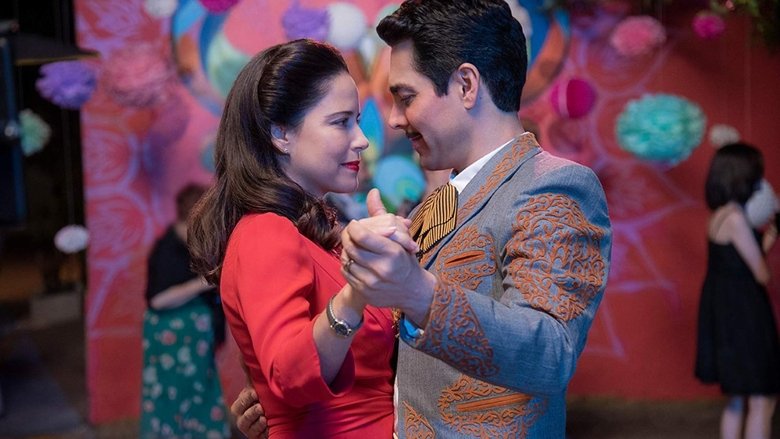
Throughout the film, Infante (as Pedro Guadalupe) performs classic songs like "Amorcito Corazón" to serenade Raquel and express his feelings. The music often serves as a turning point in their relationship, reminding her of the good man he can be, and it connects him to his granddaughter, Jenny.
The Motorcycle Cop Uniform
Raquel's job as a motorcycle police officer symbolizes female empowerment and authority in the modern world. It is a direct visual and narrative counterpoint to the traditional, submissive female roles often seen in Pedro Infante's original films. Her uniform represents a world where women are not just objects of affection but figures of power and independence.
Raquel is introduced as a competent police officer. Her profession is a key part of her identity, showing she is a provider and protector, roles traditionally assigned to men in Infante's era. Her character directly challenges the gender norms Infante is used to.
Tijuana
The setting of Tijuana, a vibrant border city, symbolizes a crossroads between the past and present, and between Mexican and American cultures. It's a modern, dynamic space where Infante's old-world charm must adapt to new rules and a different pace of life. Director Pepe Bojórquez specifically wanted to show a romantic and contemporary side of the city.
The film is set and partially filmed in Tijuana. This modern urban landscape, with its unique blend of cultures, provides the backdrop against which Infante's spiritual and cultural journey unfolds, forcing him out of the nostalgic past and into the complex present.
Philosophical Questions
Can art be separated from the artist's personal failings?
The film explores this by centering on Pedro Infante, a beloved artist known for his beautiful music and charismatic film roles, but also for his problematic personal life as a womanizer. His journey suggests that while the art (his music) has timeless value, the artist himself must be held accountable for his actions. The film's entire premise is that his artistic contributions alone were not enough to grant him passage to heaven; his character had to be redeemed.
What is the nature of identity when a soul inhabits a new body?
The film plays with the idea of identity by placing Infante's soul into the body of his impersonator. It questions whether the man is the body (Pedro Guadalupe, with his existing life and problems) or the soul (Pedro Infante, with his memories and personality). The conflict arises as Infante must live another man's life, fall in love with his wife, and ultimately decide whose legacy he is truly saving—his own, or that of the man he has replaced.
Can a person truly change their fundamental nature, even with divine motivation?
This is the central question of Infante's arc. He is a 'womanizer by nature' who is tasked with becoming faithful. The film examines his struggles with temptation and whether his good deeds are performed out of a genuine change of heart or simply as a means to an end (getting into heaven). His eventual, seemingly sincere love for Raquel suggests that true change is possible, but the film leaves the audience to ponder the depth of this transformation.
Core Meaning
The core meaning of "Como caído del cielo" revolves around redemption and the re-evaluation of cultural idols in a modern context. Director Pepe Bojórquez aimed to create a tribute to Pedro Infante that would introduce him to new generations while simultaneously deconstructing the toxic "macho" culture he often represented. The film poses the question of whether a flawed man can change and atone for his past mistakes, even after death. It carries a message that true love and respect, particularly for women, are timeless virtues that transcend any era. By forcing a 1950s icon to navigate the complexities of 21st-century gender dynamics, the film suggests that cultural legacies must evolve to remain relevant and honorable.