
Out of the Clear Blue Sky
A vibrant musical-comedy fantasia where a legendary crooner's soul gets a second chance on Earth, navigating modern love and machismo in a heartfelt quest for celestial redemption.
Out of the Clear Blue Sky

Out of the Clear Blue Sky

Como caído del cielo

24 December 2019 Mexico 112 min ⭐ 8.2 (362)
Director: Pepe Bojórquez
Cast: Omar Chaparro, Ana Claudia Talancón, Stephanie Cayo, Lupita Sandoval, Yare Santana
Drama Comedy Music
Redemption and Second Chances Machismo vs. Modern Feminism The Enduring Power of Music Love and Fidelity

Overview

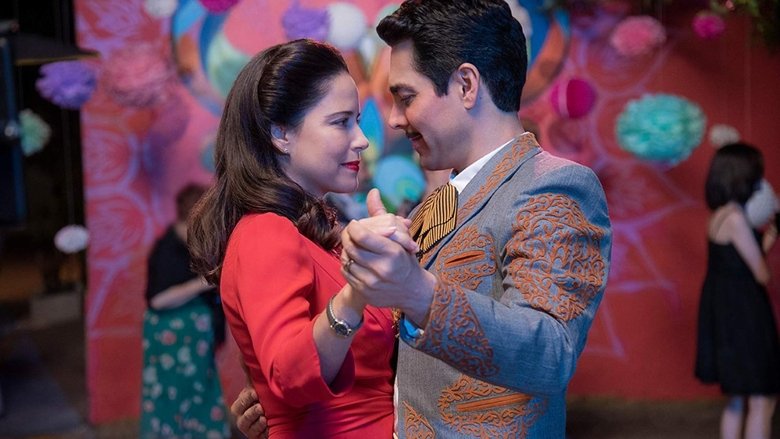
"Out of the Clear Blue Sky" (original title: "Como caído del cielo") is a Mexican musical comedy that imagines a second chance for the iconic singer and actor Pedro Infante. After spending 60 years in limbo for his womanizing ways, Infante is granted an opportunity to earn his way into heaven. His spirit is sent back to Earth to inhabit the body of Pedro Guadalupe Ramos (Omar Chaparro), a struggling Infante impersonator who has just fallen into a coma.

The mission seems simple: Infante, in Pedro Guadalupe's body, must mend the impersonator's broken life, primarily by winning back his estranged wife, Raquel (Ana Claudia Talancón), whom the real Pedro Guadalupe had been cheating on. However, the legendary charmer finds that the world has changed dramatically. He must confront modern ideas about feminism and relationships, all while resisting his old temptations, to prove he has truly changed and finally secure his place in heaven.

Core Meaning

The core meaning of "Como caído del cielo" revolves around redemption and the re-evaluation of cultural idols in a modern context. Director Pepe Bojórquez aimed to create a tribute to Pedro Infante that would introduce him to new generations while simultaneously deconstructing the toxic "macho" culture he often represented. The film poses the question of whether a flawed man can change and atone for his past mistakes, even after death. It carries a message that true love and respect, particularly for women, are timeless virtues that transcend any era. By forcing a 1950s icon to navigate the complexities of 21st-century gender dynamics, the film suggests that cultural legacies must evolve to remain relevant and honorable.

Thematic DNA

Redemption and Second Chances 40%
Machismo vs. Modern Feminism 30%
The Enduring Power of Music 20%
Love and Fidelity 10%

Redemption and Second Chances

The central theme is Pedro Infante's quest for redemption. Stuck in limbo, his entire journey is a test to see if he can mend his womanizing past to earn entry into heaven. This is externalized through his mission to fix the life of his impersonator, Pedro Guadalupe, by becoming a faithful and loving husband. The film explores whether a person's essence can truly be changed, even with the ultimate incentive.

Machismo vs. Modern Feminism

The film directly confronts the concept of machismo, an ideology embodied by the historical Pedro Infante. By placing him in 2019, the narrative forces him to face a world where his old ways are no longer celebrated but are criticized. He encounters strong, independent women like Raquel and even attends a feminist conference, highlighting the stark contrast between the patriarchal values of his era and contemporary ideals of gender equality.

The Enduring Power of Music

Music is a vital element of the film, functioning as a bridge between the past and present. Pedro Infante's classic songs are used to express emotion, win over Raquel, and connect with his granddaughter. The soundtrack, featuring Omar Chaparro performing Infante's hits, serves as a tribute and demonstrates how the romanticism and heart of the music remain powerful, even as the social context changes.

Love and Fidelity

At its heart, the film is a romantic comedy that champions true love and fidelity. Pedro Infante's path to heaven is contingent on him learning to be faithful to one woman. His growing, genuine love for Raquel, in contrast to his past philandering and Pedro Guadalupe's infidelity, becomes the ultimate proof of his transformation. The film posits that romantic gestures must be backed by genuine respect and commitment.

Character Analysis

Pedro Infante / Pedro Guadalupe Ramos

Omar Chaparro

Archetype: The Reformed Rake / Anti-Hero
Key Trait: Charismatic

Motivation

His primary motivation is to earn his way into heaven by proving he has changed his womanizing ways. This goal becomes intertwined with a more personal motivation: to genuinely win the love and respect of Raquel, the woman he falls for while on his mission.

Character Arc

Starts as the spirit of a charming but deeply flawed womanizer stuck in limbo. He is given a mission of redemption, believing his charm will make it easy. Through his experiences in Pedro Guadalupe's body—falling genuinely in love with Raquel, connecting with his granddaughter, and facing modern feminist ideals—he undergoes a profound transformation. He learns humility and the meaning of true fidelity, evolving from a symbol of machismo into a man worthy of heaven.

Raquel

Ana Claudia Talancón

Archetype: The Modern Woman / The Anchor
Key Trait: Pragmatic

Motivation

Initially motivated by a desire for a respectful and faithful partner, her motivation shifts to understanding the perplexing but seemingly sincere changes in her husband. She wants to believe in the possibility of his transformation while protecting herself from further heartbreak.

Character Arc

Raquel begins as a long-suffering wife on the verge of leaving her unfaithful husband, Pedro Guadalupe. When Infante's soul takes over, she is initially suspicious of his sudden change in personality. Her arc involves cautiously opening her heart again, learning to trust the "new" Pedro while maintaining her independence and self-respect. She represents the modern woman who demands more than just empty romantic gestures.

Samantha

Stephanie Cayo

Archetype: The Temptress
Key Trait: Seductive

Motivation

Her motivation is to continue her affair with Pedro Guadalupe, creating conflict and testing the resolve of the new soul inhabiting his body.

Character Arc

As Raquel's cousin and Pedro Guadalupe's mistress, Samantha represents the temptations that Pedro Infante must overcome to succeed in his mission. She is a direct link to the infidelity he is supposed to be atoning for, both his own and his host body's. Her character does not have a significant arc but serves as a constant obstacle and a reminder of the past.

Jenny Infante

Yare Santana

Archetype: The Voice of the New Generation
Key Trait: Inquisitive

Motivation

She is motivated by a desire to reconcile the public image of her famous ancestor with the man she gets to know, seeking an honest understanding of her family's legacy.

Character Arc

Jenny is Pedro Infante's granddaughter, who initially holds a negative view of her famous grandfather due to his reputation as a womanizer. Her arc involves meeting the "reformed" version of her grandfather (in Pedro Guadalupe's body) and coming to see the man behind the myth. Their relationship helps bridge the gap between his legacy and modern sensibilities, and she helps him understand the contemporary female perspective.

Symbols & Motifs

Pedro Infante's Music

Meaning:

The songs of Pedro Infante symbolize both his flawed past and his capacity for romantic sincerity. They are the tools of his womanizing charm but also the medium through which he expresses his genuine, newfound love for Raquel. The music represents the timeless, positive aspect of his legacy that can be separated from his personal failings.

Context:

Throughout the film, Infante (as Pedro Guadalupe) performs classic songs like "Amorcito Corazón" to serenade Raquel and express his feelings. The music often serves as a turning point in their relationship, reminding her of the good man he can be, and it connects him to his granddaughter, Jenny.

The Motorcycle Cop Uniform

Meaning:

Raquel's job as a motorcycle police officer symbolizes female empowerment and authority in the modern world. It is a direct visual and narrative counterpoint to the traditional, submissive female roles often seen in Pedro Infante's original films. Her uniform represents a world where women are not just objects of affection but figures of power and independence.

Context:

Raquel is introduced as a competent police officer. Her profession is a key part of her identity, showing she is a provider and protector, roles traditionally assigned to men in Infante's era. Her character directly challenges the gender norms Infante is used to.

Tijuana

Meaning:

The setting of Tijuana, a vibrant border city, symbolizes a crossroads between the past and present, and between Mexican and American cultures. It's a modern, dynamic space where Infante's old-world charm must adapt to new rules and a different pace of life. Director Pepe Bojórquez specifically wanted to show a romantic and contemporary side of the city.

Context:

The film is set and partially filmed in Tijuana. This modern urban landscape, with its unique blend of cultures, provides the backdrop against which Infante's spiritual and cultural journey unfolds, forcing him out of the nostalgic past and into the complex present.

Philosophical Questions

Can art be separated from the artist's personal failings?

The film explores this by centering on Pedro Infante, a beloved artist known for his beautiful music and charismatic film roles, but also for his problematic personal life as a womanizer. His journey suggests that while the art (his music) has timeless value, the artist himself must be held accountable for his actions. The film's entire premise is that his artistic contributions alone were not enough to grant him passage to heaven; his character had to be redeemed.

What is the nature of identity when a soul inhabits a new body?

The film plays with the idea of identity by placing Infante's soul into the body of his impersonator. It questions whether the man is the body (Pedro Guadalupe, with his existing life and problems) or the soul (Pedro Infante, with his memories and personality). The conflict arises as Infante must live another man's life, fall in love with his wife, and ultimately decide whose legacy he is truly saving—his own, or that of the man he has replaced.

Can a person truly change their fundamental nature, even with divine motivation?

This is the central question of Infante's arc. He is a 'womanizer by nature' who is tasked with becoming faithful. The film examines his struggles with temptation and whether his good deeds are performed out of a genuine change of heart or simply as a means to an end (getting into heaven). His eventual, seemingly sincere love for Raquel suggests that true change is possible, but the film leaves the audience to ponder the depth of this transformation.

Alternative Interpretations

While the film's intended message is one of redemption and the embrace of modern, respectful views on women, a significant alternative interpretation exists among critics. This view holds that the film's critique of machismo is shallow and ultimately unsuccessful. Critics have pointed out that despite its feminist-friendly premise, the movie often reverts to humor that sexualizes women and relies on the very charm it claims to be deconstructing.

From this perspective, Pedro Infante's transformation is too easy, and his charm remains a tool of manipulation, even if used for a "good" cause. The dedication "to all the women in the world" at the end is seen by some as ironic or unearned, given the film's content. This interpretation suggests that instead of being a progressive re-evaluation of a cultural icon, "Como caído del cielo" is a tonally confused film that wants to have it both ways: celebrating the romanticized macho icon while paying lip service to contemporary feminist ideals without fully committing to them.

Cultural Impact

"Como caído del cielo" serves as a cultural bridge, reintroducing Pedro Infante, a titan of Mexico's Golden Age of Cinema, to a global Netflix audience and younger generations. The film was created in the context of the #MeToo movement, attempting to grapple with the problematic aspects of Infante's iconic "macho" persona. It intentionally confronts his legacy of womanizing and reframes his story through a modern, feminist-conscious lens.

Critically, the reception was mixed. Some praised it as a heartfelt and funny tribute that successfully balanced nostalgia with a modern message. Others found its tone confused, arguing that its attempt to critique machismo was superficial and often contradicted by its own comedic style. Some academic analysis has even labeled the film as "culturally regressive" compared to other contemporary Mexican comedies that tackle gender roles.

For audiences, however, the film was a significant success, topping Netflix charts in Mexico and performing well internationally. This suggests a strong public appetite for nostalgic stories that honor cultural icons while acknowledging contemporary values. The film sparked conversations about Pedro Infante's complex legacy—celebrating his immense talent and charisma while questioning the cultural norms he represented. It demonstrated a way for popular culture to engage with, rather than ignore, the problematic aspects of historical figures.

Audience Reception

Audience reception for "Como caído del cielo" was largely positive, especially in Mexico, where it quickly became the most-watched film on Netflix upon its release. Viewers praised Omar Chaparro's charismatic and heartfelt performance, with many finding his portrayal of Pedro Infante both entertaining and respectful. The film's nostalgic elements, particularly the use of Infante's classic songs, resonated strongly with audiences who grew up with his music and films. Many viewers appreciated the lighthearted, feel-good nature of the story, seeing it as a sweet romantic comedy and a fitting tribute to a cultural icon.

However, there was also criticism from some viewers and critics. The main points of contention were the film's tonal inconsistencies, shifting between broad comedy, romance, and even thriller elements. Some felt the plot was predictable and cliché-ridden. A more significant point of criticism was that the film's attempt to tackle the theme of machismo was superficial and, at times, contradictory, failing to offer a deep introspection into Pedro Infante's complex legacy beyond his womanizing.

Interesting Facts

  • The film was an original Netflix production and became the most-watched Spanish-language title on the platform in Mexico within five days of its release in 2019.
  • Director Pepe Bojórquez and star Omar Chaparro both had a long-standing desire to make a film about Pedro Infante, which led to this project.
  • Omar Chaparro undertook extensive vocal training to be able to perform Pedro Infante's classic songs himself, aiming for a genuine interpretation rather than a simple imitation.
  • The film's concept was originally based on a play by Toby Campion.
  • The family of the real Pedro Infante had a mixed but generally supportive reaction to the film, with his daughter Irma stating that Omar Chaparro did a "dignified" job with the character.
  • The movie was filmed in Tijuana, Mexico City, and San Diego.
  • The final credits include a dedication "to all the women in the world," reinforcing its intended message of female empowerment, though some critics found this at odds with parts of the film's humor.

Easter Eggs

Numerous classic Pedro Infante songs are performed in the film.

The film is loaded with musical numbers from Pedro Infante's catalog, such as "Amorcito Corazón" and "¿Quién será?". These act as direct references for fans of the Golden Age of Mexican cinema and serve to ground the fantastical plot in his real-life legacy.

The film references character types and scenarios from Infante's movies.

The plot includes elements that echo Infante's filmography, such as the charming mariachi, boxing scenes (a nod to "Pepe El Toro"), and romantic serenades. These are winks to the audience familiar with his work, positioning the film as a modern tribute to his cinematic style.

Actress Angélica María, a legend of Mexican cinema who co-starred with the real Pedro Infante as a child, makes a cameo appearance.

Angélica María, who appeared in the film "Los Gavilanes" with Pedro Infante, appears in "Como caído del cielo." This creates a direct link between the Golden Age of Mexican cinema and this modern tribute, adding a layer of authenticity and respect.

⚠️ Spoiler Analysis

Click to reveal detailed analysis with spoilers

Frequently Asked Questions

Explore More About This Movie

Dive deeper into specific aspects of the movie with our detailed analysis pages

Comments (0)

Leave a comment

No comments yet. Be the first to share your thoughts!