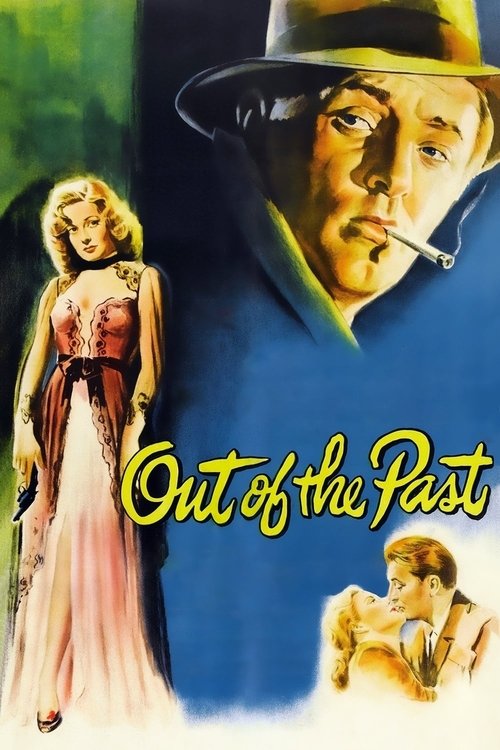
"OUT of the Sun, OUT of the Moonlight, OUT of the Past."
Out of the Past - Symbolism & Philosophy
Symbols & Motifs
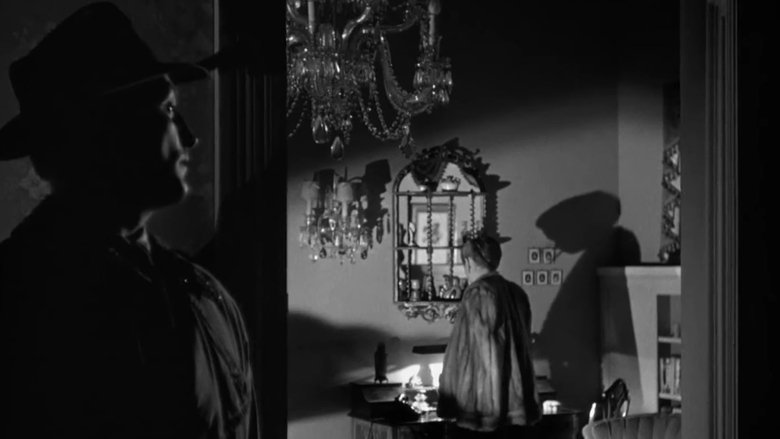
Light and Shadow (Chiaroscuro)
A visual metaphor for moral duality, fatalism, and the hidden depths of the characters' psyches.
Nicholas Musuraca's cinematography bathes the characters in harsh shadows, cigarette smoke, and Venetian blind silhouettes. As Kathie's true, murderous nature becomes more apparent, the lighting around her becomes increasingly hard and dark, contrasting with the soft, bright lighting used for Ann.
The Fishing Rod / The Hook
Symbolizes entrapment, the sudden violence of the natural world, and being pulled unwillingly into a fatal situation.
In a critical scene in Bridgeport, The Kid uses a fishing rod to literally hook the hitman Joe Stefanos, pulling him over a cliff to his death. This also mirrors how Jeff is 'hooked' and reeled back in by his past.
Kathie's White Dress and Sun Hat
Represents false innocence, angelic deception, and the blinding nature of initial attraction.
When Jeff first sees Kathie in the Mexican cantina, she is walking out of the bright, glaring sun wearing white. This angelic entrance completely masks her true identity as a ruthless, manipulative thief and killer.
The Bridgeport Gas Station Sign ('Jeff Bailey')
Symbolizes Jeff's fabricated identity, his yearning for an honest, ordinary life, and the ultimate illusion of escape.
At the very end of the film, after Jeff's death, The Kid looks up and salutes the sign bearing Jeff's fake name. It serves as a bittersweet monument to the decent man Jeff tried to be, rather than the doomed man he actually was.
Philosophical Questions
Is human nature fixed, or can an individual outrun their past?
The film deeply explores the philosophy of fatalism. Jeff's earnest attempt to build a pure, pastoral life in Bridgeport is systematically destroyed. The narrative suggests that our past actions create an inescapable web of karma and consequence, and that one's true nature—whether compromised or innocent—will inevitably dictate their ultimate fate.
Can a lie be more moral than the truth?
In the final scene, The Kid knowingly lies to Ann about Jeff's intentions, allowing her to believe Jeff betrayed her. This raises the ethical question of whether truth is an absolute good, or if a compassionate deception that frees someone from a lifetime of grief and waiting is actually the higher moral choice.
Does free will exist in a corrupt world?
As Jeff is pulled back into Whit and Kathie's orbit, his choices become increasingly limited. He operates under the illusion that he can outsmart them and regain his freedom, but the film's structure—heavy with flashbacks and inevitable doom—suggests that his path was predetermined the moment he compromised his morals in Acapulco.
Core Meaning
The core meaning of Out of the Past is rooted in the inescapable nature of one's own history and the fatalistic philosophy that past sins cannot simply be outrun or erased. Director Jacques Tourneur and screenwriter Daniel Mainwaring present a cynical, post-war worldview where attempts to find redemption or a clean slate in the purity of nature are ultimately thwarted by the corrupting forces of human greed and desire. The film serves as a bleak but poetic testament to the idea that destiny is a fixed path; no matter how far one runs to find a peaceful, idealized life, the dark gravity of past choices will inevitably pull them back into the abyss.