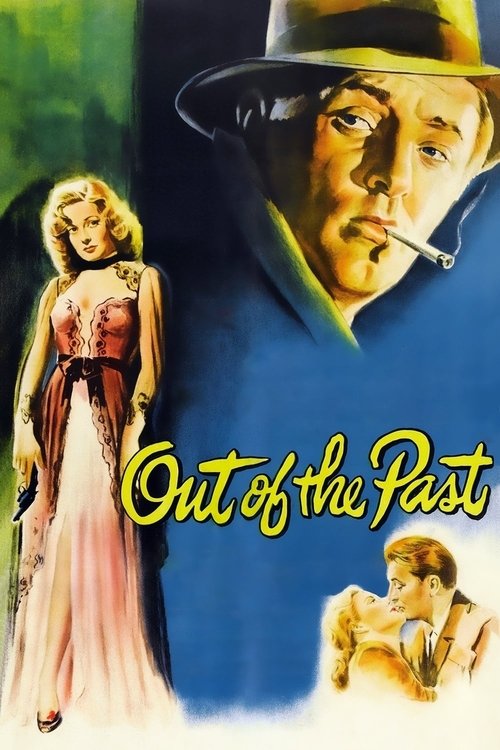
Out of the Past
"OUT of the Sun, OUT of the Moonlight, OUT of the Past."
Overview
Out of the Past follows Jeff Bailey, a man attempting to live a quiet, unassuming life as a gas station owner in the small, idyllic town of Bridgeport, California. His peaceful existence with his wholesome girlfriend, Ann, is abruptly shattered when a figure from his shadowy past arrives, summoning him back to the criminal underworld he desperately tried to leave behind.
Through a masterful, sweeping flashback, Jeff reveals his true identity as Jeff Markham, a former private investigator hired by a powerful and cynical gambler, Whit Sterling. His mission was to track down Whit's runaway mistress, Kathie Moffat, who had shot the gangster and absconded with $40,000. When Jeff finally locates the captivating Kathie in the sun-drenched town of Acapulco, he falls hopelessly into a doomed romance with her, setting off a chain reaction of double-crosses, murder, and moral decay.
As the narrative returns to the present, Jeff finds himself hopelessly entangled in a new, labyrinthine plot orchestrated by Whit and Kathie. Forced to navigate a treacherous web of lies and frame-ups, Jeff must rely on his wits and fatalistic stoicism to survive, culminating in a tense and unforgettable climax that firmly establishes the film as the quintessential American noir.
Core Meaning
The core meaning of Out of the Past is rooted in the inescapable nature of one's own history and the fatalistic philosophy that past sins cannot simply be outrun or erased. Director Jacques Tourneur and screenwriter Daniel Mainwaring present a cynical, post-war worldview where attempts to find redemption or a clean slate in the purity of nature are ultimately thwarted by the corrupting forces of human greed and desire. The film serves as a bleak but poetic testament to the idea that destiny is a fixed path; no matter how far one runs to find a peaceful, idealized life, the dark gravity of past choices will inevitably pull them back into the abyss.
Thematic DNA
The Inescapability of the Past and Fatalism
The central theme, mirrored by the title itself, is that the past is a physical and psychological prison. Jeff's attempt to build a new life in Bridgeport is merely a temporary illusion. The film suggests a fatalistic universe where characters are doomed from the start, bound by the consequences of their previous moral compromises. Jeff's stoic acceptance of his fate embodies the ultimate noir tragedy.
The Femme Fatale and Destructive Desire
Kathie Moffat represents the ultimate cinematic embodiment of the femme fatale—an alluring, manipulative, and lethal force. The film explores how blinding sexual desire and romantic obsession can override logic, self-preservation, and morality. Jeff knows Kathie is dangerous and deceitful, yet he is willingly consumed by her, illustrating the self-destructive nature of illicit passion.
The Dichotomy of Nature and City (Innocence vs. Corruption)
The film frequently contrasts the pure, sunlit, and idyllic environments (like the mountains of Bridgeport and the beaches of Acapulco) with the shadowy, claustrophobic, and corrupt urban spaces (New York, San Francisco). Ann symbolizes the wholesome purity of the country, while Kathie represents the tainted, predatory nature of the city, highlighting a post-war anxiety about losing traditional American innocence.
Deception and Moral Ambiguity
Almost every relationship in the film is built on a foundation of lies, double-crosses, and shifting loyalties. The boundary between hero and villain is blurred; Jeff is a compromised protagonist who willingly breaks the law, Whit is a gangster with a surprising code of affable charm, and Kathie uses her innocent appearance to mask a sociopathic survival instinct. The pervasive deception reflects a deeply cynical worldview.
Character Analysis
Jeff Bailey / Markham
Robert Mitchum
Motivation
Initially driven by blind romantic obsession, his motivation shifts to survival, clearing his name, and protecting the innocent life he built in Bridgeport.
Character Arc
Jeff begins as a cynical but romantic private eye who abandons his duty for love. He transitions into a man hiding in plain sight, desperately trying to maintain a quiet, honest life. Ultimately, when dragged back into the underworld, he stops running and actively maneuvers to take down his enemies, accepting his own inevitable demise rather than compromising his soul again.
Kathie Moffat
Jane Greer
Motivation
Self-preservation, financial gain, and a sociopathic desire to control and manipulate the men around her.
Character Arc
Kathie enters the story as a seemingly vulnerable woman fleeing an abusive gangster. As the narrative unfolds, the layers of her deception are peeled back, revealing her to be an entirely ruthless, opportunistic survivor who will betray, frame, or murder anyone to ensure her own preservation and wealth.
Whit Sterling
Kirk Douglas
Motivation
Ego, possession, and maintaining absolute dominance over his criminal empire and personal relationships.
Character Arc
Whit starts as the ultimate man in control—wealthy, powerful, and dangerously charming. However, his arrogance blinds him to Kathie's true danger. The man who thought he could buy and control everyone is ultimately outsmarted and destroyed by the very woman he sought to possess.
Ann Miller
Virginia Huston
Motivation
Unconditional love and a desire for domestic tranquility.
Character Arc
Ann remains steadfast and devoted to Jeff despite learning of his dark past. Her arc ends in tragic loss, but she is ultimately freed from the shadow of Jeff's doom by a compassionate lie, allowing her to move forward into a conventional life.
The Kid
Dickie Moore
Motivation
Fierce, unspoken loyalty and love for Jeff as a father figure.
Character Arc
As a deaf-mute teenager working at Jeff's gas station, The Kid acts as Jeff's silent guardian and moral anchor. He proactively saves Jeff's life and, in the final scene, makes a profound moral choice to lie to Ann to protect her future.
Symbols & Motifs
Light and Shadow (Chiaroscuro)
A visual metaphor for moral duality, fatalism, and the hidden depths of the characters' psyches.
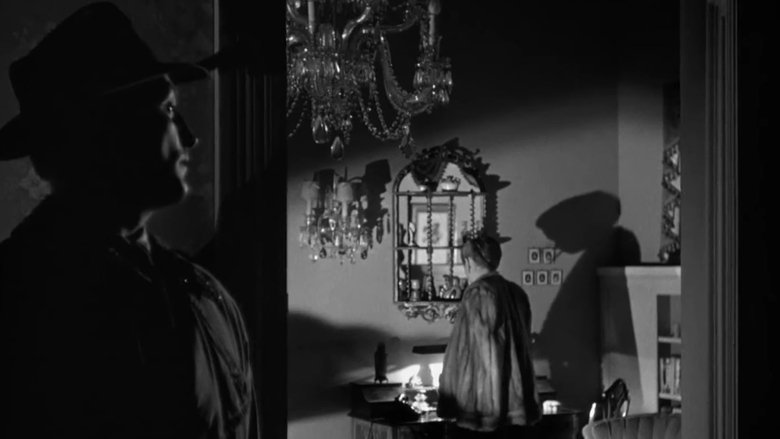
Nicholas Musuraca's cinematography bathes the characters in harsh shadows, cigarette smoke, and Venetian blind silhouettes. As Kathie's true, murderous nature becomes more apparent, the lighting around her becomes increasingly hard and dark, contrasting with the soft, bright lighting used for Ann.
The Fishing Rod / The Hook
Symbolizes entrapment, the sudden violence of the natural world, and being pulled unwillingly into a fatal situation.
In a critical scene in Bridgeport, The Kid uses a fishing rod to literally hook the hitman Joe Stefanos, pulling him over a cliff to his death. This also mirrors how Jeff is 'hooked' and reeled back in by his past.
Kathie's White Dress and Sun Hat
Represents false innocence, angelic deception, and the blinding nature of initial attraction.
When Jeff first sees Kathie in the Mexican cantina, she is walking out of the bright, glaring sun wearing white. This angelic entrance completely masks her true identity as a ruthless, manipulative thief and killer.
The Bridgeport Gas Station Sign ('Jeff Bailey')
Symbolizes Jeff's fabricated identity, his yearning for an honest, ordinary life, and the ultimate illusion of escape.
At the very end of the film, after Jeff's death, The Kid looks up and salutes the sign bearing Jeff's fake name. It serves as a bittersweet monument to the decent man Jeff tried to be, rather than the doomed man he actually was.
Memorable Quotes
Baby, I don't care.
— Jeff Bailey
Context:
When Kathie passionately claims that she didn't steal Whit's $40,000, Jeff dismisses the truth of her statement, kissing her and accepting his doomed fate with her regardless of her guilt.
Meaning:
This line perfectly encapsulates the fatalistic core of the film noir antihero. It shows that Jeff's romantic obsession overrides his logic, his self-preservation, and his moral compass.
And then I saw her, coming out of the sun, and I knew why Whit didn't care about that forty grand.
— Jeff Bailey
Context:
Jeff's voiceover narration as he recounts to Ann the moment he first laid eyes on Kathie walking into the dimly lit cantina in Acapulco.
Meaning:
A poetic, mythic introduction to the femme fatale. It highlights the blinding, overwhelming nature of Kathie's physical beauty and the immediate loss of Jeff's objectivity.
You're gonna make every guy you meet a little bit curious.
— Jeff Bailey
Context:
Spoken during their early courtship in Mexico, as they sit in a cafe and size each other up, dancing around their mutual attraction and hidden secrets.
Meaning:
This establishes the crackling, sexually charged banter typical of noir, while hinting at Kathie's irresistible, ruinous effect on men.
I never found out much listening to myself.
— Jeff Bailey
Context:
Whit tells Jeff that he likes him because he sits quietly and waits for Whit to talk. Jeff responds with this cynical, self-deprecating line.
Meaning:
Highlights Jeff's laconic, observant nature. He is a man who plays his cards close to his chest, surviving by watching and analyzing others rather than revealing his own thoughts.
A dame with a rod is like a guy with a knitting needle.
— Jack Fisher (quoted by Whit Sterling)
Context:
Whit recounts to Jeff how his former partner, Fisher, joked about Kathie shooting him. Later, Kathie proves just how deadly she is with a gun, turning the joke into a grim tragedy.
Meaning:
A fiercely misogynistic and ultimately ironic line. It underestimates the lethality of the femme fatale, a mistake that costs multiple men in the film their lives.
Philosophical Questions
Is human nature fixed, or can an individual outrun their past?
The film deeply explores the philosophy of fatalism. Jeff's earnest attempt to build a pure, pastoral life in Bridgeport is systematically destroyed. The narrative suggests that our past actions create an inescapable web of karma and consequence, and that one's true nature—whether compromised or innocent—will inevitably dictate their ultimate fate.
Can a lie be more moral than the truth?
In the final scene, The Kid knowingly lies to Ann about Jeff's intentions, allowing her to believe Jeff betrayed her. This raises the ethical question of whether truth is an absolute good, or if a compassionate deception that frees someone from a lifetime of grief and waiting is actually the higher moral choice.
Does free will exist in a corrupt world?
As Jeff is pulled back into Whit and Kathie's orbit, his choices become increasingly limited. He operates under the illusion that he can outsmart them and regain his freedom, but the film's structure—heavy with flashbacks and inevitable doom—suggests that his path was predetermined the moment he compromised his morals in Acapulco.
Alternative Interpretations
A major point of alternative interpretation surrounds the film's final scene, where The Kid nods to Ann, falsely confirming that Jeff intended to run away with Kathie. One interpretation is that this is an act of supreme mercy—a 'noble lie' that shatters Ann's devotion to Jeff, freeing her to marry the safe, dependable Jim and escape the shadow of the noir underworld. However, a darker, alternative reading suggests that The Kid's lie solidifies the film's cynical worldview: that truth is inherently destructive, and the idealized 'American Dream' (represented by Ann and Jim's future) can only survive if it is built on a foundation of protective falsehoods.
Another interpretive debate centers on Jeff's final actions. When he calls the police on himself and Kathie, some critics argue it is a heroic act of redemption, a sacrifice to ensure a murderer is stopped. Others view it as an act of pure, exhausted fatalism—an admission that his soul is already dead, and he is merely choosing the time and place of his physical execution, subconsciously inviting Kathie to pull the trigger.
Cultural Impact
Out of the Past is widely revered as the definitive, quintessential American film noir. Released in 1947, during the post-WWII era, it perfectly captured the cultural shift from wartime idealism to peacetime disillusionment, anxiety, and moral ambiguity. French critics, who originally coined the term 'film noir', championed Jacques Tourneur's film for its cold, cynical characters, fatalistic philosophy, and breathtaking chiaroscuro cinematography by Nicholas Musuraca.
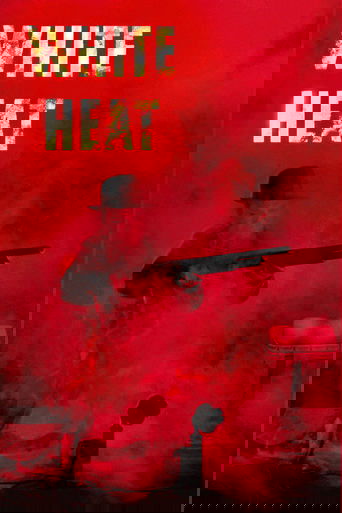
The film cemented Robert Mitchum's star persona as the ultimate sleepy-eyed, trench-coated antihero, and established Jane Greer's Kathie Moffat as the gold standard for the cinematic femme fatale. Over the decades, its influence has permeated pop culture and neo-noir cinema; elements of its plot and visual style can be seen in films like Body Heat, L.A. Confidential, and Blade Runner. In 1984, it was remade as Against All Odds starring Jeff Bridges and Rachel Ward (with Jane Greer appearing as the mother of her original character). In recognition of its profound cultural, historical, and aesthetic significance, the Library of Congress selected it for preservation in the United States National Film Registry in 1991.
Audience Reception
Out of the Past is universally acclaimed by modern audiences and critics alike, holding a near-perfect rating on review aggregators like Rotten Tomatoes. Audiences frequently praise Robert Mitchum's effortless cool and Jane Greer's chillingly nuanced performance, often citing Kathie Moffat as one of the greatest villains in cinema history. Nicholas Musuraca's evocative black-and-white cinematography is consistently highlighted as a masterclass in visual storytelling and atmospheric tension.
While the film is beloved, the primary point of criticism—even from its ardent fans—is its notoriously convoluted and labyrinthine plot. The second half of the film features a dizzying array of double-crosses, framed murders, and shifting alliances that can be difficult to follow on a first viewing. However, most viewers agree that the dense plotting is secondary to the film's intoxicating mood, razor-sharp dialogue, and profound emotional resonance, solidifying its status as an undisputed masterpiece.
Interesting Facts
- Robert Mitchum's performance was so effortlessly cool that he reportedly improvised several of his iconic, laconic one-liners on the set.
- Humphrey Bogart was initially a top choice for the role of Jeff Bailey, given the character's similarities to Sam Spade and Philip Marlowe, but he had to drop out.
- Jane Greer was under contract with Howard Hughes, who initially did not want her to play the role of the treacherous femme fatale, but director Jacques Tourneur fought hard for her casting.
- The film was based on the novel 'Build My Gallows High' by Daniel Mainwaring (writing under the pseudonym Geoffrey Homes), which remained the working title during production and was used for the UK release.
- Test audiences originally reacted poorly to the morbid title 'Build My Gallows High', prompting the studio to change it to the more nostalgic and mysterious 'Out of the Past'.
- Despite now being considered one of the greatest masterpieces of the film noir genre, the film was completely ignored by the Academy Awards upon its release.
- Director Jacques Tourneur, known for subtle horror classics like 'Cat People', used his mastery of shadow and dread to elevate the film's crime narrative into a visually poetic tragedy.
Easter Eggs
The casting of former child star Dickie Moore as the deaf-mute 'Kid'.
Moore's character acts as a classic noir trope—the silent, incorruptible witness to a corrupt world. He functions as Jeff's external conscience and a sharp contrast to the fast-talking, deceptive criminals from the city.
Kathie's shifting wardrobe colors.
Kathie's outfits act as a subtle visual mood ring for her morality. She is introduced in pure white, transitions to ambiguous grays as her lies unravel, and is ultimately clad in stark black during the film's climax when her murderous nature is fully exposed.
⚠️ Spoiler Analysis
Click to reveal detailed analysis with spoilers
Frequently Asked Questions
Explore More About This Movie
Dive deeper into specific aspects of the movie with our detailed analysis pages
Comments (0)
No comments yet. Be the first to share your thoughts!