The core meaning of "Over the Garden Wall" revolves around the difficult, often frightening, transition from childhood to adulthood. It's a story about accepting responsibility, confronting one's fears, and finding hope in the face of despair. The journey through the Unknown serves as a metaphorical pilgrimage where the older brother, Wirt, must shed his adolescent anxieties and passivity to take charge of his and his brother's fate. The series posits that one's path is defined by the choices made in moments of uncertainty and fear. It explores the power of stories—the ones we tell ourselves and the ones we inherit—in shaping our reality and helping us process trauma and navigate the frightening 'unknown' territories of life.
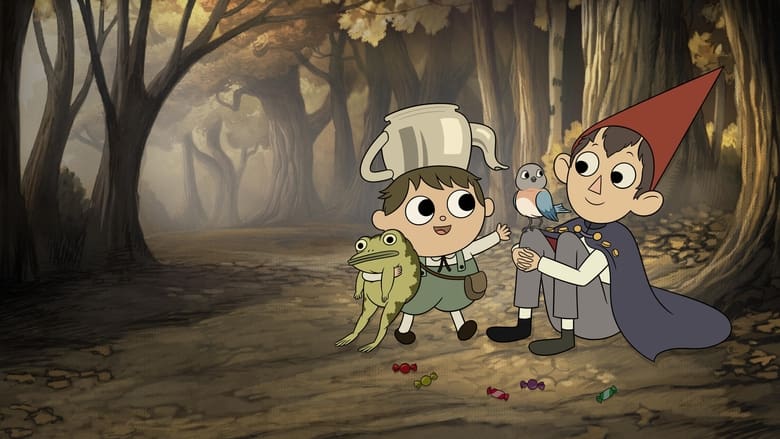
An autumnal dark fantasy whispers a coming-of-age fable, painting a journey through the hazy uncertainty between childhood and maturity like leaves scattered in a mysterious wind.
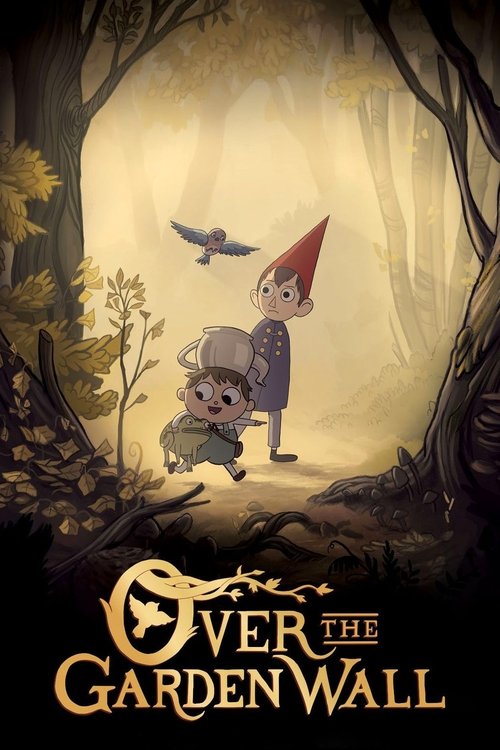
Over the Garden Wall
"Will you take a peek?"
03 November 2014
— 07 November 2014
United States of America
1 season
10 episode
Ended
8.6
(1,598)
Cast: Elijah Wood, Collin Dean, Melanie Lynskey, Samuel Ramey, Christopher Lloyd
Animation
Sci-Fi & Fantasy
Family
Comedy
Mystery
Coming of Age and Responsibility
Hope vs. Despair
Fear of the Unknown
Death and the Afterlife
Over the Garden Wall — Symbolism & Philosophy
Symbols & Motifs
The Lantern
Meaning:
The lantern symbolizes a false hope, burden, and the preservation of a soul through desperate means. For the Woodsman, it represents the belief that he is keeping his daughter's spirit alive. However, it's revealed that the lantern actually contains the Beast's own life force, making it a symbol of manipulation and the way despair can trick one into feeding the very thing that consumes them.
Context:
The lantern is carried by the Woodsman throughout the entire series. He is obsessed with keeping it lit by using oil rendered from Edelwood trees. The climax of the series hinges on Wirt discovering the lantern's true nature and the Woodsman's choice to finally extinguish it, thereby defeating the Beast.
Edelwood Trees
Meaning:
The dark, oil-producing Edelwood trees symbolize souls who have succumbed to despair. They are the physical manifestation of lost hope, people (specifically children) who became lost in the Unknown and gave up, allowing the Beast to claim them and turn them into fuel for his own existence.
Context:
The Woodsman is constantly seen chopping down Edelwood trees to fuel his lantern. The Beast's ultimate goal is to turn Wirt and, later, Greg into an Edelwood tree. This process is the central threat of the series and represents the ultimate consequence of surrendering to hopelessness in the Unknown.
The Unknown
Meaning:
The forest itself, known as "The Unknown," is a powerful symbol for liminal spaces—the frightening, transitional periods in life. It is widely interpreted as a form of purgatory or limbo, a place between life and death. More broadly, it symbolizes the confusing journey from childhood innocence to the responsibilities of adulthood, a period fraught with uncertainty and fear.
Context:
The entire series takes place within The Unknown. It is a world adrift in time, containing elements from various eras of Americana. The brothers enter it after falling into a pond on Halloween and only escape once Wirt has undergone significant personal growth and confronted the Beast.
Black Turtles
Meaning:
The small, black turtles are a recurring motif that appears to symbolize a source of darkness or a bad omen. Auntie Whispers, a character who works to control evil, is shown to consume them. The Beast is also seen releasing one, suggesting they are connected to his influence or are carriers of his dark will.
Context:
Greg finds a black turtle in the first episode, which later leads the wolf monster to the mill. In "The Ringing of the Bell," Auntie Whispers has a barrel full of them and warns Greg not to let them out. In the tavern, one of the patrons sings about having a black turtle, and it's implied to be a source of his troubles.
Philosophical Questions
What is the nature of reality versus the stories we tell ourselves?
The series constantly blurs the line between what is real and what is imagined. The ending, with the magically glowing bell, leaves the physical reality of the Unknown deliberately ambiguous. This raises the question of whether the objective truth of the experience matters as much as its impact on the characters. The journey, whether real or a dream, is what allows Wirt to mature and save his brother. The show suggests that the stories we construct to understand our world and our traumas hold a powerful reality of their own, shaping who we become.
How do we find our way when we are truly lost?
"Over the Garden Wall" explores being lost both literally and metaphorically. Wirt is lost not just in a forest, but in his own adolescent anxiety and indecision. The series suggests that the way forward is not found by passively waiting for rescue, but by taking responsibility, making choices (even wrong ones), and relying on the hope and connection offered by others. The journey home is an internal one as much as it is external; Wirt can only find his way out of the woods after he finds his own sense of direction and purpose.
Is despair a choice or an external force?
The Beast is presented as an external entity, the literal embodiment of despair that stalks the forest. However, his power comes not from his own strength, but from the willingness of his victims to surrender their hope. He can only claim those who give in. The series explores this duality, framing despair as a malevolent force that exists in the world, but one that can only take root if we allow it to. The ultimate victory over the Beast is not a physical fight but a refusal to give up, an internal choice to persevere.
Core Meaning
Explore More About This Movie
Dive deeper into specific aspects of the movie with our detailed analysis pages