Over the Garden Wall
An autumnal dark fantasy whispers a coming-of-age fable, painting a journey through the hazy uncertainty between childhood and maturity like leaves scattered in a mysterious wind.
Over the Garden Wall

Over the Garden Wall

"Will you take a peek?"

03 November 2014 — 07 November 2014 United States of America 1 season 10 episode Ended ⭐ 8.6 (1,598)
Cast: Elijah Wood, Collin Dean, Melanie Lynskey, Samuel Ramey, Christopher Lloyd
Animation Sci-Fi & Fantasy Family Comedy Mystery
Coming of Age and Responsibility Hope vs. Despair Fear of the Unknown Death and the Afterlife

Overview

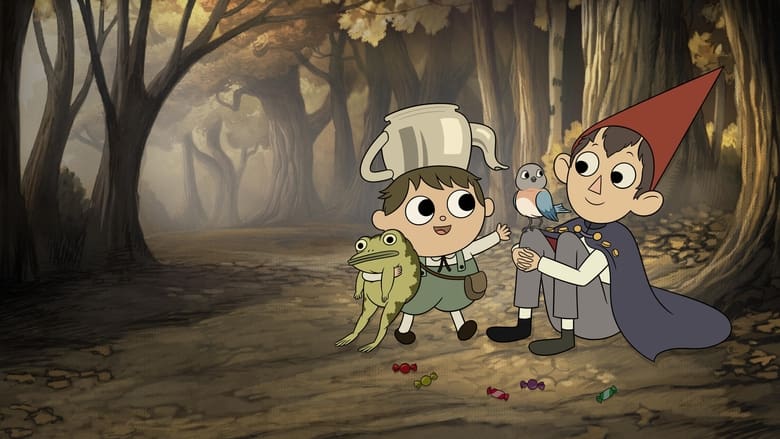
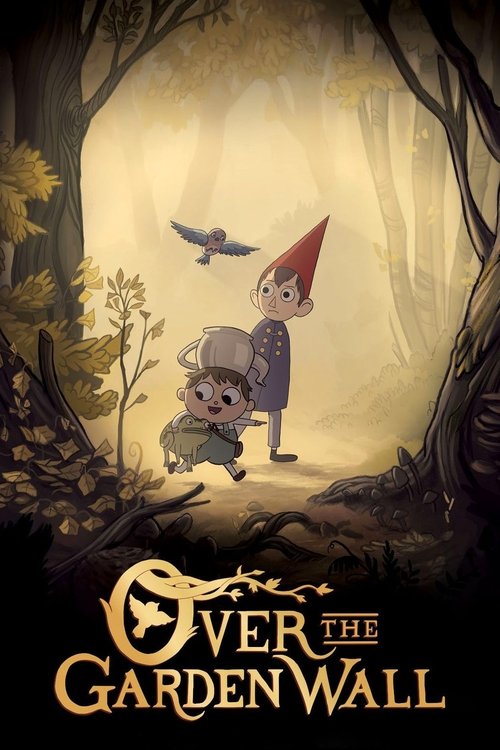
"Over the Garden Wall" follows two half-brothers, Wirt and Greg, who find themselves lost in a mysterious and timeless forest called the Unknown. Voiced by Elijah Wood and Collin Dean, the anxious older brother Wirt and his relentlessly optimistic younger brother Greg navigate a series of strange, surreal, and folkloric vignettes in their quest to find their way home. They are joined by Beatrice (Melanie Lynskey), a sharp-tongued bluebird under a curse, who promises to lead them to Adelaide of the Pasture, a supposed 'Good Woman of the Woods' who can help them.

Their journey is shadowed by the presence of the ominous Beast (Samuel Ramey), a creature who stalks the forest turning lost souls into Edelwood trees. They also frequently cross paths with the enigmatic Woodsman (Christopher Lloyd), who tirelessly chops down the Edelwood trees to keep his mysterious lantern lit. Each episode presents a new encounter with the peculiar inhabitants of the Unknown—from a town of pumpkin-headed skeletons to a school for woodland animals—blending whimsy with an undercurrent of melancholy and danger, all while slowly peeling back the layers of how the boys arrived in this strange world.
Core Meaning

The core meaning of "Over the Garden Wall" revolves around the difficult, often frightening, transition from childhood to adulthood. It's a story about accepting responsibility, confronting one's fears, and finding hope in the face of despair. The journey through the Unknown serves as a metaphorical pilgrimage where the older brother, Wirt, must shed his adolescent anxieties and passivity to take charge of his and his brother's fate. The series posits that one's path is defined by the choices made in moments of uncertainty and fear. It explores the power of stories—the ones we tell ourselves and the ones we inherit—in shaping our reality and helping us process trauma and navigate the frightening 'unknown' territories of life.

Thematic DNA

Coming of Age and Responsibility 35%
Hope vs. Despair 30%
Fear of the Unknown 20%
Death and the Afterlife 15%

Coming of Age and Responsibility

This is the central theme, primarily explored through Wirt's character arc. Initially indecisive, insecure, and prone to poetic melodrama, Wirt is forced to mature. His journey through the Unknown is a trial by fire, compelling him to move past his self-absorption and take responsibility for his younger brother, Greg. He learns to make difficult decisions, to lead instead of follow, and to face his fears directly rather than running from them. This culminates in his confrontation with the Beast, where he demonstrates his growth by making a selfless and decisive choice.

Hope vs. Despair

The series presents a constant struggle between hope, embodied by the cheerful and naive Greg, and despair, personified by the Beast. The Beast preys on those who have lost all hope, turning them into Edelwood trees. Wirt often teeters on the edge of giving up, making him vulnerable to the Beast's influence. Greg's unwavering optimism, though sometimes reckless, often serves as the light that guides them. The core conflict is an internal one: choosing to persevere through darkness or surrendering to hopelessness.

Fear of the Unknown

The very setting of the series, "The Unknown," literalizes this theme. The forest is a place of uncertainty, where the rules are unclear and danger can be both real and imagined. Each episode introduces a new, strange situation that challenges the brothers. The series suggests that the most frightening things are not necessarily the monsters in the dark, but the anxieties and insecurities within oneself. Wirt's journey is about learning to navigate this uncertainty, both in the forest and within his own life.

Death and the Afterlife

The series is saturated with imagery and allegories related to death. The autumnal setting signifies decay and the end of a cycle, while winter represents death itself. Many fan theories interpret the Unknown as a form of purgatory or limbo, a space between life and death where souls must resolve their unfinished business. Encounters with skeletons in Pottsfield, a town whose name references burial grounds for the unknown, and the central conflict of souls being lost to the Beast, all contribute to a deep meditation on mortality.

Character Analysis

Wirt

Elijah Wood

Archetype: The Reluctant Hero
Key Trait: Anxious

Motivation

Initially, Wirt's motivation is purely self-centered: get home and deal with his embarrassment over a mixtape he made for his crush, Sara. As the series progresses, his motivation shifts from simply returning home to a fierce, protective need to ensure his younger brother's safety. This evolution is central to his character development, moving from selfish teenage angst to selfless brotherly love.

Character Arc

Wirt begins the series as a quintessential insecure teenager. He is prone to anxiety, overthinking, and poetic self-pity, often blaming others for his problems. Lost in the Unknown, his initial instinct is passivity and complaint. His journey is one of forced growth; he must learn to be decisive and responsible to protect his brother. His betrayal by Beatrice and Greg's subsequent sacrifice force him to confront his own cowardice. By the end, he transforms from a follower into a leader, capable of outsmarting the Beast and taking definitive action to save Greg, demonstrating a newfound confidence and maturity.

Greg

Collin Dean

Archetype: The Innocent/The Fool
Key Trait: Optimistic

Motivation

Greg's motivation is simple and unwavering: to have fun and to help. He wants to lead, to name his frog, and to make the best of their situation. His ultimate motivation is his love for his brother. When Wirt gives up hope, Greg's motivation becomes to take on the burden himself, leading to his selfless confrontation with the Beast.

Character Arc

Greg starts and largely remains a force of pure, chaotic optimism. He is carefree, imaginative, and lives entirely in the moment. While his whimsical nature often gets the duo into trouble, it also serves as their primary source of hope. His character arc isn't about changing his nature, but about demonstrating the strength within it. In a pivotal moment, he evolves from pure impulse to making a conscious, selfless choice to sacrifice himself to the Beast to save a despairing Wirt. This act shows that his innocence is not ignorance, but a powerful form of bravery.

Beatrice

Melanie Lynskey

Archetype: The Cynic with a Heart of Gold
Key Trait: Sarcastic

Motivation

Beatrice's primary motivation is to undo the curse that turned her and her entire family into bluebirds. This selfish goal initially drives her to betray Wirt and Greg. After her change of heart, her motivation becomes to genuinely help them and atone for her actions, putting their well-being before her own desire to become human again.

Character Arc

Beatrice is introduced as a cynical, irritable bluebird who begrudgingly helps the brothers. Her arc is a journey of redemption. It's revealed she was cursed along with her family after throwing a rock at a bluebird. Her initial goal is selfish: to deliver Wirt and Greg to Adelaide in exchange for magical scissors to break the curse. However, as she travels with them, she develops a genuine affection for the boys. Plagued by guilt, she ultimately defies Adelaide to protect them and, despite Wirt's anger at her betrayal, she saves him from drowning, proving her change of heart.

The Woodsman

Christopher Lloyd

Archetype: The Guardian/The Misguided Mentor
Key Trait: Burdened

Motivation

The Woodsman's sole motivation is the belief that he is protecting his daughter's soul. The Beast exploits his grief and love, tricking him into becoming his unwilling caretaker. Every action he takes, from his warnings to the boys to his relentless chopping of the Edelwood trees, is driven by this desperate, misguided hope.

Character Arc

The Woodsman is a grim and mysterious figure, initially presented as a potential threat. He is weary and singularly focused on keeping his lantern lit. His arc is one of tragic manipulation and eventual liberation. He believes the lantern contains his daughter's soul and that he must feed it with oil from Edelwood trees to keep her alive. He is an antagonist out of desperation, not malice. The climax of his arc is the revelation that he has been deceived by the Beast; the lantern contains the Beast's soul, not his daughter's. Upon learning this, he is freed from his burden and is the one to finally extinguish the lantern, destroying his tormentor.

Symbols & Motifs

The Lantern

Meaning:

The lantern symbolizes a false hope, burden, and the preservation of a soul through desperate means. For the Woodsman, it represents the belief that he is keeping his daughter's spirit alive. However, it's revealed that the lantern actually contains the Beast's own life force, making it a symbol of manipulation and the way despair can trick one into feeding the very thing that consumes them.

Context:

The lantern is carried by the Woodsman throughout the entire series. He is obsessed with keeping it lit by using oil rendered from Edelwood trees. The climax of the series hinges on Wirt discovering the lantern's true nature and the Woodsman's choice to finally extinguish it, thereby defeating the Beast.

Edelwood Trees

Meaning:

The dark, oil-producing Edelwood trees symbolize souls who have succumbed to despair. They are the physical manifestation of lost hope, people (specifically children) who became lost in the Unknown and gave up, allowing the Beast to claim them and turn them into fuel for his own existence.

Context:

The Woodsman is constantly seen chopping down Edelwood trees to fuel his lantern. The Beast's ultimate goal is to turn Wirt and, later, Greg into an Edelwood tree. This process is the central threat of the series and represents the ultimate consequence of surrendering to hopelessness in the Unknown.

The Unknown

Meaning:

The forest itself, known as "The Unknown," is a powerful symbol for liminal spaces—the frightening, transitional periods in life. It is widely interpreted as a form of purgatory or limbo, a place between life and death. More broadly, it symbolizes the confusing journey from childhood innocence to the responsibilities of adulthood, a period fraught with uncertainty and fear.

Context:

The entire series takes place within The Unknown. It is a world adrift in time, containing elements from various eras of Americana. The brothers enter it after falling into a pond on Halloween and only escape once Wirt has undergone significant personal growth and confronted the Beast.

Black Turtles

Meaning:

The small, black turtles are a recurring motif that appears to symbolize a source of darkness or a bad omen. Auntie Whispers, a character who works to control evil, is shown to consume them. The Beast is also seen releasing one, suggesting they are connected to his influence or are carriers of his dark will.

Context:

Greg finds a black turtle in the first episode, which later leads the wolf monster to the mill. In "The Ringing of the Bell," Auntie Whispers has a barrel full of them and warns Greg not to let them out. In the tavern, one of the patrons sings about having a black turtle, and it's implied to be a source of his troubles.

Memorable Quotes

Ain't that just the way.

— Greg (and others)

Context:

The line is used multiple times throughout the series by various characters, starting with Greg. It often follows a moment of minor tragedy or inconvenience, serving as a verbal shrug that diffuses tension and underscores the show's blend of dark themes and gentle humor.

Meaning:

This simple phrase encapsulates a blend of optimistic and realistic acceptance of life's misfortunes and absurdities. It's a recurring line used by several characters, suggesting a shared, folksy wisdom in the face of hardship. It reflects an ability to acknowledge a setback and move on without dwelling on it, a key aspect of Greg's resilient personality.

Oh, potatoes and molasses! If you want some, oh, just ask us!

— Greg and the school animals

Context:

This song is from Episode 3, "Schooltown Follies." Greg teaches the song to a classroom of woodland animals to raise their spirits and help pay for the school's upkeep. It's a standout moment of levity and charm in the series.

Meaning:

This is the chorus to the most iconic song from the series. It represents the childlike innocence, whimsy, and simple joys that persist even within the strange and sometimes frightening world of the Unknown. The song is a moment of pure, nonsensical delight that perfectly captures Greg's character.

There is only the forest, and there is only surrender.

— The Beast

Context:

The Beast says this as he tries to convince a despairing Wirt to give up and become the new lantern bearer in the final episode, "The Unknown." It is the ultimate expression of his power, which thrives on the victim's loss of will.

Meaning:

This quote reveals the Beast's core philosophy and method of attack. He doesn't rely on physical force but on psychological manipulation. He aims to crush the hope of those lost in the woods, convincing them that the struggle is futile and that their only option is to give in to despair. It frames the central conflict as an internal battle against hopelessness.

We are but wayward leaves, scattered to the air by an indifferent world.

— Wirt

Context:

Wirt recites this line in Episode 2, "Hard Times at the Huskin' Bee," reflecting on their predicament. It is a prime example of his verbose and pessimistic nature early in the series.

Meaning:

This quote perfectly illustrates Wirt's initial personality: melodramatic, poetic, and fatalistic. He sees himself as a victim of circumstance with no agency. It highlights his tendency to wallow in his own perceived misfortune rather than taking action, a trait he must overcome throughout his journey.

Episode Highlights

Hard Times at the Huskin' Bee

S1E2

Wirt, Greg, and Beatrice stumble upon Pottsfield, a town inhabited by people wearing pumpkin costumes. They are put on trial for disturbing the peace and sentenced to a few hours of manual labor. The episode is known for its folksy atmosphere and the memorable reveal that the town's inhabitants are actually skeletons. Enoch, the giant pumpkin leader, tells Wirt he'll "join them someday," a line rich with foreshadowing.

Significance:

This episode is significant for establishing the series' unique blend of autumnal folklore, gentle humor, and underlying darkness. It's one of the most iconic episodes, visually defining the show's aesthetic. The themes of death and the afterlife are brought to the forefront, solidifying theories that the Unknown is a form of purgatory.

Lullaby in Frogland

S1E6

The trio takes a ferry full of well-dressed frogs to meet Adelaide of the Pasture. The episode features a full musical performance by Greg's frog. The journey culminates in the discovery that Adelaide is a wicked witch who intends to enslave the boys, and that Beatrice was leading them into a trap in exchange for a cure for her family's curse. Beatrice has a change of heart and saves them, but a betrayed Wirt leaves her behind.

Significance:

This episode marks a crucial turning point in the narrative. It reveals Beatrice's backstory and initial betrayal, shattering the group's dynamic and sending Wirt into a spiral of mistrust and despair. It's the moment the series pivots from episodic adventures to a more focused and emotionally charged final act.

The Ringing of the Bell

S1E7

Wirt and Greg seek shelter in a cottage inhabited by a young woman named Lorna, who is cared for by the terrifying Auntie Whispers. Lorna is possessed by a malevolent spirit that is kept at bay by a magic bell. Wirt, showing newfound initiative, figures out how to compel the spirit out of Lorna without killing her. This episode is noted for its genuinely creepy atmosphere.

Significance:

This episode is a key moment for Wirt's character development. Separated from Beatrice and responsible for Greg, he is forced to take charge. He solves the episode's central problem not with brawn, but with intelligence and courage, marking a significant step away from his earlier passivity.

Into the Unknown

S1E9

This penultimate episode is a flashback that reveals the truth about Wirt and Greg's origins. They are not from a fairytale past, but are modern-day children. On Halloween night, Wirt's attempt to retrieve an embarrassing cassette tape from his crush, Sara, leads them to a graveyard. Fleeing from a police officer, they jump over a garden wall and fall into a body of water, knocking them unconscious.

Significance:

This episode completely re-contextualizes the entire series. It reveals that the journey through the Unknown is happening while the brothers are unconscious and drowning, possibly in a state between life and death. It grounds the fantastical story in a real-world, emotional event and raises the stakes for the finale.

The Unknown

S1E10

The final chapter begins with Greg having surrendered to the Beast to save Wirt. Wirt, with Beatrice's help, finds Greg as winter settles over the forest. Wirt confronts the Beast, and in a moment of clarity, realizes the Beast's soul is in the lantern. He tricks the Beast, saves Greg, and gives the lantern to the Woodsman, who extinguishes it. The boys then wake up in a hospital, back in their world.

Significance:

This episode provides a deeply satisfying conclusion to all the character arcs. Wirt completes his transformation into a confident hero. The Woodsman is freed from his burden, and the Beast is defeated. The ending remains ambiguous, as Greg's frog glows with a magical bell it swallowed in the Unknown, suggesting their experience was real.

Philosophical Questions

What is the nature of reality versus the stories we tell ourselves?

The series constantly blurs the line between what is real and what is imagined. The ending, with the magically glowing bell, leaves the physical reality of the Unknown deliberately ambiguous. This raises the question of whether the objective truth of the experience matters as much as its impact on the characters. The journey, whether real or a dream, is what allows Wirt to mature and save his brother. The show suggests that the stories we construct to understand our world and our traumas hold a powerful reality of their own, shaping who we become.

How do we find our way when we are truly lost?

"Over the Garden Wall" explores being lost both literally and metaphorically. Wirt is lost not just in a forest, but in his own adolescent anxiety and indecision. The series suggests that the way forward is not found by passively waiting for rescue, but by taking responsibility, making choices (even wrong ones), and relying on the hope and connection offered by others. The journey home is an internal one as much as it is external; Wirt can only find his way out of the woods after he finds his own sense of direction and purpose.

Is despair a choice or an external force?

The Beast is presented as an external entity, the literal embodiment of despair that stalks the forest. However, his power comes not from his own strength, but from the willingness of his victims to surrender their hope. He can only claim those who give in. The series explores this duality, framing despair as a malevolent force that exists in the world, but one that can only take root if we allow it to. The ultimate victory over the Beast is not a physical fight but a refusal to give up, an internal choice to persevere.

Alternative Interpretations

The most pervasive interpretation of "Over the Garden Wall" is that The Unknown is a form of Purgatory or Limbo. According to this theory, Wirt and Greg are in a state between life and death after falling into the river. The characters they meet are other lost souls working through their own unresolved issues. Their journey is a test of their will to live, and by overcoming the Beast (a symbol of death or despair), they earn their return to the world of the living. Evidence includes the tombstone of Quincy Endicott and the name "Pottsfield" referencing a burial ground.

A second interpretation posits that The Unknown is a dream or hallucination. This theory suggests the entire adventure is a shared unconscious experience the brothers have while drowning. The fantastical elements are their minds' way of processing the traumatic event. The glowing bell in the frog's stomach at the end is seen not as proof of a real place, but as a lingering piece of the dream world bleeding into reality as they wake up.

A third, more metaphorical view, is that the story is an allegory for Wirt processing trauma and protecting his brother. In this reading, the events in the Unknown are not literal. They are stories Wirt creates to shield Greg from the terrifying reality of their near-death experience. The Unknown is a fantasy world Wirt builds, and the happy ending where everyone is safe is the narrative he constructs for Greg's benefit. The glowing bell symbolizes the power and reality of that story in Greg's memory, which is more important than the traumatic event itself.

Cultural Impact

Aired in 2014, "Over the Garden Wall" arrived during a renaissance of creator-driven television animation. It distinguished itself by being Cartoon Network's first miniseries, telling a complete, self-contained story over ten episodes. This format proved highly successful, influencing other shows to explore shorter, more focused narratives. The series was met with critical acclaim for its unique blend of whimsy and melancholy, its mature themes, and its stunning visual style inspired by Americana and vintage art. It won an Emmy Award for Outstanding Animated Program in 2015.

The show's philosophical depth, drawing comparisons to Dante's Inferno and classic fables, has made it the subject of extensive analysis. Its greatest legacy is perhaps its status as a modern cult classic and an annual autumn tradition for many viewers. Its popularity surges each fall, fueled by social media discussions about its themes, aesthetic, and enduring mysteries. The deliberate ambiguity of its world and ending has fostered a vibrant fan community that continues to create theories and interpretations years after its debut, cementing its place as a timeless and beloved piece of animation.

Audience Reception

Upon its premiere in 2014, "Over the Garden Wall" was met with widespread critical acclaim. Critics praised its unique and atmospheric art style, which evokes a nostalgic, autumnal feeling inspired by American folklore and vintage illustrations. The writing was lauded for its ability to balance whimsical, comedic moments with genuinely unsettling and mature themes of death, despair, and responsibility, making it appealing to both children and adults. The voice cast, particularly Elijah Wood as Wirt, was highly commended for bringing emotional depth to the characters.

Audiences responded with immense positivity, and the show quickly developed a passionate cult following. Its status as a miniseries was praised for allowing a tight, focused narrative without filler. The main points of praise from viewers center on its rich symbolism, emotional resonance, and memorable soundtrack. There is virtually no significant criticism or controversy associated with the series; it is almost universally regarded as a masterpiece of modern animation. Over the years, its reputation has only grown, solidifying its place as a beloved annual viewing tradition for many during the Halloween season.

Interesting Facts

  • The series was created by Patrick McHale, who previously worked as a writer and creative director on "Adventure Time."
  • "Over the Garden Wall" is based on an animated short film created by McHale called "Tome of the Unknown" (2013).
  • The art style was heavily inspired by a variety of sources, including 19th-century chromolithography, vintage Halloween postcards, Gustave Doré illustrations, and the 1890s board game "Game of Frog Pond."
  • The show was Cartoon Network's first-ever miniseries.
  • The character of The Beast is voiced by Samuel Ramey, a renowned operatic bass-baritone, adding to the character's menacing and theatrical presence.
  • The music was composed by The Blasting Company and was designed to evoke a feeling of lost American folk music and early opera.
  • Production began in 2014, and the animation was primarily done by the South Korean studio Digital eMation.

Easter Eggs

In Episode 5, "Mad Love," Wirt and Greg meet the wealthy tea magnate Quincy Endicott. In the flashback Episode 9, "Into the Unknown," the boys hide in a cemetery, and the name on one of the tombstones is "Quincy Endicott."

This easter egg is a key piece of evidence for the popular theory that the Unknown is a form of afterlife or purgatory, and that its inhabitants are spirits of the deceased. It confirms that at least one character the brothers meet is a ghost from the past.

The dancing style of the Highwayman in Episode 4, "Songs of the Dark Lantern," is a direct homage to the rotoscoped dance moves of Cab Calloway in the 1932 Betty Boop cartoon "Minnie the Moocher."

This is one of many references to early 20th-century animation. It grounds the show's timeless aesthetic in a specific era of animation history and serves as a tribute to the Fleischer Studios style.

The town of Pottsfield in Episode 2 is a reference to a "potter's field," a term for a common burial ground for the unknown or indigent.

This biblical and historical reference reinforces the episode's themes of death and burial. It's a clever, dark pun that adds another layer to the idea that Pottsfield is a town of the dead awaiting the harvest (or judgment).

In Episode 9, one of the teenagers at the graveyard party is wearing a hot dog costume. This character is voiced by Patrick McHale, the show's creator.

This is a fun cameo by the creator of the series, a common tradition in animation and filmmaking.

⚠️ Spoiler Analysis

Click to reveal detailed analysis with spoilers

Frequently Asked Questions

Explore More About This Movie

Dive deeper into specific aspects of the movie with our detailed analysis pages

Comments (0)

Leave a comment

No comments yet. Be the first to share your thoughts!